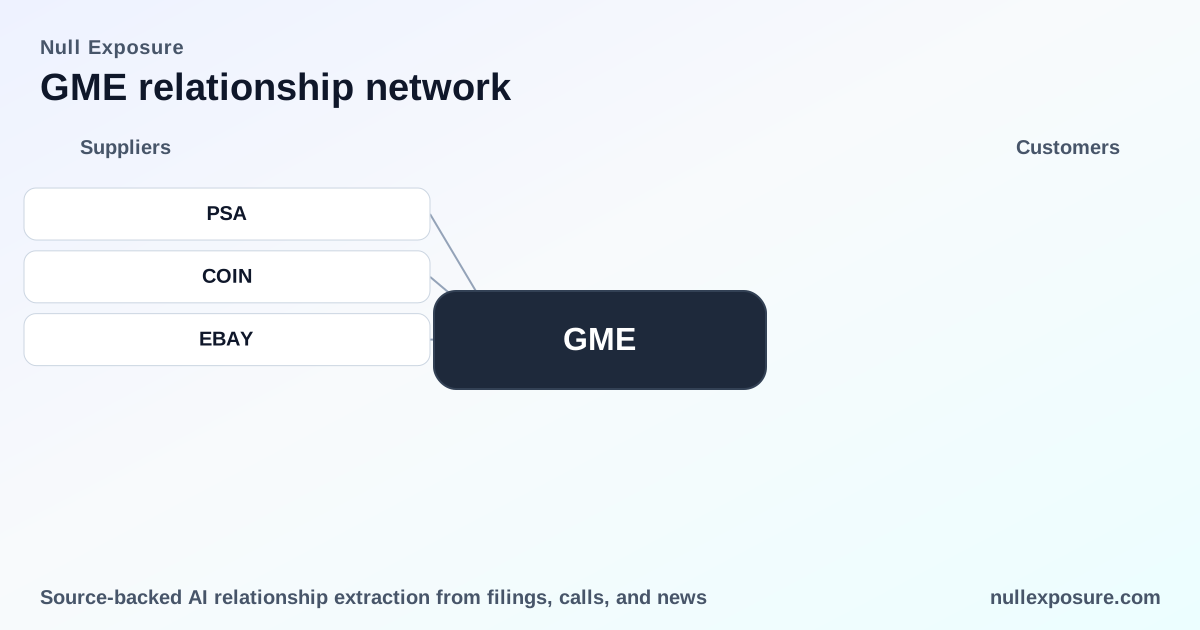
GameStop (GME) — Supplier Ecosystem and Strategic Relationships
Thesis: GameStop operates a hybrid retail and platform business that monetizes through physical and digital merchandise sales, resale and grading services, and strategic custody and trading of digital assets. The company’s core economic engine remains product turnover from new and used video games and collectibles, supplemented by fees and cuts on secondary markets and by financial returns on invested assets such as Bitcoin. For supplier-risk intelligence and supplier relationship mapping, see https://nullexposure.com/.
How GameStop buys, contracts and captures value
GameStop sources new products globally from manufacturers, software publishers and distributors and runs a large store footprint alongside digital initiatives that extract fees on resale and grading. Revenue drivers are product sales, resale/fee income, and balance-sheet returns from invested assets — a mix that creates both retail supply-chain exposure and non-operating financial exposures (crypto custody).
Company-level signals from public filings show a mixed contracting posture:
- Short-term and cancellable purchase obligations: purchase orders through fiscal 2025 are generally cancellable until shipment, implying flexibility in inventory commitments and vulnerability to supplier negotiation pressure.
- Order-by-order (spot) practices are standard across product lines, reflecting industry norms and reducing long-term purchase lock-ins.
- Material long-lived lease liabilities remain on the books, indicating a base level of fixed cost commitment through operating leases.
- Government counterparty exposure exists where state guarantees were used (the French government guarantee on term loans), which is a financing rather than supplier dependence signal.
- Supplier roles are broad: GameStop interacts with manufacturers, distributors and service providers (notably logistics partners), which increases the surface area for operational disruption.
These characteristics point to a low contractual lock-in for product suppliers but significant operational reliance on logistics and distribution partners; fixed-cost maturity comes primarily from leasing rather than supplier contracts.
The relationships you need to know — concise, sourced summaries
PSA (Push Start Arcade partnership)
GameStop launched Push Start Arcade in beta in partnership with PSA, the card-grading leader, to address friction in trading-card collecting by enabling grading and resale flows tied to GameStop’s platform. According to InsiderMonkey (March 2026), the PSA tie-in is positioned to accelerate instant grading, secure storage and secondary-market monetization for collectible cards. Source: InsiderMonkey article on Push Start Arcade — https://www.insidermonkey.com/blog/gamestop-corp-gme-a-bull-case-theory-2-1588003/
Coinbase Prime (custody and bitcoin servicing)
GameStop transferred its entire Bitcoin position to Coinbase Prime, signaling a shift in how the company custody-manages digital assets and potentially how it uses crypto on the balance sheet (active trading, reserve strategy, or custody efficiencies). Multiple contemporaneous reports (Sahm Capital, January 2026; TradingView ideas, early 2026) documented the transfer and discussed implications for valuation and treasury management. Sources: Sahm Capital coverage on GameStop’s bitcoin shift — https://www.sahmcapital.com/news/content/gamestop-insider-buying-and-bitcoin-shift-spark-fresh-valuation-questions-2026-01-28 and TradingView mentions — https://www.tradingview.com/symbols/VIE-GME/ideas/?sort=recent
eBay (secondary-market routing for cards)
Under Push Start Arcade flows, GameStop offers resale routing that includes selling to GameStop for a 10% cut plus a 6% trading fee or routing via eBay for a 6% fee, embedding eBay as an alternative marketplace partner for card resale liquidity. InsiderMonkey’s reporting details how the service splits resale channels and fee capture. Source: InsiderMonkey on Play Start Arcade resale economics — https://www.insidermonkey.com/blog/gamestop-corp-gme-a-bull-case-theory-2-1588003/
What these relationships mean for investors and operators
Collectively, the supplier and partner picture shows GameStop balancing retail supply flexibility with strategic platform tie-ups that extend monetization beyond brick-and-mortar sales.
Key implications:
- Supply flexibility reduces inventory write-down risk but increases exposure to supplier pricing shifts and logistics interruptions, because many purchases are order-by-order and cancellable.
- Platform partnerships (PSA, eBay) increase fee-based revenues and lock in collectible-market participants, improving margin mix if volumes scale; PSA integration converts a service provider into a distribution/monetization partner.
- Custody shift to Coinbase Prime turns crypto exposure into an outsized counterparty dependency on a regulated custodian, concentrating operational risk in one financial service provider while reducing in-house custody operational complexity.
- Leases and fixed costs anchor a base load of expense that must be covered by retail turnover and platform revenues; this affects margin sensitivity to top-line volatility.
Operational teams should prioritize vendor performance metrics for logistics partners and partner-API/service SLAs for PSA and Coinbase Prime, while investors should monitor disclosure on crypto custody, graded-card volumes, and fee capture rates on resale.
For an in-depth supplier-risk scorecard and continuous monitoring, visit https://nullexposure.com/ for tailored coverage.
Tactical risk checklist for investors
- Monitor graded-card transaction volumes and margin contribution from PSA-linked flows as an early indicator of platform monetization success.
- Watch disclosures on Bitcoin holdings and Coinbase Prime custody arrangements—custody concentration is a material financial exposure.
- Track purchase obligation rolloffs and lease-payment schedules for signs of tightening liquidity or renegotiation pressure.
- Evaluate logistics provider continuity and shipping-cost trends because GameStop relies on third-party transportation for product flow.
Bottom line and next steps
GameStop’s supplier strategy combines operational flexibility in sourcing with deliberate platform partnerships that convert collectible demand into fee-bearing revenue. The Coinbase Prime custody move concentrates crypto counterparty risk into a single, regulated provider while PSA and eBay relationships broaden pathways for resale monetization. For portfolio managers and corporate operators, the priorities are execution on platform scaling, vendor continuity for logistics, and transparent treasury disclosures for digital assets.
If you want supplier-level intelligence, relationship mapping, and continuous alerts for GME and comparable retailers, start with NullExposure: https://nullexposure.com/. For bespoke supplier-risk assessments and subscription access, visit https://nullexposure.com/ and request a demo.