Globus Medical (GMED): Supplier relationships, constraints, and what investors should price in
Globus Medical develops and sells spinal and musculoskeletal implants, devices and related services, monetizing primarily through product sales to hospitals and specialty clinics, recurring accessory and implant purchases, and professional arrangements such as consulting and royalties with surgeons. For investors and operators, the critical lens is how supplier posture, domestic manufacturing concentration and long-term contracting shape both margin stability and execution risk as the company scales robotics and integration initiatives.
For a deeper supplier-risk view and mapped relationships, visit https://nullexposure.com/.
How suppliers show up in Globus’s economics
Globus runs a product-heavy model that depends on reliable components (including allograft tissue), surgical training/consulting relationships, and durable equipment leases. That mix translates into a business that is capital- and relationship-intensive: device throughput and surgeon preference drive recurring revenue, while longer lease terms and domestic supplier relationships support operational continuity and quality control.
- Market signals: $2.94B revenue TTM and $877M EBITDA indicate an established device franchise with meaningful gross margins, but the company’s path to faster growth is tied to execution on robotics and integration initiatives.
- Valuation context: trailing PE ~21.7, forward PE ~19.0 and EV/EBITDA ~15.9 set expectations for steady margin delivery rather than speculative upside.
If you want a complete supplier mapping for decision-making, start here: https://nullexposure.com/.
Direct supplier and partner mentions you need to track
Below I cover every relationship surfaced in the available reporting and commentary. Each entry is a plain-English summary with a concise source note.
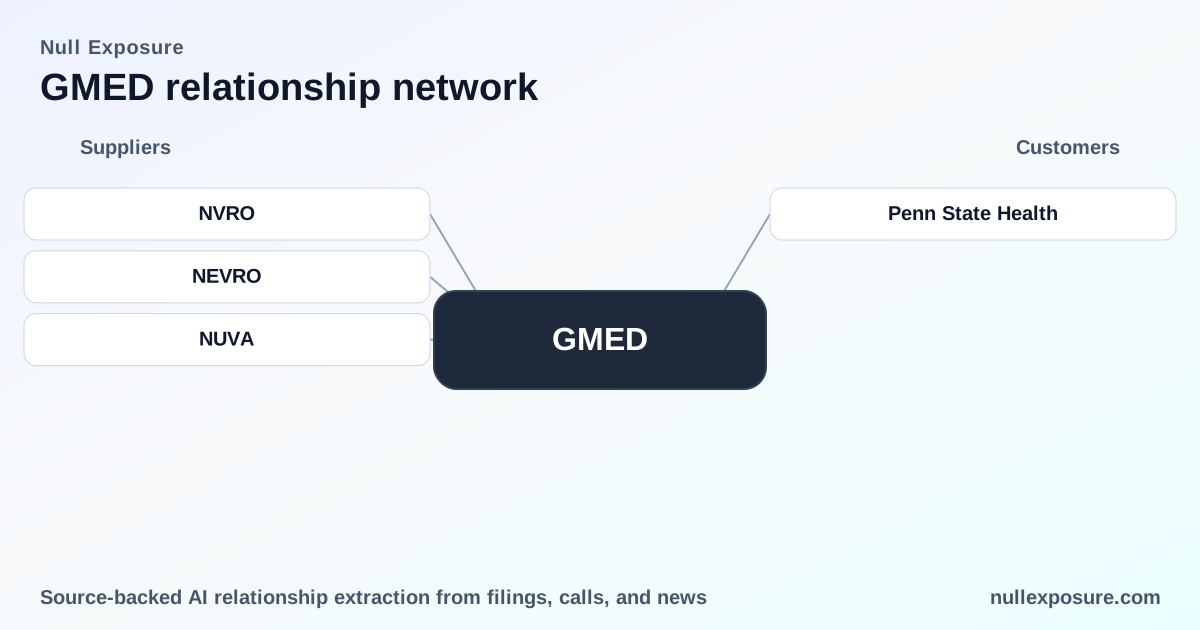
Nevro — recorded product sales and an integration angle
Globus reported net sales of Nevro products totaling $94,586 in its second-quarter results, indicating a small but recorded line item tied to Nevro product revenue in FY2025. (GlobeNewswire press release, Aug 7, 2025: https://www.globenewswire.com/news-release/2025/08/07/3129736/0/en/Globus-Medical-Reports-Second-Quarter-2025-Results.html)
A separate market note flagged execution risk if prolonged sales cycles for robotics or ongoing integration issues with Nevro begin to pressure growth and margins—positioning Nevro interactions as part of broader execution sensitivity rather than a material concentrated supplier exposure today. (Sahm Capital research note, Feb 11, 2026: https://www.sahmcapital.com/news/content/globus-medical-gmed-valuation-check-after-mixed-short-term-returns-and-166-undervaluation-view-2026-02-11)
NuVasive — cited as an integration risk in sell-side commentary
NuVasive is referenced in the same Sahm Capital note as a potential integration risk that could slow growth if robotics sales cycles extend or if consolidation-related disruptions occur, framing NuVasive alongside Nevro as a partner or competitor whose integration dynamics matter for Globus’s near-term execution. (Sahm Capital research note, Feb 11, 2026: https://www.sahmcapital.com/news/content/globus-medical-gmed-valuation-check-after-mixed-short-term-returns-and-166-undervaluation-view-2026-02-11)
What constraints and supplier characteristics tell investors
Globus’s public disclosures and the relationship mentions together convey several company-level operating signals that shape supplier risk and opportunity.
-
Contracting posture: long-term orientation. The company discloses leases and equipment arrangements with initial terms up to 17 years, signaling capital commitment and long-duration fixed obligations that stabilize operations but increase leverage against secular slowdowns. This is a company-level signal rather than something tied to any single supplier.
-
Geography and concentration: domestic manufacturing bias. Management states that substantially all suppliers manufacture in the U.S. and that the majority are domestic, which gives engineering teams proximity for commercialization work and reduces some international supply-chain volatility. This domestic concentration supports quality control and speed-to-market but concentrates geopolitical and labor risks within North America.
-
Relationship roles are hybrid: service providers and manufacturers. Globus formalizes consulting, royalty and referral agreements with surgeons and relies on tissue banks for allograft products—indicating a mix of professional services and manufacturing dependencies embedded in the go-to-market model. These are firm-level characteristics that increase the importance of clinical relationships and specialized suppliers.
-
Maturity and criticality. Evidence of recurring product sales, strong gross profit and long-term leases point to a mature supplier ecosystem where continuity is critical; disruptions would have an outsized effect on operating leverage because high-margin device revenue depends on uninterrupted supply and surgeon adoption.
What that means for investment and operational decisions
-
Upside drivers. If Globus executes on robotics and integrates partnerships cleanly, recurring device sales and installed-base upgrades could compound revenue and justify current multiples. The company’s gross-profit profile supports margin expansion if supply continuity and surgeon alignment persist.
-
Key risk vectors. Execution delays in robotics, integration frictions with partners like NuVasive and Nevro, and long-dated fixed commitments are the main operational risks investors should price in. Domestic supplier concentration mitigates some global supply shocks but raises exposure to US labor/capacity constraints.
-
Operational levers to watch. Procurement diversification beyond domestic sources, clarity on robotics commercialization timelines, and how consulting/royalty arrangements with surgeons translate to sustained implant demand are the three levers most likely to alter the risk/return profile materially.
For a strategic supplier risk dashboard and transaction-level exposure mapping, see https://nullexposure.com/.
Bottom line for investors and operators
Globus Medical is a capital-and-relationship-intensive medical device supplier with strong gross margins and clear execution dependencies. Its supplier posture—long-term leases, U.S.-centric manufacturing, and hybrid service/manufacturer relationships—favors operational stability but concentrates execution risk around integration initiatives and robotics sales cycles. Monitor partner integration outcomes and lease/capex commitments closely; these will determine whether Globus’s current valuation reflects durable earnings growth or an execution premium.
If you want a structured supplier-risk report tailored to portfolio decisions, start your assessment at https://nullexposure.com/.
Key takeaway: the company’s supplier setup supports quality and speed-to-market, but it elevates the stakes on flawless integration and execution—outcomes that will determine multiple expansion or compression.