Genie Energy (GNE) — supplier relationships that shape working capital and margin risk
Genie Energy runs a retail energy platform that buys electricity and natural gas in bulk and resells to residential and small-business customers; it monetizes through the spread between wholesale purchase costs and retail prices plus explicit fees for supply management. The company combines active spot-market trading with preferred supplier agreements, creating a hybrid procurement posture that drives both upside in favorable wholesale windows and exposure to short-term price volatility and counterparty credit terms. For a quick gateway to the broader supplier intelligence suite used to source this analysis, visit https://nullexposure.com/.
Why supplier links matter for investors: the operating levers are procurement, collateral and contract tenor
Genie’s economics are straightforward: cost of goods sold is dominated by purchased electricity and gas, and the company’s margin and cash flow profile is therefore tightly coupled to how it contracts for that supply and how counterparties manage credit. Two structural operating characteristics stand out from the filings and public reports: a mixed contract book (spot trading plus framework agreements) and material purchase commitments that create concentrated short-term spending. These are not theoretical — they are evident in the company’s FY2024 filings and subsequent reporting.
- Contracting posture: GRE’s retail energy providers (REPs) execute both spot-market trades to balance load and framework agreements with preferred suppliers. The spot activity supports short-term balancing but increases margin volatility. The framework agreements reduce execution risk for core volumes yet introduce counterparty concentration.
- Working capital and collateral: The FY2024 disclosures show restricted cash and receivables pledged as collateral to suppliers, indicating counterparty credit arrangements that can influence liquidity during stress.
- Spend concentration: The firm reported purchase commitments north of $100 million at year-end, so suppliers are not de minimis to Genie’s P&L.
If you track counterparty exposure as part of investment due diligence, these are actionable flags — more detail below and on the platform: https://nullexposure.com/.
What the filings and news show: every disclosed relationship in the public results
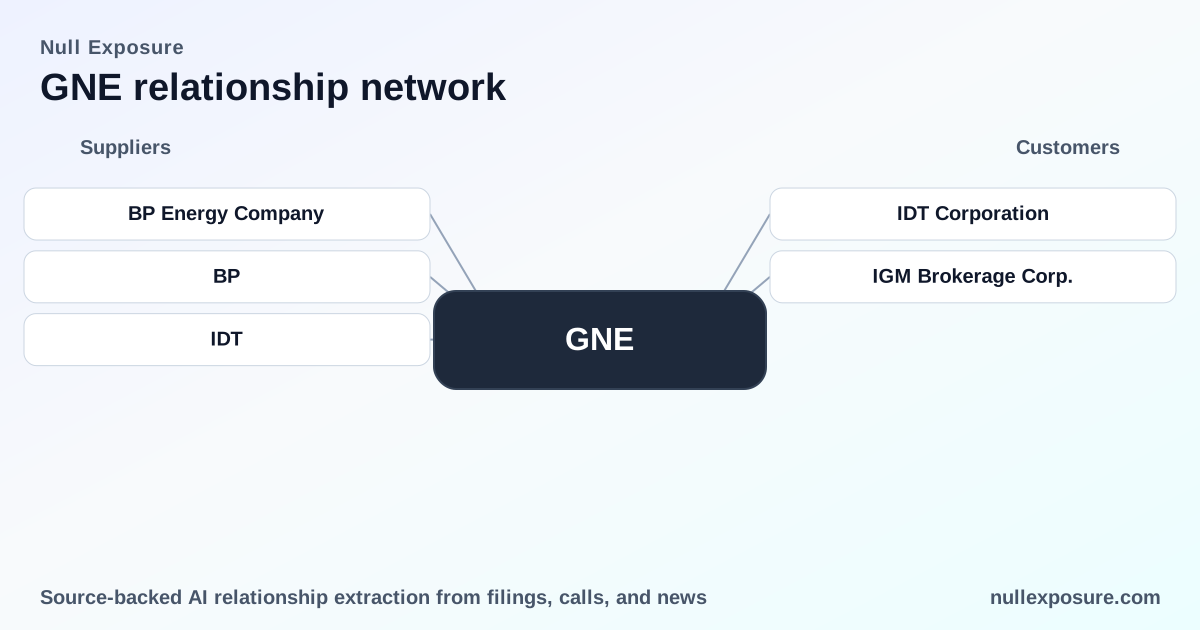
BP Energy Company — FY2024 10‑K
Genie discloses that certain of its REPs are party to an Amended and Restated Preferred Supplier Agreement with BP Energy Company, with historical references to an agreement term through November 30, 2023 in one filing excerpt, and treatment of restricted cash set aside under the agreement. According to the FY2024 10‑K, amounts of restricted cash short‑term were set aside in accordance with that preferred supplier arrangement. (Source: Genie Energy FY2024 10‑K, period ended December 31, 2024.)
BP (BP plc / BP Energy Company) — FY2024 10‑K, collateral and tenors noted
The FY2024 filing also states that, at December 31, 2024, restricted cash of $1.1 million and trade receivables of $68.8 million were pledged to BP as collateral for trade payables to BP totaling $24.2 million, and that the preferred supplier agreement was in effect through November 30, 2026. This shows BP functioning as both a commercial supplier and a secured counterparty for Genie’s working capital flows. (Source: Genie Energy FY2024 10‑K, period ended December 31, 2024.)
IDT Corporation — QuiverQuant news item, Q3 2025 reporting mention
A March 2026 news summary of Genie’s Q3 2025 results references an amount “Due to IDT Corporation,” indicating a short-term payable relationship recorded in period reporting. This is presented as a current settlement item rather than a long-term strategic framework. (Source: QuiverQuant news coverage of Genie Energy Q3 2025, published March 2026.)
What the constraint signals mean for corporate risk and strategy
The extracted constraints from the public text populate a compact profile of supply-side behavior and scale:
- Spot contracts are a material operational tool. GRE’s REPs actively buy and sell in the spot market to reconcile customer loads against bulk or block purchases, implying ongoing exposure to intraday and short‑term price swings and hedging settlements. This increases margin variability but is necessary to match retail load. (Company-level signal from FY2024 disclosures.)
- Framework agreements coexist with spot activity. The preferred supplier agreement with BP is a clear example of longer-tenor contracting layered over spot operations; that hybrid model lowers execution risk for baseline volumes while preserving flexibility. (BP excerpts in FY2024 10‑K name the agreement.)
- Genie acts as buyer and is spending at scale. The firm reported purchase commitments of $134.7 million as of December 31, 2024, of which $123.0 million relates to electricity — a non-trivial procurement profile for a company of this market capitalization and revenue. Large spend commitments raise counterparty concentration and collateral concerns. (Source: Genie Energy FY2024 10‑K.)
- Collateral arrangements affect liquidity. The pledge of restricted cash and receivables to BP indicates that supplier relationships influence Genie’s short-term liquidity cushions and the company’s ability to access working capital under stress. (Source: Genie Energy FY2024 10‑K.)
If you want to map supplier exposure quantitatively across more counterparties, the platform page consolidates these relationship attributes: https://nullexposure.com/.
Investment implications and recommended diligence checklist
For investors or operators assessing Genie’s supplier risk, prioritize the following areas in your due diligence:
- Contract renewal and termination terms with BP. Confirm current status beyond the FY2024 disclosure and any embedded credit triggers that could accelerate collateral calls.
- Hedging policy and net open position. Understand how spot trading is sized relative to block purchases and whether hedges are dynamic or fixed.
- Working capital sensitivity. Model scenarios where wholesale prices spike and collateral calls increase; the $134.7 million purchase commitment baseline is a useful starting point.
- Counterparty diversity. Evaluate how concentrated procurement is by supplier and whether single-supplier dependency could amplify operational disruptions.
These are the direct levers that will move Genie’s margins and cash flow — focus your conversations with management on contractual covenants, collateral mechanics, and the practical day‑to‑day execution of load balancing.
Bottom line and next steps
Genie Energy runs a retail supply business that is economically exposed to wholesale procurement dynamics and operational collateral arrangements. The public record makes clear that BP is a strategic supplier with active collateral and preferred-supplier links, and that spot-market trading is a normal part of Genie’s operating rhythm; smaller payables such as the one to IDT show routine vendor relationships. For investors, the interaction of spot exposure, a $100M+ purchase commitment profile, and supplier collateral arrangements creates both earnings leverage and liquidity risk that deserve focused monitoring.
To explore consolidated supplier intelligence and supplier-level signals across multiple issuers, visit https://nullexposure.com/. If you want a tailored rundown of supplier exposures by counterparty for Genie or peer utilities, request an in-depth report at https://nullexposure.com/ and we will assemble the relevant feeds and filings.