Genco Shipping & Trading Ltd (GNK): a supplier-focused counterparty and constraints brief for investors
Genco is a pure-play dry bulk shipping owner-operator that monetizes by owning a modern fleet and chartering vessels into spot and period markets while managing financeable asset lives and dividend distributions to equity holders. Revenue is driven by freight rates and fleet utilization; capital allocation choices (dividends, debt sizing, vessel sales) determine free cash flow available to investors. For anyone evaluating GNK as a supplier counterparty or provider of services to a shipping portfolio, the counterparty map below and the company-level constraints signal where operational fragility and negotiating leverage live. Visit the NullExposure homepage for broader counterparty intelligence: https://nullexposure.com/
Quick conclusion for capital allocators
Genco runs a classic asset-backed operating model: capital-light in operations but capital-intensive in balance sheet, where lenders, technical managers, and specialist advisers are structural to operations and distress avoidance. The company demonstrates diversified lending relationships and outsourced technical management, but insurance and P&I structures are company-critical, creating a single-point dependency that investors must underwrite.
Who actually does business with GNK — a counterparty map
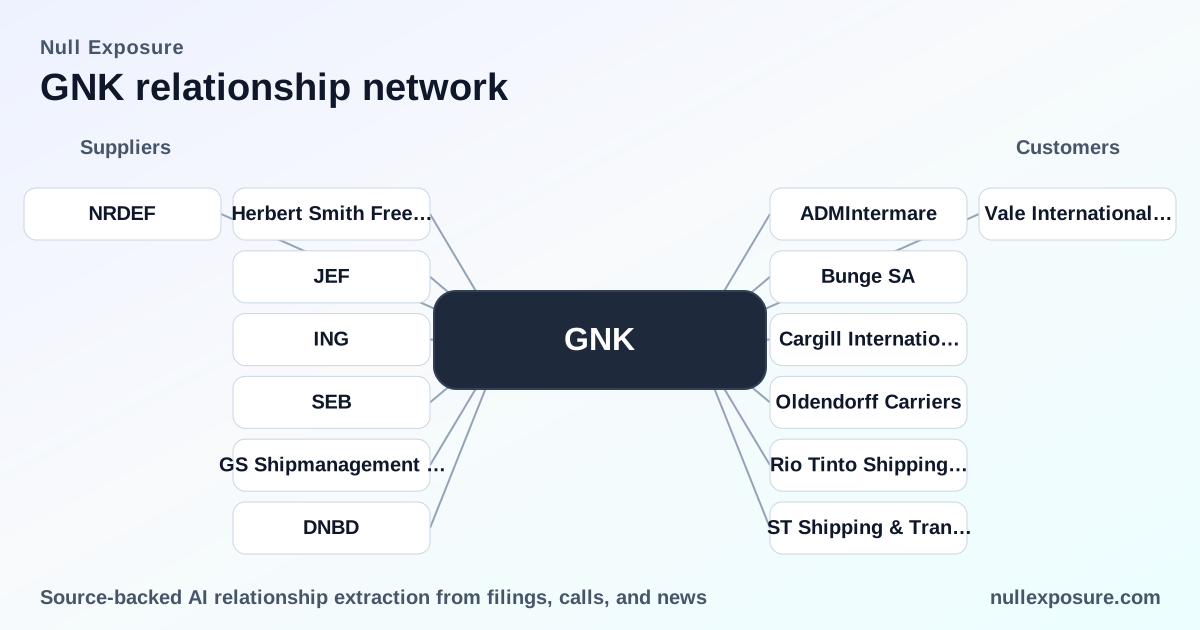
Below are the supplier and advisor relationships surfaced in recent public reporting. Each entry is a plain-English summary with the public source cited.
- Herbert Smith Freehills Kramer (US) LLP — Legal counsel to Genco in the context of strategic transaction activity and corporate defence. According to coverage of Genco’s response to a non-binding proposal in January 2026, Herbert Smith Freehills Kramer is serving as legal counsel to Genco (Cyprus Shipping News, Jan 16, 2026).
- Jefferies LLC — Financial advisor engaged by Genco for strategic evaluation and to advise the board during contested proposals. Public notices around the January 2026 takeover storyline list Jefferies as Genco’s financial advisor (Manila Times / GlobeNewswire, Jan 14, 2026; Cyprus Shipping News, Jan 16, 2026).
- ING — Participant lender in a revolving credit facility upsizing that expanded GNK’s committed bank group. Management named ING among lenders joining the upsized facility in the Q4 2025 earnings-call transcript (InsiderMonkey transcript of GNK Q4 2025 earnings call).
- SEB (Skandinaviska Enskilda Banken) — Another bank participant in the revolver upsizing; listed by management alongside Nordea, DNB and ING in the Q4 2025 call (InsiderMonkey, Q4 2025).
- GS Shipmanagement Pte. Ltd — Technical manager handling day-to-day fleet technical management, accountable for routine maintenance and operational readiness under oversight from the company’s New York management team; detail is drawn from GNK’s 10‑K summary as reported in the press (TradingView summarizing GNK SEC 10‑K, Mar 2026).
- DNB — Named as a participating lender in the upsized revolving credit facility in the Q4 2025 management commentary (InsiderMonkey Q4 2025 transcript).
- Nordea — Also a participant in the same revolving credit facility; management listed Nordea as part of the lender syndicate in the Q4 2025 earnings call transcript (InsiderMonkey Q4 2025).
Why these relationships matter to investors
Genco’s operating model relies on a small set of functional relationships that are operationally critical, contractually significant, and finance-enabling. The revolving credit facility syndicate (Nordea, DNB, ING, SEB) supplies committed liquidity and sets financial covenants that determine fleet investment flexibility. Technical management via GS Shipmanagement externalizes execution risk but concentrates operational control outside the balance sheet, which is efficient but creates vendor dependence. Legal and financial advisers are invoked during strategic stress or change-of-control activity and indicate active market interest in GNK’s corporate value.
For more detail on counterparty exposures across shipping names, see the research hub at https://nullexposure.com/
Operating model characteristics that drive valuation and risk
- Contracting posture: GNK operates with a mix of long-term and spot charter exposure, backed by bank facilities rather than sponsor capital, implying credit discipline driven by lender covenants. The presence of a multi-bank revolver upsizing suggests management prefers committed bank liquidity to support working capital and growth optionality.
- Concentration and counterparty criticality: The technical manager relationship centralizes day‑to‑day fleet reliability with GS Shipmanagement, which is highly material to operability; likewise, P&I and insurance frameworks (see constraints below) are structurally critical. Lender diversification across several Nordic and international banks reduces single-credit concentration but keeps GNK exposed to syndicated bank lending cycles.
- Maturity and operational outsourcing: Outsourced ship management implies operational maturity—professionalized third-party managers plus New York oversight—reducing in-house crew and technical overhead but increasing reliance on vendor SLAs and third-party performance.
- Contractual leverage in events: The hiring of Jefferies and Herbert Smith Freehills during a contested proposal signals preparedness to defend valuation and execute structured responses, and that GNK treats strategic offers as material events requiring specialist advisers.
Company-level constraints investors must underwrite
Two firm-wide constraints stood out in reporting and filings and should be integrated into underwriting models as company-level signals rather than counterparty-specific items:
- Insurance is critical. GNK discloses that any uninsured or underinsured loss could materially harm results, cash flows, and dividend capacity, making insurance adequacy a systemic risk to the equity case (company filings and risk disclosures, FY2026 commentary).
- Service-provider reliance for liability mitigation. Genco uses Protection & Indemnity (P&I) Associations for mutual insurance against tort and certain contractual claims; this structure signals a membership-based, pooled-risk model that is essential to limit downside in casualty or pollution events (company filings / FY2026 risk sections).
Both constraints imply that investors must monitor insurance coverage terms, P&I membership status, and any gaps that could create outsized cash demands after a casualty.
If you want an investor-grade counterparty report for GNK or comparable shipping names, start here: https://nullexposure.com/
Investment implications and risk call
- Upside drivers: Management’s access to an expanded revolving facility and a modern technical manager supports fleet availability and earnings capture when freight markets rally. Analyst sentiment is net positive on near-term earnings (consensus target in data).
- Downside risks: Insurance shortfalls and operational dependency on third-party technical managers are the top idiosyncratic threats to distributable cash. Loan covenant shock or a sudden withdrawal from key bank participants would compress liquidity quickly.
- Governance and strategic posture: The presence of high-quality external advisers during takeover activity is a governance signal—management defends valuation and has transactional options.
For deeper counterparty profiling or to commission an exposure brief tied to GNK’s lenders and service providers, go to https://nullexposure.com/ — our research team can deliver tailored reports and monitoring.
Final takeaway: GNK is a fleet-owning operator whose equity case hinges on freight cycles, secured bank liquidity, and intact insurance/P&I relationships; lenders and technical managers are not peripheral — they are core to the company’s ability to operate and pay dividends.