Global Net Lease (GNL-P-A): Preferred Income with Active Governance Influence
Global Net Lease Inc.’s 7.25% Series A cumulative redeemable preferred (GNL-P-A) provides a fixed-income entry point into a net-lease REIT structure where cash generation is driven by long-term, triple-net leases to institutional-quality tenants. The security monetizes through prioritized, cumulative dividend claims on REIT cash flow and optional redemption mechanics, delivering target yield for income-focused investors while exposing holders to governance dynamics that affect board composition and strategic direction. For a deeper supplier-risk and governance view, visit https://nullexposure.com/.
How this preferred security functions and why investors care
GNL-P-A is a cumulative preferred share carrying a 7.25% coupon, structured to preserve dividend accrual even when common dividends are suspended. That legal priority grants holders more predictable income than common equity in stress scenarios. The preferred is redeemable, which creates a runway for issuer-driven capital actions such as call/redemption at predefined terms.
Publicly available operating metrics for the security are limited in the provided record: several standard balance-sheet and market capitalization fields are not populated, though the equity’s recent trading band shows a 52-week high of $24.23 and low of $19.36, indicating a market trading range that reflects interest-rate and credit considerations. The combination of cumulative dividends and redeemable mechanics is the core driver of investor return for GNL-P-A.
The business model in plain language: operating characteristics that matter to suppliers and partners
Global Net Lease runs a classic net-lease REIT model: it acquires commercial property, leases it long-term on net terms so tenants assume many operating expenses, and monetizes via rent rolls and capital-market transactions. For suppliers and counterparties, that structure implies:
- Contracting posture: Long-term leases with stable counterparty obligations produce predictable cash flow and limited lease renegotiation frequency.
- Concentration and criticality: Portfolio diversification across tenants reduces single-tenant exposure, but individual large tenants remain critical to cash flow if concentration exists at the property level.
- Maturity: The REIT model is operationally mature; growth depends on acquisition and financing activity rather than early-stage product development.
- Counterparty risk visibility: Supplier payment profiles are effectively linked to tenant credit and lease structure rather than day-to-day operational volatility.
These characteristics make GNL attractive to suppliers seeking steady receivables, while imposing an expectation of consistently enforced lease covenants and landlord governance.
Key relationships that shape governance and strategy
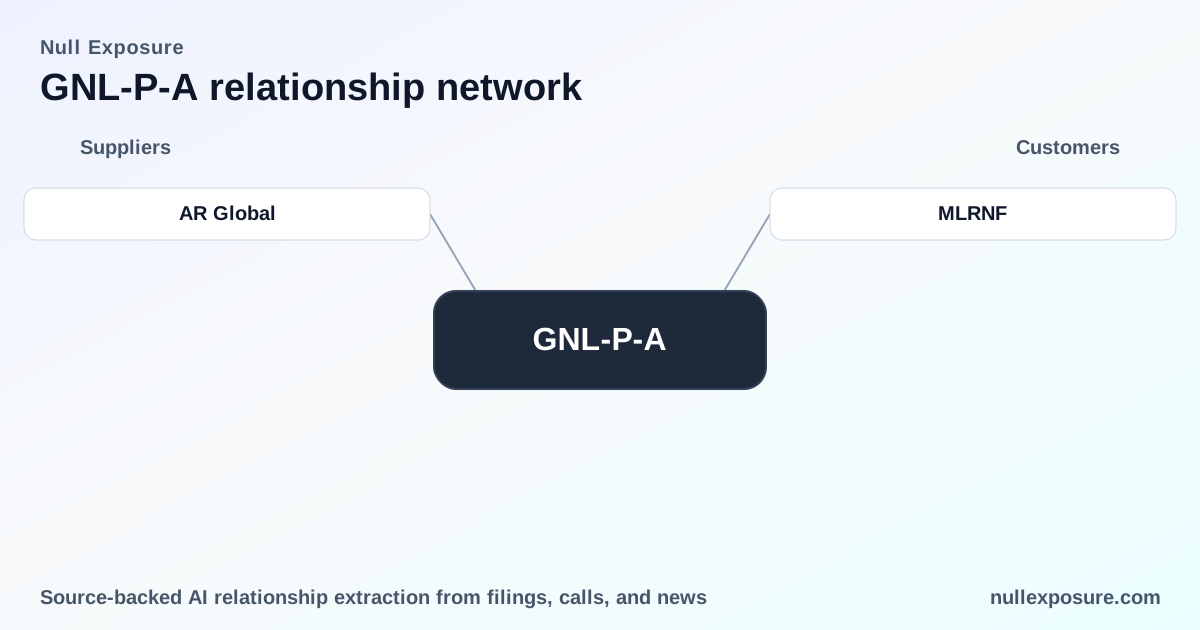
AR Global — governance influence through external management channels
According to a GlobeNewswire release dated December 19, 2022, GNL and related entities amended bylaws in July 2022 to allow boards to include “up to” two managing directors designated by AR Global, reflecting a formal governance channel for the external manager to place directors (https://www.globenewswire.com/news-release/2022/12/19/2576492/0/en/Blackwells-Capital-Announces-Lawsuit-Against-Global-Net-Lease-Inc-and-The-Necessity-Retail-REIT-Inc.html). This amendment signals direct governance influence by AR Global through designated managing directors, which has material implications for strategic decisions and board composition.
(That news release is the only relationship record surfaced in the provided materials for GNL-P-A in FY2022.)
What the absence of reported constraints tells investors
The collected supplier-level constraints show no explicit contractual limitations or supplier-specific constraints in the provided material. This absence is itself a company-level signal: no supplier-side encumbrances or vendor-specific constraints were recorded in the data set, which implies the principal near-term governance and counterparty exposures to monitor are board interactions and managerial control rather than supplier contract covenants.
Practical implications for investors and supplier partners
- Governance risk is front-and-center. The AR Global bylaw amendment to allow managing directors to be designated by the manager constitutes a concentration of influence at the board level, which can directly affect asset-level dispositions, capital allocation, and dividend policy.
- Income profile is stable but not opaque. The preferred’s cumulative dividend provides protection relative to common shares, yet several public metrics commonly used by analysts (market cap, EPS, dividend dates) are not populated in the provided record, requiring investors to complement this record with current market data before sizing positions.
- Operational counterparties can expect predictability. Long-term net leases transfer routine operating obligations to tenants, preserving landlord cash flow predictability but also connecting supplier payment health to tenant credit quality.
If you are evaluating supplier exposure or negotiating contracts with GNL-affiliated entities, this combination — stable lease cashflows plus concentrated managerial influence — should guide bargaining posture and covenant design.
For a broader governance and supplier-risk screen, consult our investor resources at https://nullexposure.com/.
Signals to monitor quarter to quarter
- Board appointments and bylaws changes: any further adjustments like the July 2022 amendment are direct levers of strategic change.
- Dividend notices and redemption actions: cumulative dividends create accruals that affect balance-sheet priorities if cash becomes constrained.
- Tenant concentration shifts: acquisitions or dispositions that change major tenant exposure will materially alter counterparty risk for suppliers.
Recommendation and next steps for sophisticated investors
GNL-P-A is structured for income stability through cumulative dividends and the legal priority of preferred equity. However, governance influence exercised by AR Global is a material, observable factor that investors must price into valuation and covenant negotiations. Investors and operator-partners should combine this governance view with current market pricing, tenant roll analytics, and the issuer’s most recent filings before establishing or expanding exposure.
Explore our supplier-governance analyses and monitor ongoing updates at https://nullexposure.com/. For a tailored diligence brief that integrates governance events with tenant-level cash-flow analysis, request an engagement via our homepage.