Generac (GNRC) — supplier relationships, operating posture, and what investors should price in
Generac operates as a designer and marketer of backup power and distributed energy products, monetizing through equipment sales (engines, generators, inverters, controls), aftermarket parts and services, and project-level deployments with utilities and commercial customers. The company sources components globally and relies on a combination of contract manufacturers and third‑party logistics to deliver finished systems; where Generac secures differentiated control electronics and inverters it converts product capability into competitive positioning in utility-interactive and fast‑response markets. For investors, the key levers are supply‑chain concentration, supplier criticality, and the company’s contracting posture — all of which materially affect margins, delivery risk, and product roadmaps. Learn more about supplier intelligence at https://nullexposure.com/.
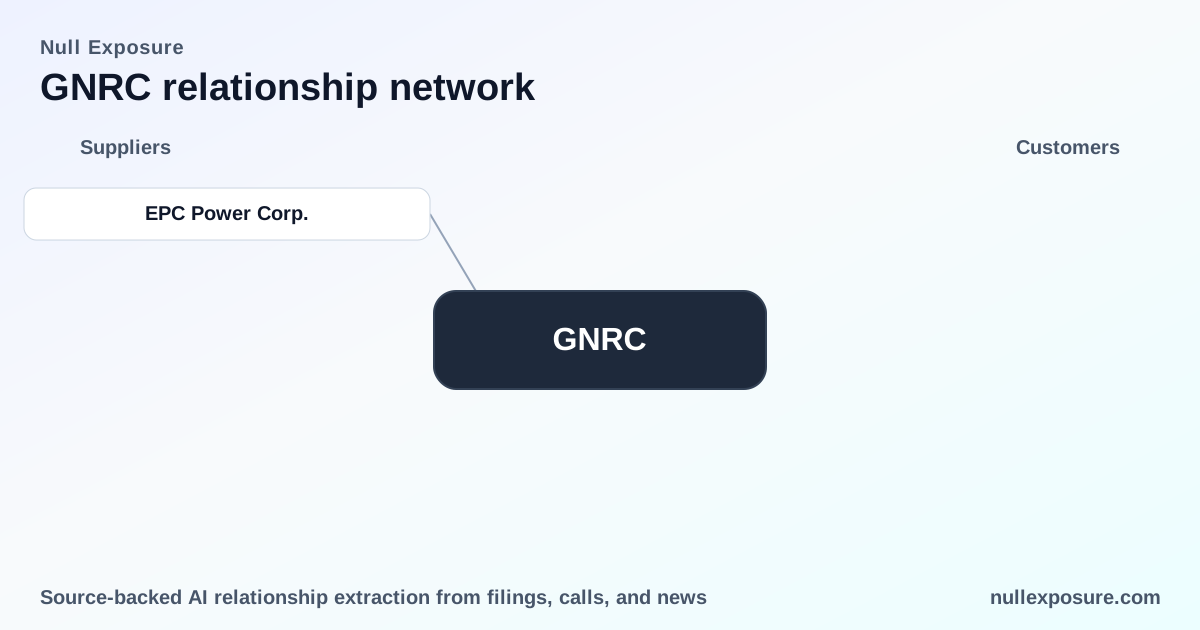
EPC Power Corp.: a targeted technical supplier with grid-scale implications
Generac is integrating EPC Power’s inverters and advanced controllers to deliver ultra‑fast response solutions that preserve continuity during grid disturbances and satisfy utility performance requirements. This is a tactical supplier relationship that strengthens Generac’s position in grid-interactive and resiliency product lines. According to a news report on March 9, 2026, Generac will utilize EPC Power’s inverters and controllers to deploy these rapid‑response solutions (Intellectia, 2026-03-09).
Why this matters: EPC Power contributes a capability — rapid inverter/controller response — that converts product specifications into utility‑grade performance and could accelerate Generac’s penetration of demand‑response and microgrid segments.
What the company-level constraints reveal about Generac’s operating model
Generac’s supplier constraints collectively describe an operational posture that is globally sourced, reliant on external manufacturers, and managed on shorter contract horizons. These are company-level signals drawn from public disclosures and supply‑chain commentary:
- Short-term contracting posture. Generac states it does not typically maintain long-term supply contracts for many components, which increases exposure to raw-material and component price volatility and availability shocks.
- Global sourcing and logistics. The company sources component parts from an extensive global network of suppliers, which broadens vendor options but raises geopolitical, tariff, and transit‑time risks.
- Critical supplier footprint. Generac classifies a subset of its suppliers as critical and subjects them to cybersecurity and risk assessments, signaling both concentration and high operational dependency.
- Dual supplier roles: manufacturer and service provider. Generac depends on contract manufacturers to deliver finished products to its designs and uses third‑party warehouses to meet rapid-response inventory requirements.
These constraints create a tradeoff: flexibility to switch suppliers and access global capacity versus heightened exposure to supply interruptions, single‑source failures, and price swings. Investors should price an elevated operational volatility premium into forecasts until evidence shows longer-term contracting or de‑risking progress.
How each documented relationship fits into the picture
EPC Power Corp. — Generac will utilize EPC Power’s inverters and advanced controllers to deploy solutions capable of ultra‑fast response times, ensuring continuity during grid disturbances and meeting utility requirements. (Intellectia news, March 9, 2026)
This is the only supplier relationship explicitly documented in the captured results; it is a capability supplier rather than a raw‑materials vendor and therefore represents strategic technology sourcing rather than commodity procurement.
Operational and financial implications investors should track
- Margin pressure from component procurement. Short-term contracts and global sourcing leave Generac exposed to commodity and FX swings; procurement cost pass‑through to end customers is limited in competitive segments.
- Concentration risk and single‑source suppliers. Generac acknowledges dependence on a small number of contract manufacturers and single‑source suppliers for certain products and components, an acute operational vulnerability for parts with long lead times or regulatory approvals.
- Cybersecurity as operational risk. The company conducts cybersecurity health assessments on critical suppliers, making supplier IT posture a de facto operational control; any supplier breach can translate directly into production disruption or intellectual property compromise.
- Product differentiation and market access. Relationships like the EPC Power tie provide technical differentiation that can unlock utility contracts and higher‑margin solutions businesses, shifting the revenue mix over time toward systems and services.
Risk checklist for due diligence
- Concentration: quantify the percentage of procurement tied to the top 5 contract manufacturers and any single‑source parts.
- Contract tenor: validate how many suppliers are on short‑term purchase orders versus multi‑year agreements.
- Cyber posture of critical suppliers: request evidence of third‑party cybersecurity assessments and remediation roadmaps.
- Inventory and logistics exposure: examine third‑party warehouse coverage and contingency plans for rapid‑response customer requirements.
For a deeper workflow on supplier risk assessments and to compare Generac’s posture across peers, visit https://nullexposure.com/ for tailored intelligence.
How operators should respond and what investors should watch next
Operators should prioritize contract reformation for the most critical components, expand multi‑sourcing where feasible, and formalize cybersecurity standards for supplier acceptance. Investors should watch three measurable signals in upcoming quarters: (1) any shift toward multi‑year supply agreements for critical inputs, (2) disclosure of supplier concentration metrics or alternative sourcing milestones, and (3) contract wins that explicitly credit supplier‑provided technical capabilities (for example, inverter/controller performance tied to utility procurement criteria).
Bottom line: position and path for value creation
Generac’s supplier architecture combines strategic technology partnerships (like EPC Power) with a global, contract‑manufacturing model that delivers flexibility but embeds meaningful operational risk. Investors should price in supply‑chain volatility and concentration risk today while valuing the upside from differentiated supplier technologies that enable utility and resiliency revenue streams. Engage directly on supplier concentration, contract tenor, and cybersecurity controls to convert qualitative supplier commentary into investable conviction. Learn more about supplier risk frameworks and sector comparisons at https://nullexposure.com/.