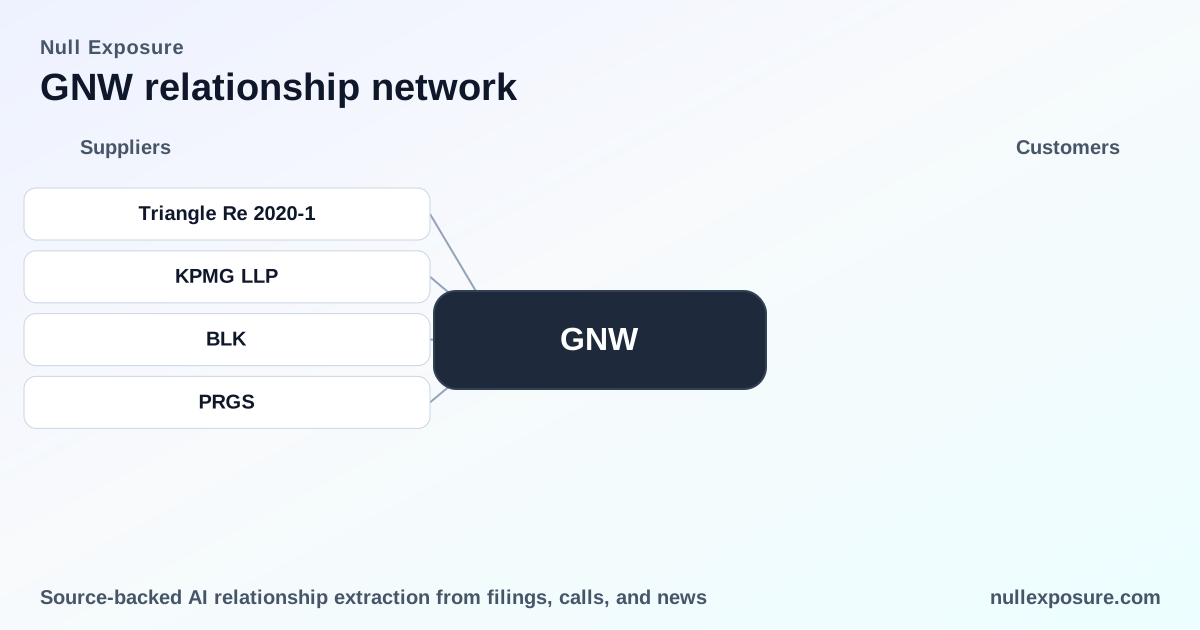
Genworth (GNW): Supplier map, contractual posture, and what investors should price in
Genworth operates as a multi-line insurance holding company that underwrites mortgage insurance, life and long-term care risks and manages associated investment and hedging programs. It monetizes through insurance premiums, reinsurance arrangements that shift loss volatility, investment income on reserves, and hedging strategies that reduce product market exposure. Key supplier relationships therefore influence capital flexibility, operational resilience, and collateral needs — all of which flow directly to free cash generation and balance‑sheet risk. For a concise supplier intelligence overview and ongoing tracking, see https://nullexposure.com/.
Fast take: operating posture and where suppliers actually matter
Genworth's supplier profile is a hybrid of capital counterparties, audit and professional services, asset managers used in retirement plans, and third‑party technology/service vendors. The company runs long-dated financing and hedges alongside short-term, renewable reinsurance treaties, and relies on large, rated counterparties for uncollateralized reinsurance capacity. Those choices create a mix of structural strengths—and clear operational dependencies.
- Contracting posture: Genworth carries long-term subordinated debt and interest rate hedges that lock in funding costs, alongside yearly-renewable reinsurance treaties for certain life products, indicating a dual horizon in its counterparty engagements.
- Concentration and counterparty standards: Management requires high-rated reinsurers to participate without collateral, signaling a deliberate tilt toward large‑enterprise partners.
- Critical dependencies: The holding companies depend on the cash flow and dividend capacity of operating affiliates (notably Enact) to meet obligations, making payment channels and servicer reliability functionally critical.
- Collateral and spend exposure: The company’s derivatives program creates material collateral posting obligations and cash margin needs, which translate into a high spend band for counterparties handling clearance and collateral management.
For ongoing supplier coverage and alerts, visit https://nullexposure.com/.
What each supplier relationship tells an investor (concise summaries)
Triangle Re 2020-1 — reinsurance capacity
Genworth Mortgage Insurance secured approximately $349.6 million of fully collateralized excess‑of‑loss reinsurance from Triangle Re 2020‑1 to protect mortgage insurance exposure, reflecting reliance on special‑purpose Bermuda reinsurers for catastrophe and credit layering. According to Bermuda Reinsurance Magazine (FY2020), this was structured as a fully collateralized placement that reduces Genworth MI’s direct capital volatility.
KPMG LLP — external auditor
Shareholders ratified KPMG LLP as Genworth’s independent registered public accounting firm for 2024, confirming continuity in external audit oversight and financial reporting controls often sought by institutional investors. A company notice reported on Aijourn (FY2024) records the ratification at the annual meeting.
BlackRock / BlackRock Inc. — retirement plan funds and litigation exposure
Genworth faces litigation tied to its use of BlackRock target‑date funds in a 401(k) plan, with allegations around fiduciary duty and relative fund performance; Genworth has appealed class certification issues up to the U.S. 4th Circuit. A news report on USAHerald (FY2025) outlines the underlying claim that BlackRock TDFs, selected for low fees, underperformed peers, while PlanSponsor (FY2024) noted the appellate proceedings over class status. This relationship is primarily plan‑sponsor exposure rather than an asset‑management commercial contract, but it carries governance and reputational implications.
Progress Software Corporation — MOVEit technology and breach impact
Genworth used components of the MOVEit file‑transfer system that were implicated in a 2021–2023 vulnerability exploited by attackers; the incident placed Genworth among a wide set of organizations that had to address potential sensitive‑data exposure and notification obligations. Coverage aggregated by a Class Action Lawyers bulletin (FY2023) lists Genworth among affected entities and highlights third‑party vendor risk in critical data flows.
How these relationships map to procurement and risk management
The relationship slate reveals a clear set of operational priorities and vendor risk controls:
- Capital and underwriting partners: Use of Bermuda special‑purpose reinsurers and high credit standards for uncollateralized participation indicates management prioritizes rated counterparties to preserve capital efficiency. This reduces counterparty credit risk but increases legal and documentation complexity.
- Service provider dependence: Genworth outsources critical functions—loan servicing, death‑record searches, and data transfers—to third parties. The MOVEit incident underscores how vendor security lapses translate directly into remediation costs, notifications and potential regulatory scrutiny.
- Collateral intensity and liquidity demands: The company’s derivatives exposures require material collateral posting and cleared swap margins, which is consistent with a high spend band on custody/clearing and collateral management services; management disclosed large potential posting figures tied to its derivatives portfolio as of December 31, 2024.
- Audit and governance: Retention of a Big Four auditor supports investor confidence in controls, but litigation around plan investments flags a governance review item for fiduciary processes.
All of these are company‑level signals: while certain constraints explicitly reference entities like Enact (on which holding company liquidity depends), the overall supplier posture is diverse and leans toward large, rated partners and highly managed short‑term treaty relationships.
Explore detailed supplier profiles and tracking tools at https://nullexposure.com/ to monitor counterparties, contracts, and materiality thresholds.
Investment implications and what to watch next
- Balance‑sheet sensitivity: The mix of long‑dated subordinated debt and active hedging programs makes Genworth sensitive to counterparty credit re‑pricing and collateral shocks; any increase in derivative valuation losses will press liquidity and counterparty posting requirements.
- Operational risk path: Data‑transfer and servicing vendors are high‑impact single points of failure; incidents like MOVEit create both remediation expenses and regulatory attention that compress margins.
- Legal and governance overhangs: The BlackRock 401(k) litigation introduces reputational and potential settlement risk; while this is plan‑sponsor litigation rather than core insurance exposure, outcomes influence executive distraction and potential compliance costs.
- Counterparty selection as a strength: Requiring high ratings for uncollateralized reinsurers and using fully collateralized structures for special‑purpose placements protect capital ratios and reduce unexpected credit losses.
If your analysis depends on real‑time supplier signal tracking, consider a subscription to Null Exposure’s supplier intelligence at https://nullexposure.com/ for ongoing updates and alerts.
Bottom line: Genworth’s supplier relationships reflect a deliberate mix of capital efficiency and operational outsourcing that reduces certain balance‑sheet risks while concentrating reliance on large, rated counterparties and critical service providers. Investors should price in collateral and liquidity sensitivity from the derivatives program, vendor security risk, and the governance costs tied to retirement plan litigation when modeling downside scenarios.