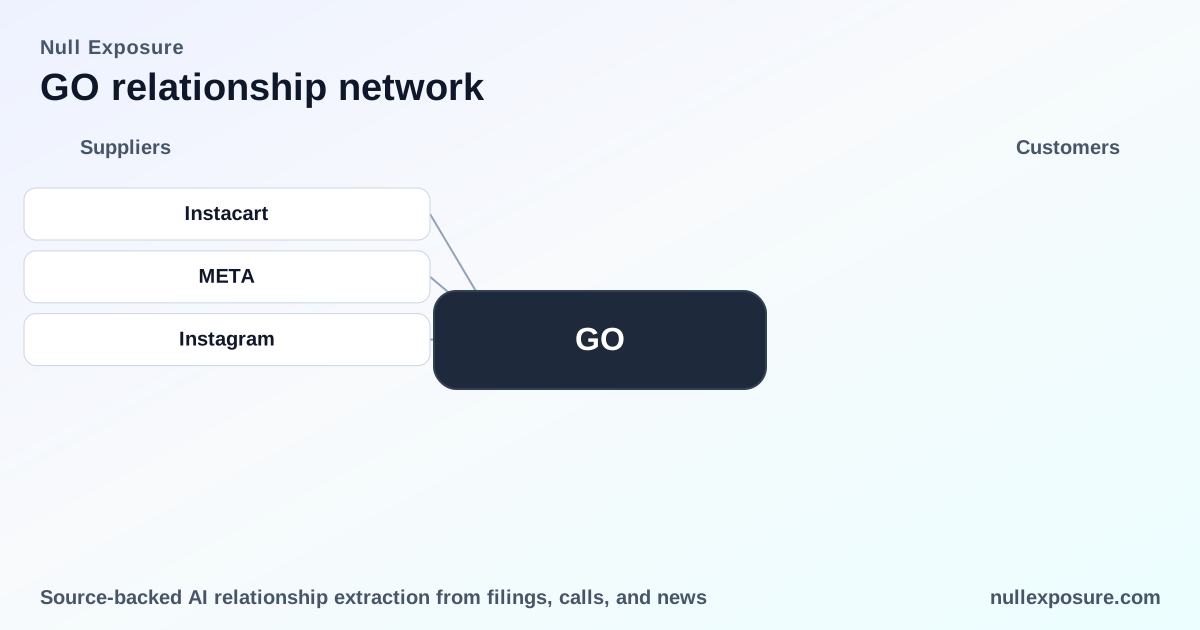
Grocery Outlet (GO): Supplier and Platform Relationships — Instacart, Facebook, Instagram
Grocery Outlet operates a discount grocery chain that monetizes by opportunistic purchasing of name-brand goods and converting inventory turns through retail store sales, supported by a network of leased stores and third-party distribution centers. The company leverages a centralized buying team to source deeply discounted branded products, uses long-dated real estate leases to secure store footprints, and increasingly partners with digital platforms to convert marketing into immediate online purchases. Revenue drivers are retail throughput and margin capture on opportunistic buys; cost and operational risk center on distribution capacity and lease obligations. For an interactive map of supplier exposure and platform ties, visit https://nullexposure.com/.
Why the recent partnership activity matters for investors
Grocery Outlet’s recent marketing and commerce moves shift incremental sales from in-store impulse to platform-driven, on-demand fulfillment. The company’s debut of a shoppable livestream series — distributed on social platforms and tied to Instacart purchase flow — converts audience attention into immediate transactions, accelerating the path from marketing spend to revenue. This is a distribution and conversion play: broaden addressable reach, shorten checkout friction, and increase velocity of turnover for off-price inventory.
Early evidence shows Grocery Outlet is executing a multi-channel fulfillment strategy rather than depending solely on store throughput. That expands near-term customer acquisition options while adding dependency on third-party commerce platforms. For a quick look at partner exposure and supplier posture, see https://nullexposure.com/.
The campaign: what was announced
Grocery Outlet launched the “Xtreme Value Stock Up Show” as a shoppable livestream designed to let viewers buy featured products instantly through platform channels. The program is both a marketing vehicle and a digital sales channel designed to accelerate conversion of opportunistically acquired branded inventory into cash flow.
Who Grocery Outlet is working with (relationship-by-relationship)
Below are the relationships mentioned in the reported coverage and what each connection practically implies.
Instacart
Grocery Outlet’s livestream lets viewers browse and purchase featured products instantly through Instacart while watching, enabling same-day fulfillment through Instacart’s delivery and pickup network. This integrates Grocery Outlet’s promotional inventory with a major grocery fulfillment platform, converting live viewers into immediate orders. (According to a GlobeNewswire press release, Feb 3, 2026; also syndicated via Finviz and Bluebook Services.)
The livestream debuts on Instagram as one of the distribution endpoints, giving Grocery Outlet access to a large social audience and in-platform discovery features that support video-driven commerce. Instagram placement positions the brand to capture younger and mobile-first shoppers during live programming. (As reported by SahmCapital and echoed in Finviz coverage, Feb 2026.)
Grocery Outlet is running the show simultaneously on Facebook, leveraging its broad reach and established commerce integrations to convert audiences into purchases. Facebook distribution complements Instagram and targets a different user cohort with potentially higher household purchase power. (Reported by SahmCapital and Finviz, Feb 2026.)
What the company-level constraints reveal about operating posture
The company disclosures and constraint excerpts provide a clear picture of Grocery Outlet’s supplier and operating model characteristics:
-
Contracting posture is mixed: Grocery Outlet runs long-term real estate commitments — lease terms typically ten years with multiple renewal options — while deliberately keeping short-term supplier commitments for many staples to preserve purchasing flexibility and opportunism. The lease profile is a structural fixed-cost commitment, while procurement retains tactical agility. (Company filing excerpts referencing lease terms and supply sourcing.)
-
Concentration and counterparty profile: The business is a preferred buyer for large CPGs, able to purchase significant volumes quickly; that positions Grocery Outlet as a large-enterprise customer for brand manufacturers and gives it negotiating leverage when inventory dislocations occur. (Management commentary on relationships with leading CPGs.)
-
Geographic sourcing and distribution criticality: The company sources a portion of goods internationally and operates a hybrid distribution model with both company-operated and third-party distribution centers; distribution disruptions are explicitly material to operating performance, establishing distribution as a critical operational risk. (Disclosure on sourcing outside the U.S. and distribution center operations; risk language on distribution interruption.)
-
Relationship roles and maturity: Grocery Outlet functions as distributor and retail operator, dealing with consolidated manufacturers; it also leverages third-party service providers for audit, security, and other vendor services — reflecting a mature, actively managed supplier ecosystem. (Excerpts on distribution centers, manufacturer consolidation, and third-party vendor management.)
-
Spend profile is bifurcated: Real estate lease commitments create $100m+ scale obligations (undiscounted future lease payments of $451.5 million as of Dec 28, 2024), while shorter-term purchase obligations can be smaller and immediate (total purchase obligations of $8.3 million payable in fiscal 2025). This mix creates large fixed-cost leverage from leases alongside relatively low near-term contracted purchase commitments. (Company filing, Dec 28, 2024.)
Investment implications — risk and upside you should weigh
-
Upside: The live shoppable format is a low-friction path to accelerate turnover of opportunistic inventory and increases average store reach without adding store-capex; platform partnerships can lift same-day sales and reduce markdown cycles. If adoption scales, incremental gross margins on rapid-turn branded goods will improve cash generation.
-
Risk: Distribution and fulfillment are core operational bottlenecks. A material disruption to DC capacity, third-party fulfillment partners, or platform integrations could compress margins and slow inventory velocity. Long-dated lease obligations amplify operational leverage during downturns, while short-term supplier contracts preserve buying flexibility but limit guaranteed supply continuity for staples.
-
Platform dependency: Integration with Instacart, Facebook, and Instagram increases customer reach but places transactional flow and user experience partially under third-party control — a strategic trade-off between scale and operational sovereignty.
Visit https://nullexposure.com/ for a concise supplier-risk dashboard and to model counterparty exposure for GO.
Bottom line and recommended focus for investors and operators
Grocery Outlet is executing a pragmatic omnichannel move: preserve buying agility, lock down store footprint through long-term leases, and use platform partnerships to accelerate conversion of promotional inventory. Key investor takeaways: distribution resiliency and lease leverage are the principal risks; platform-driven commerce is the immediate growth lever. Operators should prioritize distribution capacity and integration reliability; investors should focus on how livestream conversion metrics and platform economics translate to sustained margin improvement.
For an at-a-glance view of Grocery Outlet’s supplier exposures and to track updates from these platform relationships, visit https://nullexposure.com/ and review the supplier profiles tied to GO.