Genuine Parts Company (GPC): Supplier Relationships, Contracting Risks, and Strategic Advisors
Genuine Parts Company distributes automotive, industrial, office and electrical replacement parts through scale wholesale networks and brand franchises (notably NAPA), monetizing via distribution margins, inventory turnover and supplier-managed incentives; the business generated roughly $24.3B in trailing revenue and trades with a market capitalization near $14.5B, while operating margin sits in the mid-single digits. For investors and operators, the supplier story is a mix of high purchasing concentration, framework contracting, and short payment cycles—conditions that create both bargaining leverage and single-counterparty fragility. Explore further and see supplier-level intelligence at https://nullexposure.com/.
How GPC structures supplier relationships and why it matters
GPC uses a combination of non‑exclusive, continuing distributor agreements and annual purchasing accords that embed inventory purchase incentives. The company reports that most industrial suppliers operate under framework-style agreements that are treated as continuing until terminated, while payment terms across the supplier base range from 30 to 360 days. Those two facts together define GPC’s operating posture: highly centralized purchasing with flexible exit options for both parties and working capital dynamics that shift economic power toward GPC when payment terms extend.
Company-level signals from filings show that supplier purchases are material to results—about 55% of automotive parts inventories came from 10 major suppliers in 2024, and ~46% of industrial purchases were from the top 50 strategic suppliers—which creates concentrated counterparty exposure even inside a framework-contract model. The filing also records confirmed obligations at year‑end (an excerpted figure of $3,331,385), and internal analysis flags that some supplier relationships sit in the >$100M spend band (constraint confidence 90%). These are company-level indicators that suppliers are both large and strategically important.
What the contracting constraints mean in practice
- Contract maturity and enforceability: Framework, non‑exclusive agreements reduce lock‑in but increase the real-world importance of supplier continuity—termination is possible but operationally disruptive.
- Working capital leverage: Payment terms up to 360 days transfer cash advantage to GPC, improving free cash flow while increasing supplier liquidity pressure.
- Concentration risk: Heavy spend concentration means supplier defaults or capacity shocks have outsized operational and margin impact.
- Supplier role complexity: GPC acts both as a buyer and a distributor/brand steward (e.g., NAPA lines), which complicates renegotiation dynamics and makes some supplier relationships commercially critical beyond pure price.
These constraints together describe a mature, centralized purchasing model with clear bargaining power but genuine external dependencies that require active supplier risk management.
Relationship roll call — every mentioned counterparty and what it implies
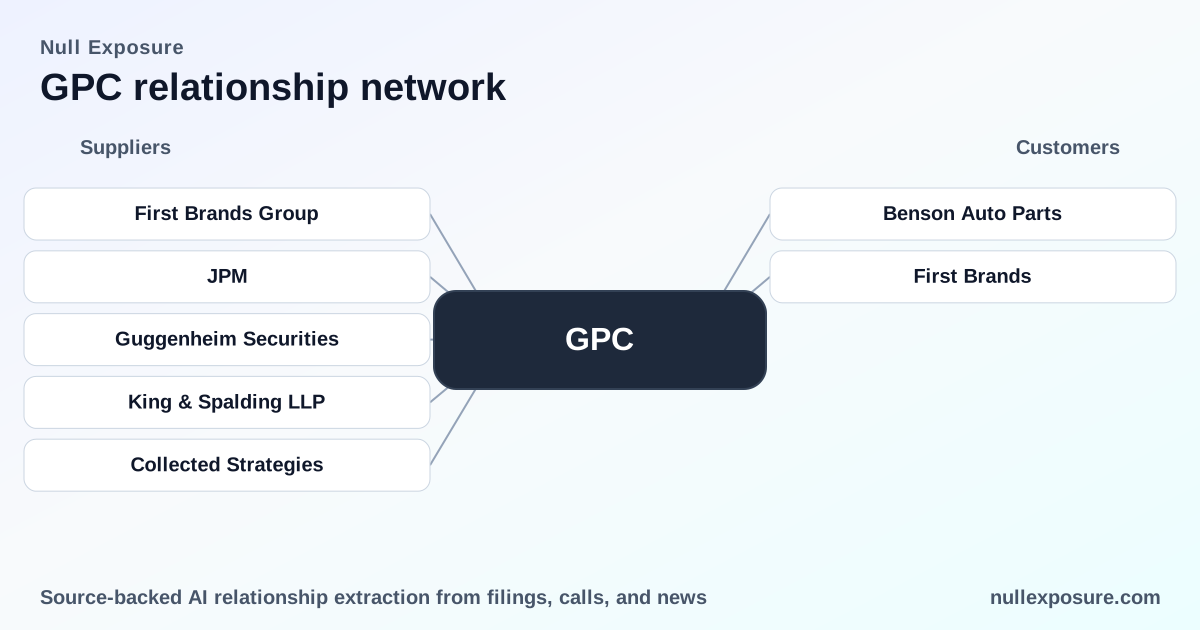
- First Brands Group — GPC described executing contingency plans after First Brands Group filed for bankruptcy, mobilizing alternative suppliers to maintain supply continuity during the disruption. This highlights GPC’s operational readiness to re-source but also confirms real exposure to supplier insolvency events (GPC earnings call, 2025 Q4).
- J.P. Morgan — J.P. Morgan is serving as a financial advisor to GPC in the company’s strategic division process, signaling a substantive corporate restructuring or transaction initiative with financial advisory support (news report from TheAutoChannel, Feb 20, 2026).
- Guggenheim Securities — Guggenheim Securities is also engaged as a financial advisor alongside J.P. Morgan, which implies a multi-advisor process and a potentially complex capital-structure or separation scenario (news report from TheAutoChannel, Feb 20, 2026).
- King & Spalding LLP — GPC has retained King & Spalding LLP as legal counsel for the division project, indicating that legal complexity and regulatory or contractual disentanglement will be central to the upcoming corporate action (news report from TheAutoChannel, Feb 20, 2026).
- Collected Strategies — Collected Strategies is acting as GPC’s strategic communications advisor, which signals planned public-facing messaging and stakeholder management around the division or transaction (news report from TheAutoChannel, Feb 20, 2026).
Each of the above relationships should be treated as an operational or strategic signal: supplier continuity was tested in 2025 Q4, and professional advisors are now actively engaged for a company-level transformation.
Strategic implications for investors and operators
GPC’s model delivers scale economics and working-capital advantage, but also concentrates operational risk in a small set of strategic suppliers. Investors should weigh the company’s durable distribution footprint and brand licensing against low reported profit margins (net profit margin approximately 0.27%) and the potential for margin compression from supplier disruptions. Operators and counterparties must be prepared for active re-sourcing activity—First Brands Group’s bankruptcy triggered immediate contingency mobilization—and for a corporate transaction process that will affect supplier contracts and communications strategy.
- Capital markets signal: Engagement of J.P. Morgan and Guggenheim plus King & Spalding indicates a credible and resource-heavy transaction process; anticipate contract reviews, potential carve-outs, and renegotiations as part of any division.
- Operational playbook: Maintain multiple qualified suppliers for critical SKUs; factor payment-term variability (30–360 days) into liquidity models and pricing.
- Counterparty monitoring: Track concentration metrics (top-10 and top-50 supplier shares) and confirmed obligations; these are leading indicators of where material risk sits.
If you require deeper supplier intelligence and continuous monitoring to navigate these dynamics, start here: https://nullexposure.com/.
Actionable checklist for counterparties and investors
- Audit contract termination clauses and renewal mechanics in your agreements with GPC; framework, non‑exclusive language is common but operational dependency remains high.
- Stress-test scenarios where one of the top suppliers fails or materially reduces supply; align contingencies with GPC’s demonstrated contingency playbook.
- Reconcile your payment profiles against GPC’s 30–360 day range and model cash-flow timing under different contract terms.
- Monitor advisor filings and public communications—financial advisors and legal counsel engagements are reliable early warnings of structural change.
Bottom line and next steps
GPC’s supplier model is strategically centralized, financially levered through long payment terms, and operationally vulnerable to concentration shocks. The recent bankruptcy interaction with First Brands Group and the simultaneous retention of senior financial, legal and communications advisors create a near-term window of elevated supplier and covenant activity that investors and operators must actively monitor.
For ongoing intelligence on GPC supplier dynamics and to plug supplier risk into financial models, visit https://nullexposure.com/ for tailored coverage and alerts.