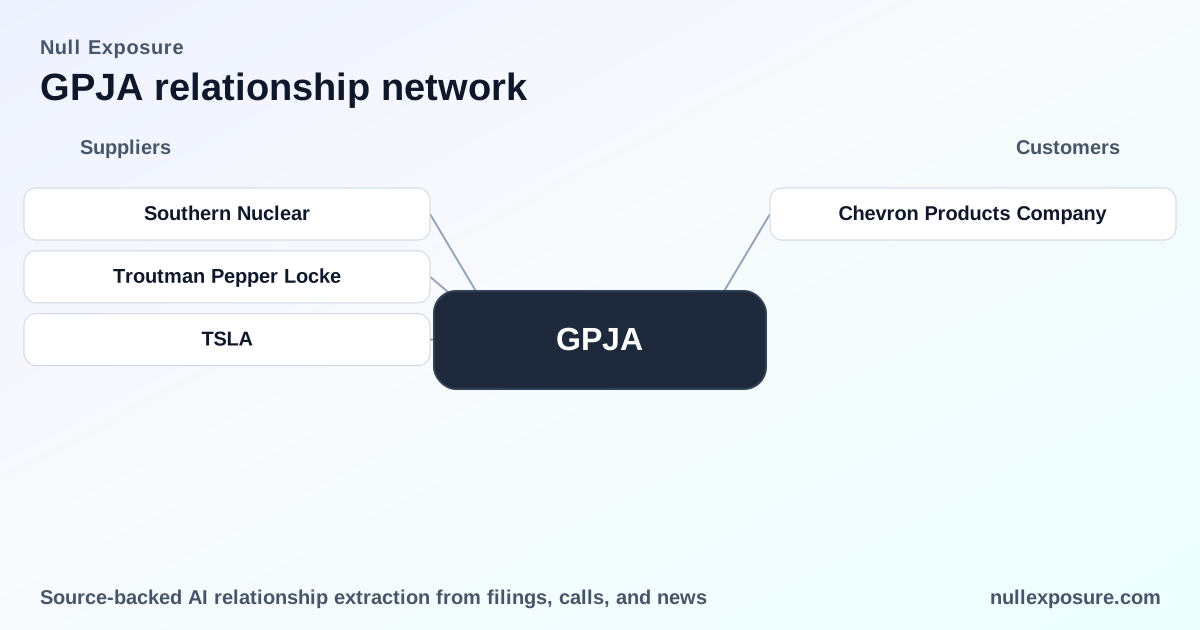
Georgia Power (GPJA) — supplier relationships that shape reliability and regulatory risk
Georgia Power is the regulated electric utility that generates, transmits and distributes electricity across Georgia, monetizing through rate‑regulated returns on capital investments and pass‑through of fuel and purchased‑power costs. Its commercial model depends on a mix of long‑term supplier commitments for fuel and maintenance, project‑level technology suppliers for grid modernization, and retained legal and advisory relationships that influence regulatory outcomes. For investors and operators, the supplier map signals both operational stability and concentrated regulatory exposure.
Discover more supplier intelligence at https://nullexposure.com/.
Why counterparty profiles matter for a regulated utility investor
Georgia Power’s cost recovery and reliability are directly tied to the terms, duration, and criticality of supplier contracts. The company’s disclosures and reporting history show a clear long‑term contracting posture for core inputs: multi‑year natural gas and nuclear fuel commitments, and long‑term service agreements (LTSAs) for plant maintenance. Those contracts create predictability in supply but concentrate exposure to a handful of large counterparties and to long‑dated price escalation clauses.
- Long‑term commitments anchor near‑term rate filings and capital plans. Evidence indicates natural gas and nuclear fuel contracts with remaining terms up to 10 years and LTSA commitments that extend well beyond 2029 (with LTSA payments after 2029 reported at roughly $1.4 billion), which is material to operations and capital allocation.
- A mix of short‑term coal purchases softens some exposure. Coal agreements for 2025 have one‑ to three‑year terms, providing tactical flexibility for thermal dispatch and fuel sourcing.
- Fuel and purchased power are material cost drivers. Management and filings treat these as significant components of operating funding, making supplier pricing and availability a direct driver of margin and rate case outcomes.
- Service relationships and professional spend are nontrivial. Audit and advisory fees are concentrated in the low‑to‑mid millions per operating company, signaling recurring vendor dependencies for compliance and financial controls.
These signals are company‑level characteristics rather than attributes of any single supplier relationship; they define Georgia Power’s contracting posture, concentration risk, and maturity of supplier commitments.
Primary counterparty relationships recent public coverage highlights
Southern Nuclear — operator of Hatch and Vogtle reactors
Southern Nuclear operates the Hatch and Vogtle plants on behalf of Georgia Power and its co‑owners, delivering nuclear generation and associated operational services. According to a local news report, Southern Nuclear is described as “an industry leader in safety, innovation and performance” in the context of Georgia Power’s 50‑year nuclear milestones (GriceConnect, Mar 9, 2026). https://www.griceconnect.com/local-news/georgia-power-marks-50-years-of-clean-reliable-nuclear-energy-11683749
Troutman Pepper Locke — regulatory and litigation counsel
Troutman Pepper Locke is serving as outside counsel for Georgia Power in regulatory discussions related to capacity expansion and reliability, expressly defending the company’s approach before commission staff. A SavannahNow article quoted Troutman Pepper Locke attorney Brandon Marzo arguing in favor of measured action to avoid reliability shortfalls (SavannahNow, Feb 19, 2026). https://www.savannahnow.com/story/news/environment/2026/02/19/commissioner-questions-the-legality-of-georgia-power-expansion/88741285007/
Tesla — battery storage technology supplier for Hammond site
Georgia Power has contracted Tesla Megapack units for a storage project at the Plant Hammond site; the Megapack 2 XL installation is expected to provide approximately 57.5 megawatts of capacity under the planned service configuration (Northwest Georgia News, reported 2026). https://www.northwestgeorgianews.com/ga-power-plans-energy-storage-at-plant-hammond-site/article_cdefef14-6885-11ef-ba06-4716c1ba607a.html
How these relationships translate into risk and opportunity for investors
The supplier mix reflects three strategic threads that investors must weigh:
- Operational criticality and concentration: Southern Nuclear’s role is central to Georgia Power’s nuclear fleet performance; long‑term nuclear fuel contracts and LTSAs point to a reliance on established service providers for plant availability and safety. Disruption or underperformance at vendor‑operated plants would have outsized system and regulatory consequences.
- Regulatory and legal exposure: Engagements with prominent law firms like Troutman Pepper Locke underscore that regulatory approval and defensible rate filings are active battlegrounds. Public questioning of project legality—reported in regional press—elevates short‑term regulatory risk that can affect timing of recoveries.
- Technology transition and grid flexibility: The Tesla Megapack award for Hammond signals a deliberate move into utility‑scale storage to address capacity and reliability constraints; this is an operational hedge that converts intermittent renewables and thermal dispatch dynamics into capacity value. Project‑level suppliers reduce exposure to fuel price volatility but introduce construction and technology integration risk.
These themes align with Georgia Power’s documented contracting posture: material long‑term commitments for fuels and services, significant post‑2029 LTSA obligations (~$1.4bn), and a mix of short‑term coal agreements that preserve flexibility.
Explore supplier risk scoring and more on the homepage at https://nullexposure.com/.
What investors and operators should monitor next
- Track regulatory dockets and testimony tied to new capacity and grid projects; legal engagement indicates active dispute channels that can delay cost recovery.
- Watch operational reports from Southern Nuclear and outage metrics at Hatch and Vogtle; vendor performance here directly affects plant availability and rate case narratives.
- Follow progress and commercial terms for the Hammond storage project to understand how capacity credits and operational dispatch will be monetized in tariffs.
- Review future disclosures on LTSA payment schedules and fuel contract escalators, because multi‑year commitments materially shape cash flow and capital allocation.
Bottom line and action steps
Georgia Power’s supplier ecosystem balances large, long‑dated commitments that stabilize supply with targeted technology partnerships that address reliability gaps. For investors, the core tradeoff is predictability of regulated returns versus concentrated counterparty and regulatory execution risk. Maintain focus on vendor performance at nuclear plants, regulatory outcomes for expansions, and the commercial rollout of storage projects as primary drivers of value and risk.
For deeper supplier intelligence and tailored exposure analysis, visit https://nullexposure.com/ to review comprehensive relationship mapping and risk indicators.