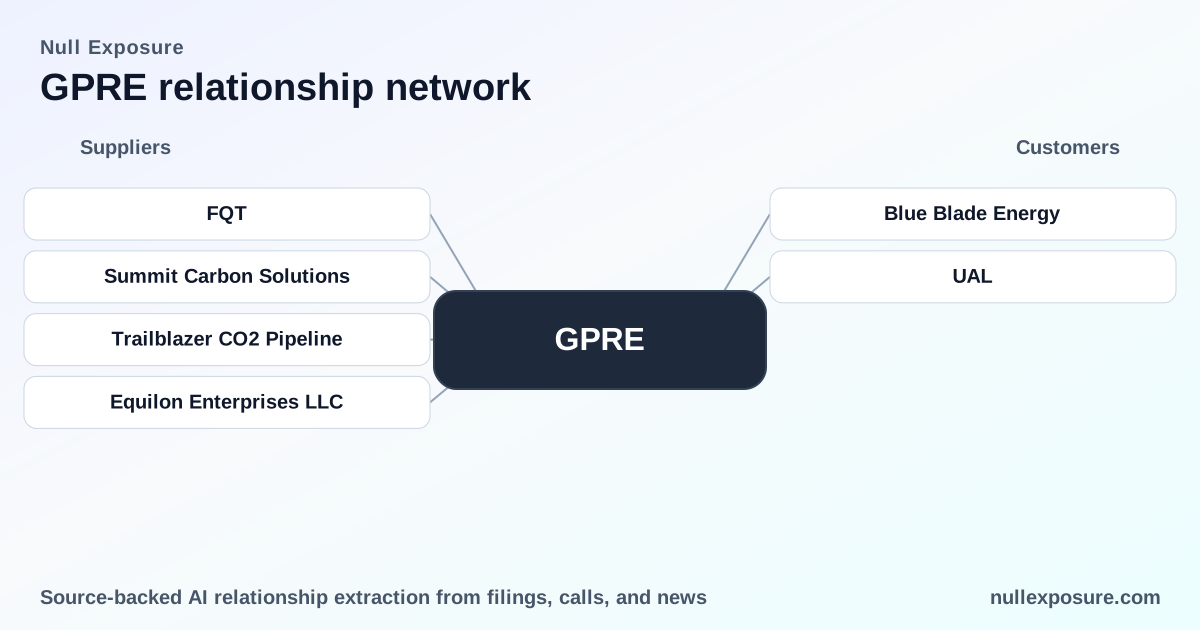
Green Plains (GPRE): Supplier relationships steering a decarbonizing ethanol platform
Green Plains produces and markets ethanol and co‑products across North America, monetizing through commodity ethanol sales, higher‑value feed ingredients (distillers grains and Ultra‑High Protein), renewable corn oil, and an expanding set of carbon capture and low‑carbon product initiatives. Revenue is primarily commodity driven, while margin expansion and strategic value are increasingly derived from processing technology and carbon capture partnerships that lower carbon intensity and unlock premium markets. Explore supplier and partner exposures at https://nullexposure.com/.
How Green Plains makes money and where supplier relationships matter
Green Plains operates an integrated ethanol platform: feedstock procurement and trading; facility‑level ethanol production; sale of distillers grains, renewable corn oil and processed high‑protein feed; and energy services, including logistics and trading. The company’s 2025 revenue run‑rate ($2.09bn TTM) is commodity scale, but EBITDA is modest ($35.9m), and GAAP margins were negative in the latest reporting period, underlining the reliance on volume and product mix rather than outsized per‑unit margins. According to the FY2026 disclosure summarized on TradingView, Green Plains is also pivoting capital into carbon capture and separation technologies to create differentiated low‑CI ethanol and higher‑value feed components.
This operating mix makes supplier relationships both critical to unit economics (feed and logistics) and strategic for differentiation (technology partners, CCS operators, and processing licensors). If you evaluate Green Plains as a counterparty or possible supplier, prioritize counterparties that touch: (1) processing technology, (2) CO2 capture/transport, and (3) feed/logistics services that support continuous commodity flow.
Supplier and partner relationships you need to know
Below I cover every relationship listed in Green Plains’ FY2026 reporting as surfaced in the trading commentary—each entry is a concise plain‑English take and a source note.
-
FQT — Green Plains is producing Ultra‑High Protein using FQT’s MSC™ separation technology at four biorefineries, which increases high‑value feed output and improves renewable corn oil yields. According to the TradingView summary of Green Plains’ FY2026 10‑K (reported March 9, 2026), this technology integration supports product diversification and margin improvement. (TradingView, March 2026)
-
Summit Carbon Solutions — CCS operations have started at three Nebraska biorefineries and Summit is the named project operator that will connect facilities to a regional pipeline; Iowa and Minnesota locations are planned to join by 2028, materially reducing carbon intensity scores for affected sites. This is described in Green Plains’ FY2026 disclosure as summarized on TradingView. (TradingView, March 2026)
-
Trailblazer CO2 Pipeline — Multiple Green Plains biorefineries are now connected to the Trailblazer CO2 Pipeline, enabling sequestration and contributing to lower CI credits for ethanol sold from those plants. The company reports these connections in its FY2026 filing, as highlighted by TradingView. (TradingView, March 2026)
-
Equilon Enterprises LLC (Shell affiliate) — Green Plains announced a technology collaboration to pair FQT separation with Shell’s Fiber Conversion Technology to enhance distillers corn oil extraction and produce cellulosic sugars for low‑carbon ethanol feedstocks. The collaboration is presented in the FY2026 10‑K summary covered on TradingView. (TradingView, March 2026)
What the contract and spending constraints reveal about Green Plains’ operating model
Company filings disclose a mixture of long‑term capital commitments and short‑term financing facilities. These items are company‑level signals of contracting posture and capital intensity.
-
Long‑term commitments are material. The company documents multi‑decade and multi‑year financing (e.g., a 2035 MetLife loan for facility collateral, a 144‑month delivery repayment schedule for carbon capture facilities, and a $350m five‑year sustainability‑linked revolving credit facility entered in 2022). These excerpts indicate high capital intensity and long payback horizons for assets tied to decarbonization and plant upgrades. (GPRE 10‑K evidence cited in FY2026 disclosures)
-
Short‑term liquidity tools are active. Instances of short‑term secured revolvers (a $30m Ancora facility that matured within months in 2025 and short‑term inventory financing) signal tactical liquidity management to cover working capital swings in grain and ethanol markets. These are operational remedies rather than permanent structural financing. (GPRE FY2026 excerpts)
-
Spend concentration is non‑trivial. The filing records >$100m of accumulated carbon equipment costs and multiple debt items in the $10–100m range (including $75m real estate loan and recorded project debts near $34.5m). Capital allocation is prioritized toward CCS and process upgrades, shifting the company’s risk profile from pure commodity exposure toward partner‑driven project execution. (GPRE FY2026 excerpts)
-
Role diversity: seller and service provider. Green Plains both sells products into markets and contracts service providers for back‑office marketing/logistics (Eco‑Energy) and CCS construction/operation (Tallgrass affiliates), indicating hybrid counterparty exposures—you buy commodity product risk and contract execution risk in large projects. (GPRE FY2026 excerpts)
Strategic and counterparty implications for investors and operators
-
Decarbonization partners are strategic, not optional. The Summit and Trailblazer pipeline connections are central to Green Plains’ ability to produce lower‑CI ethanol that commands pricing premium in regulated markets; failure or delay in CCS partner execution would be a principal downside risk. Treat CCS operators and pipeline owners as critical counterparties.
-
Processing technology turns commodity sellers into differentiated producers. The FQT MSC™ integration and the Equilon collaboration position Green Plains to capture more value per bushel via higher‑protein feed and cellulosic sugar streams; technology licensors and integration partners are value creators whose commercial terms will influence margin capture.
-
Capital structure and contract tenor create project risk. The mix of long‑dated loans and sustainability‑linked revolvers shows that funding is in place but tied to performance and multi‑year timelines; counterparties should price for execution risk and multi‑year cashflow recovery.
If you need a structured view of counterparties or want to benchmark Green Plains against peers on partner risk, start with a focused supplier diligence on their CCS and processing technology agreements. Learn how we profile these relationships at https://nullexposure.com/.
Actionable next steps for commercial and investment teams
- Map your exposure: prioritize counterparties tied to CCS pipelines (Trailblazer/Summit) and processing licensors (FQT, Equilon) for contract review and delivery timelines.
- Stress test the balance sheet against delayed CCS ramp‑up and commodity price cycles given modest EBITDA and negative GAAP margins in FY2025 results.
- Negotiate milestone‑linked commercial terms with technology and CCS partners to align capex recovery with realized CI premiums.
For a deeper supplier risk profile and tailored counterparty screening, visit https://nullexposure.com/ and request a partner briefing.
Final takeaway
Green Plains is transitioning from a legacy commodity ethanol operator to a technology‑enabled, lower‑CI producer whose commercial upside depends on successful execution of CCS projects and processing collaborations. Investors and suppliers should treat CCS and processing partners as primary operational risks and value levers; liquidity tools indicate active short‑term management but long‑term capital commitments will determine whether the company captures the premium pricing its strategy targets. For a commercial due diligence package on GPRE counterparties, go to https://nullexposure.com/.