Grace Therapeutics (GRCE): an outsourced development play with concentrated supplier exposure
Grace Therapeutics develops and commercializes pharmaceutical products for rare and orphan diseases in Canada and monetizes by advancing drug candidates through outsourced development to regulatory approval and commercial launch; the company generates value primarily through licensing, milestone payments and eventual product sales rather than current operating revenue. Grace runs a fully outsourced manufacturing and clinical operations model, relies on short-term supplier commitments, and remains pre-revenue — which concentrates operational risk in its CMO/CRO network and external advisors. For a quick drill-down of supplier relationships and strategic implications, visit https://nullexposure.com/.
What investors need to know in one paragraph
Grace’s economics are early-stage and binary: the balance sheet and equity value reflect optionality on clinical and regulatory outcomes rather than recurring cash flow. No recorded revenue (TTM revenue = $0) and negative EPS reflect a development-stage biotech that outsources production and trials, with market capitalization roughly $68.4 million and meaningful insider ownership (27%). Outsourcing reduces fixed capital requirements but transfers execution and regulatory risk to third parties, so contract terms, counterparty quality, and short-term commitments drive near-term operational leverage.
How the company structures outsourcing and what that implies
Grace does not operate its own manufacturing or trial infrastructure; instead it contracts third-party CMOs and CROs to produce clinical materials and run studies. This is a deliberate, asset-light contracting posture: critical activities are outsourced, but Grace controls only selected aspects of vendor activity and compliance monitoring. Public filings state the company will continue to rely on third-party CMOs and CROs and monitors them for regulatory compliance.
- Contracting posture: short-term, committed but limited — the company disclosed specific near-term commitments to CMOs and CROs, implying recurring procurement cycles rather than long-duration, fixed-supply contracts.
- Concentration and criticality: outsourcing all manufacturing and trial operations creates concentrated counterparty risk; a disruption at a key CMO or CRO has direct program-level consequences.
- Maturity and stage: active development-phase relationships predominate; the firm is pre-commercial and therefore supplier relationships are execution-critical rather than volume-driven.
According to the company’s public filing as of March 31, 2025, Grace disclosed $300 of commitments to CMOs and $110 of commitments to CROs for the next twelve months, underlining the short-term nature of its supplier obligations and the near-term cash demand profile implied by outsourced activities.
Relationship roster investors should track
Below I cover every supplier/partner relationship surfaced in the available results — concise, plain-English descriptions and the source for each.
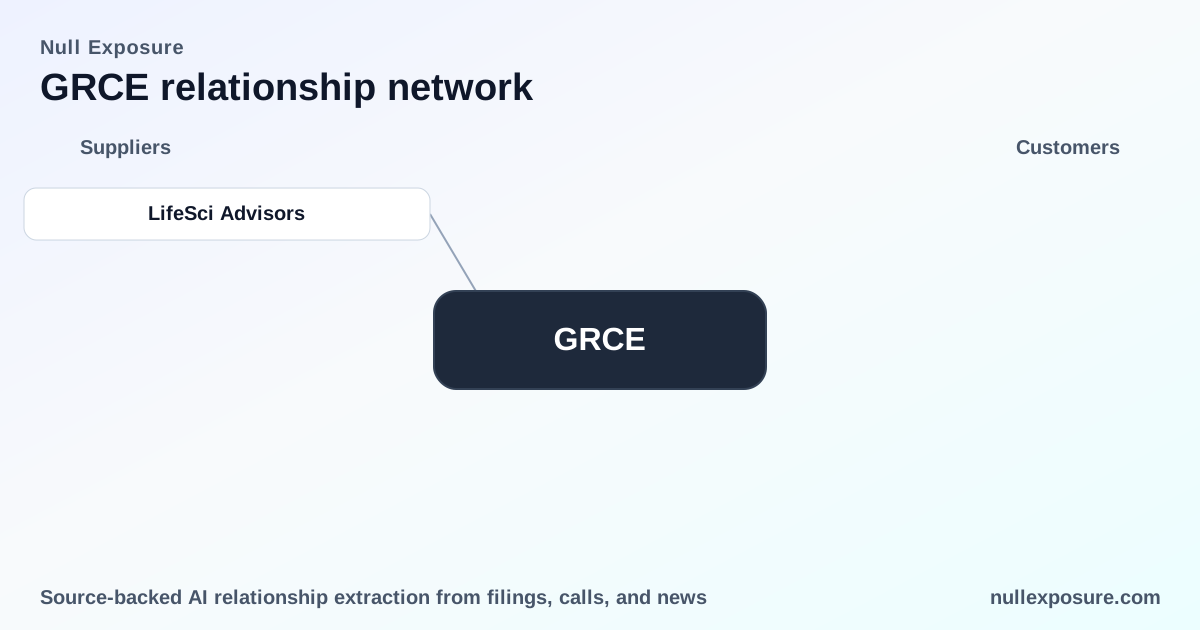
- LifeSci Advisors — The company lists LifeSci Advisors as its investor relations contact, with Mike Moyer named as Managing Director and a provided phone/email for investor outreach. According to a Yahoo Finance article referencing the investor relations contact line, LifeSci Advisors functions as Grace’s external IR advisor (March 2026). Source: Yahoo Finance article referencing investor relations contact (published March 9, 2026).
(That is the complete set of relationships surfaced in the supplier-scope results.)
What the supplier posture signals about operational risk
The catalog of constraints in public disclosures delivers a clear operational profile:
- Short-term contract exposure — The explicit near-term commitments to CMOs ($300) and CROs ($110) indicate Grace uses short-duration contracts that favor flexibility and lower fixed costs but create continual procurement and renewal risk. This is a company-level signal about contracting posture rather than a vendor-specific finding.
- Outsourced manufacturing and services — Multiple filing excerpts confirm that Grace relies on CMOs for manufacturing and CROs for clinical work; this is an intentional model to avoid capital-intensive facilities and to scale programs through partners.
- Active supplier relationships — Filings state these CMOs and CROs are actively engaged and monitored; Grace’s operational progress depends on maintaining these active, compliant relationships.
Investment implications and where the market should focus
For investors and operators evaluating Grace as a supplier-counterparty or equity exposure, prioritize these considerations:
- Execution risk is concentrated: with no internal manufacturing, a single CMO disruption or regulatory compliance issue materially delays programs and dilutes near-term optionality.
- Cash and renewal risk: short-term commitments translate into recurring cash outflows and negotiation exposure; watch quarterly cash runway and commitment rollovers.
- Governance and oversight matter: successful outsourcing requires disciplined vendor monitoring and quality assurance; evidence of robust oversight in filings reduces operational risk premium.
- Valuation is binary and event-driven: with no revenue and negative earnings, share price moves will respond to clinical milestones, regulatory news, and supplier performance updates.
If you evaluate counterparties or consider operational partnerships with Grace, demand clarity on contract length, backup suppliers, indemnities for delays, and regulatory audit history.
For a deeper supplier intelligence brief and tracking of counterparties across development-stage biotechs, visit https://nullexposure.com/ to see how we map supplier concentration and contract risk.
Short checklist for diligencing Grace as a supplier or investment
- Confirm contract durations and termination clauses with CMOs/CROs.
- Verify audit and compliance results for manufacturing partners.
- Assess cash runway against disclosed supplier commitments.
- Review investor relations and external communications for transparency and cadence.
Final takeaways and next steps
Grace Therapeutics is a development-stage biotech that outsources virtually all manufacturing and clinical activity, relies on short-term supplier commitments, and currently carries no revenue, which makes supplier performance and contract management central to company value. The only supplier/partner explicitly identified in the supplier-scope results was LifeSci Advisors in an investor relations capacity (Yahoo Finance, March 2026). Investors should prioritize supplier continuity, cash planning against short-term commitments, and evidence of rigorous vendor oversight.
Explore ongoing supplier-monitoring coverage and portfolio-grade supplier risk reports at https://nullexposure.com/ — it’s the fastest way to benchmark Grace’s outsourcing model against peers and to monitor counterparty concentration in real time.