Gracell Biotechnologies (GRCL): how supplier and licensing relationships shape an early-stage cell therapy franchise
Gracell Biotechnologies operates as a clinical-stage cell therapy developer headquartered in Suzhou, China, monetizing through research and development partnerships, exclusive licensing arrangements, and eventual product commercialization of engineered immune cells for oncology. The company is pre-revenue on a consolidated basis and funds pipeline growth through capital markets and strategic collaborations that transfer development risk and IP, rather than through product sales today. For supplier-relationship diligence and monitoring, consider tracking partner deal terms and exclusivity footprints at source companies and press channels.
Explore a consolidated view of supplier and partner exposures at https://nullexposure.com/.
Snapshot: capital structure, financial posture, and what that implies for suppliers
Gracell is a NASDAQ‑listed, clinical‑stage biotechnology firm (GRCL) focused on engineered cell therapies. Financial signals define the company’s contracting posture: the firm reported negative EBITDA of $509.6 million, trailing twelve‑month revenue of $0, a small gross profit balance ($366,000) and a market capitalization roughly $990 million in the latest public data. Institutional investors hold about 63% of the stock while insiders own roughly 16%, a mix that reflects active external financing and internal skin in the game.
These facts produce an operating model with the following characteristics as company‑level signals:
- Contracting posture: Strong incentive to use licensing and collaboration to advance programs while conserving cash; Gracell will structure deals to capture near‑term non‑dilutive funding and milestone receipts.
- Concentration: Public information shows a limited set of formal partner disclosures, implying concentrated supplier/partner exposure rather than a broad vendor ecosystem.
- Criticality: Partnerships that provide access to targets, manufacturing capacity, or regulatory pathways are strategically critical because Gracell has no product revenue to self‑fund late‑stage trials.
- Maturity: Clinical‑stage company with pre‑commercial risk profile; supplier relationships serve discovery/early development and scale‑up stages rather than commercial distribution today.
These signals mean counterparties with exclusive rights or critical IP (licensees, manufacturing partners) carry outsized influence on Gracell’s timeline and valuation.
The disclosed supplier/licensing relationship you need on your radar
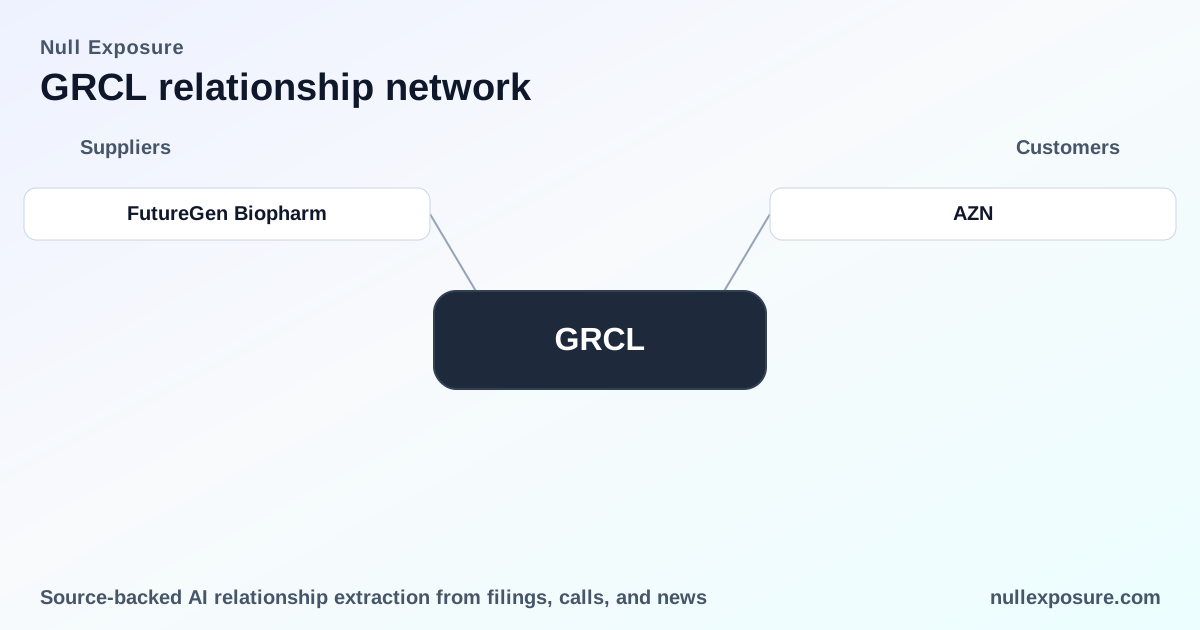
FutureGen Biopharm — exclusive license for CLDN18.2‑targeting programs
Gracell executed an exclusive license agreement with FutureGen Biopharm to develop engineered immune cell therapies targeting Claudin 18.2 (CLDN18.2) in solid tumors, a programmatic move to expand Gracell’s solid‑tumor pipeline via externally originated IP. According to a PR Newswire release, the deal grants Gracell development rights around CLDN18.2‑directed immune cell therapeutics and positions FutureGen as the originating licensor for that target (PR Newswire, announcement of the license). https://www.prnewswire.com/news-releases/gracell-biotechnologies-signs-exclusive-license-agreement-with-futuregen-biopharm-to-develop-engineered-immune-cell-therapies-targeting-claudin-18-2-in-solid-tumors-301355538.html
Takeaway: The FutureGen license is a prototypical move for a cash‑constrained clinical developer—acquiring target rights rather than originating the asset internally reduces time to clinic but creates dependency on license economics and diligence of the licensor’s data room.
What the relationship set reveals about Gracell’s operating playbook
Gracell’s public relationship footprint is narrow but strategically aligned: the company acquires target rights or development licenses to broaden its pipeline quickly while prioritizing capital efficiency. This model has clear implications:
- Value creation pathway: Clinical proof‑points and successful bridging of licensed preclinical data into human safety/efficacy will be the primary de‑risking events that convert license investments into higher enterprise value.
- Counterparty leverage: With limited in‑house revenue, counterparties that grant exclusivity or supply platform know‑how command disproportionate negotiating power on milestones, royalties, and rights reversions.
- Execution risk concentration: A small number of high‑impact licenses means single‑deal execution failures can materially affect timelines and fundraising needs.
Mid‑cycle investors should track press releases, license amendment filings, and clinical trial registries to detect shifts in exclusivity, milestone triggers, or sublicensing that change counterparty risk profiles. For a consolidated view of supplier exposures and partner histories, see https://nullexposure.com/.
Practical risk checklist for investors and operators
When evaluating Gracell as a counterparty or investment, prioritize these dimensions:
- License economics and milestone scalability: Are upfront payments, development milestones, and royalty bands aligned with Gracell’s capital runway?
- Data diligence and transfer completeness: Does Gracell have full access to the licensor’s preclinical and CMC datasets required for IND/CTA filings?
- Manufacturing and regulatory dependencies: Which suppliers cover GMP manufacturing, and how replaceable are they?
- Concentration and reversion clauses: How concentrated are rights, and what triggers reversion to the licensor on missed milestones?
These are not theoretical: with no product revenue and sizable negative EBITDA, Gracell will structure counterparty agreements to conserve cash while preserving upside—creating both leverage and vulnerability.
Investment implications and recommended next steps
Gracell’s model is growth‑driven and partnership‑dependent. For investors, the thesis is binary: successful clinical progression of licensed programs will justify valuation expansion; failure or slowed timelines will pressure capital raises and dilute value. For operators evaluating supplier relationships, contract terms around exclusivity, data access, milestone timing, and manufacturing commitments are the control points that determine program survivability.
- If you are allocating capital: stress‑test valuation assumptions against delays in key licensed programs and the potential need for equity raises.
- If you are negotiating with Gracell: insist on transparent data handoff schedules and clear manufacturing backups for clinical material.
For ongoing supplier monitoring and consolidated partner intelligence, visit https://nullexposure.com/ to subscribe to relationship feeds and alerting.
Bottom line
Gracell executes a capital‑efficient strategy of licensing and selective partnerships to expand its cell‑therapy pipeline while conserving balance‑sheet resources. The FutureGen CLDN18.2 license is emblematic of that approach—rapid program addition at the cost of counterparty dependence. Investors and operators should treat each disclosed license as a value lever and a single point of operational concentration: diligence the economics, the data transfer, and the manufacturing runway before drawing conclusions about upside or downside. For a centralized view of supplier relationships and to track changes in partner status, go to https://nullexposure.com/.