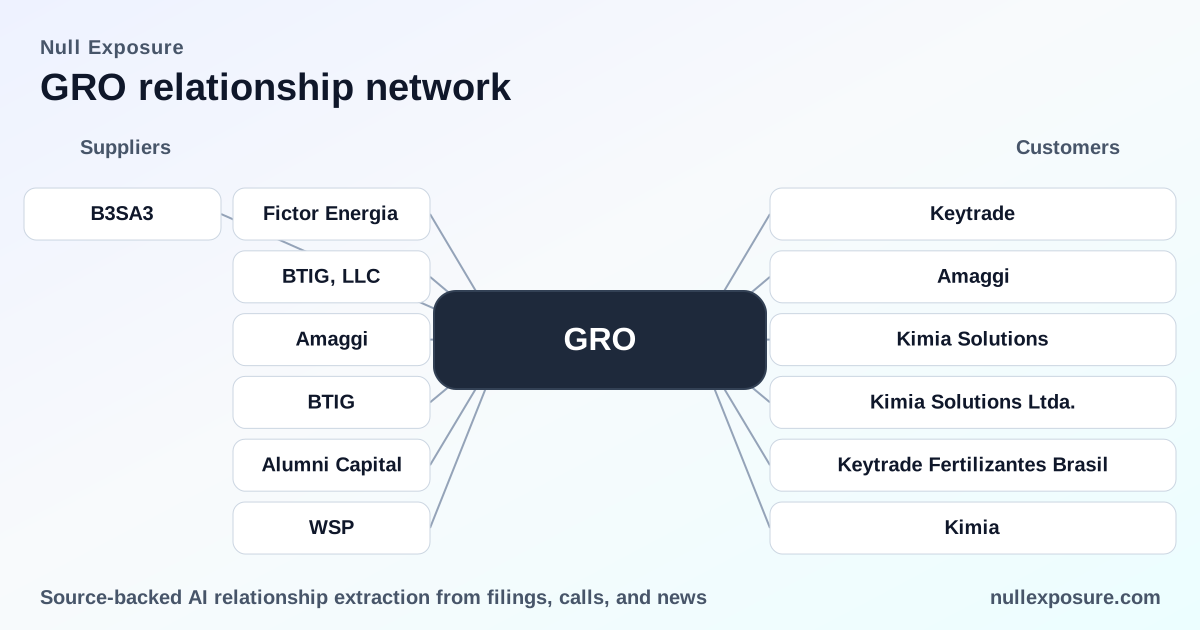
Brazil Potash (GRO) — supplier relationship map and investment implications
Brazil Potash (ticker: GRO) is a development-stage fertilizer company building a potash mine and logistics corridor in Brazil; it plans to monetize by selling domestically produced potash into Brazilian agricultural markets and by structuring project-level financing to limit shareholder dilution. The company’s commercial model mixes asset carve-outs, project-level equity, and strategic logistics and services agreements to reduce upfront capital and accelerate construction-to-production timelines. For a deeper look at partner exposures and financing posture visit https://nullexposure.com/.
Executive snapshot — what investors need to know right now
Brazil Potash is pre-revenue with a market capitalization around USD 171 million and an analyst consensus target price cited at USD 6.17. The company is transitioning from permitting and development into construction finance, and its counterparty relationships are central to whether construction can proceed on time and on budget. Key levers for investors are (1) offloading discrete infrastructure capex through third-party funding, (2) securing project-level equity to avoid balance-sheet dilution, and (3) locking logistics arrangements that lower operating costs once the mine is operational.
If you want the relationship map and source-backed tracking of these counterparties, see https://nullexposure.com/ for the full supplier overview.
How Brazil Potash is structuring the project to preserve shareholder equity
Brazil Potash’s operating posture is deliberately non-traditional for a miner: instead of financing every construction item from central equity or debt, the company is carving out specific infrastructure elements and contracting specialists to fund and build them. This reduces upfront capital needs but replaces one concentration risk (corporate funding shortfall) with counterparty execution risk (reliance on third parties to deliver critical infrastructure such as power transmission and river logistics).
At the same time, management has mandated an investment bank to lead project-level equity financing as the preferred route to fund construction while minimizing shareholder dilution, and it has established an equity line for flexible capital in the near term.
For active investors tracking execution, Brazil Potash’s public statements and press releases are the most direct evidence of these choices; more details and ongoing updates are available at https://nullexposure.com/.
The commercial pattern: carve-outs + targeted equity
- Carve-outs reduce corporate capex but increase the importance of partner contracts and milestone enforcement.
- Project-level equity can preserve public shareholder value if executed, but introduces execution risk tied to market appetite for project-level instruments.
- Logistics and power agreements are operationally critical — any delay or nonperformance materially affects construction timing and future unit costs.
Supplier and advisor relationships — the full list with sources
Below are every supplier, advisor or strategic partner referenced in the available reporting. Each entry contains a concise, plain-English summary and the reporting source.
-
Fictor Energia
Brazil Potash has signed a memorandum of understanding with Fictor Energia for roughly USD 200 million to construct a dedicated power transmission line, removing that portion of capex from the Company’s balance sheet and representing a future electricity-purchase relationship once the line is operational. This financing carve-out is described in Brazil Potash’s construction-advancement release and conference materials (GlobeNewswire, December 8, 2025; QuiverQuant conference call notice, July 2025). -
BTIG / BTIG, LLC
Management appointed BTIG as lead financial advisor to secure project-level equity financing aimed at funding construction while minimizing shareholder dilution, indicating a deliberate move toward off-balance-sheet, project-specific capital solutions (GlobeNewswire press release, November 3, 2025; ValueTheMarkets analysis, 2025). -
Amaggi
Amaggi is positioned as the logistics partner to move produced potash using low-cost river barges on an inland river system, providing access to Brazil’s agricultural distribution network and lowering projected transport costs (QuiverQuant conference call coverage, July 2025; GlobeNewswire company updates, December 2025 and February 2026). -
Alumni Capital
Brazil Potash established a USD 75 million equity line of credit with Alumni Capital to provide flexible near-term funding; the facility serves as working capital optionality while project-level financing is arranged (ValueTheMarkets reporting and GlobeNewswire corporate milestones, late 2025). -
WSP Global (WSP)
WSP Global has commenced social planning work, including demographic and needs analysis across indigenous Mura communities to develop a community Wellbeing Plan, reflecting environmental and social governance (ESG) compliance steps required for construction and permitting (GlobeNewswire site progress update, February 10, 2026). -
B3 Exchange (B3SA3)
Brazil Potash launched Brazilian Depositary Receipts (BDRs) on B3 Exchange to provide domestic investor access to the company’s equity, broadening the investor base in Brazil and signaling a domestic market engagement strategy (ValueTheMarkets coverage of the BDR listing, 2025).
Operating constraints and company-level signals
The coverage contains no explicit supplier-level contractual constraints recorded in the disclosed material set; that is a company-level signal that public disclosures emphasize commercial arrangements and financing structures rather than long-form vendor contracts. From an investor perspective, the following operating characteristics are material:
- Contracting posture: The company favors carved, externally financed infrastructure and project-level capital solutions rather than centralized balance-sheet funding. This reduces dilution risk but increases dependence on partner delivery and capital markets timing.
- Concentration: Logistics and power are concentrated exposures — Amaggi for river transport and Fictor for the transmission line — making each partner strategically critical to the project timetable.
- Criticality: These relationships are mission-critical: failure to deliver the power line or logistics backbone would delay commissioning and materially change the project economics.
- Maturity: Relationships are at the development/milestone stage (MOU, mandates, and planning work) rather than long-term operating contracts, reflecting the company’s pre-construction lifecycle.
Investment implications — what to watch and why it matters
- Execution risk is the dominant short-term variable. The company’s strategy shifts capex risk to counterparties; investors should focus on contract finalization, milestone payments, and any delegation of construction risk.
- Financing path will determine dilution and timing. If BTIG successfully places project-level equity and Alumni Capital’s equity line is used conservatively, shareholder dilution is limited and construction can proceed on schedule. If markets are adverse, the company could face delays or use more dilutive alternatives.
- Logistics pricing advantage is credible but concentrated. An Amaggi partnership offers a low-cost transport route; any disruption or contractual breakdown would raise future FOB costs significantly.
If you want a dynamic relationship tracker and source-linked updates for these counterparties, visit https://nullexposure.com/ to monitor changes and filings.
Final read: concise takeaways for investors
Brazil Potash has structured a defensible path to construction by outsourcing heavy infrastructure capex and recruiting an advisor to lead project-level equity — a model designed to preserve shareholder equity but dependent on partner execution and capital markets. Short-term monitoring should center on formal contracts with Fictor Energia, the BTIG fundraising process, draw usage on the Alumni Capital facility, and progress reports from Amaggi and WSP on logistics and community approvals. For ongoing, source-backed coverage of these relationships and their implications for project timing and valuation, check https://nullexposure.com/.