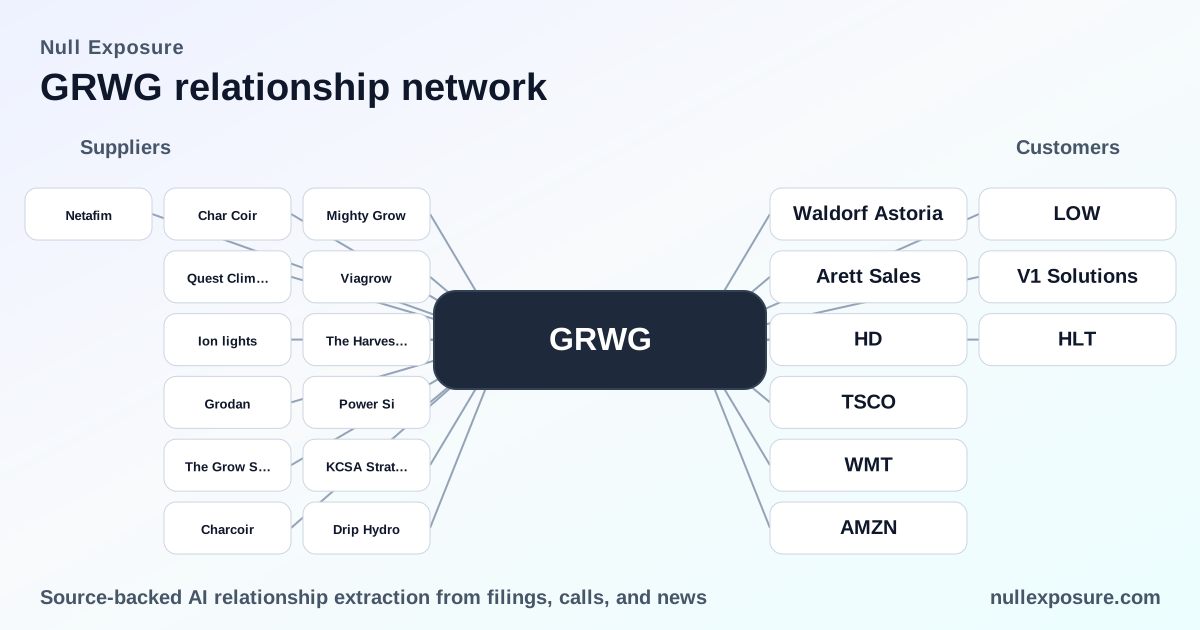
GrowGeneration (GRWG) — supplier map and what it means for investors
GrowGeneration operates the largest chain of specialty hydroponic and organic garden centers in the U.S., monetizing through retail sales of growing equipment and inputs, distribution and wholesale channels, proprietary brands, and tuck‑in acquisitions that expand inventory and regional footprint. The company drives margin through product mix (branded vs. third‑party), retail footprint density, and distribution partnerships that scale supply access; its operating model combines broad supplier reach with recurring retail demand. For a deeper supplier-risk read and ongoing monitoring, visit https://nullexposure.com/.
How the supply model actually works for investors
GrowGeneration sources products from a large number of manufacturers and distributors both inside and outside the U.S., then sells those products through its retail centers, wholesale/HRG distribution channels, and proprietary brands. Revenue is retail and distribution driven, with additional margin capture from proprietary product lines (Char Coir, Drip Hydro, Ion lights, Power Si, The Harvest Company, Viagrow). The company supplements organic growth with acquisitions of local stores and inventory, which accelerates market share and adds localized supply relationships.
Key operating characteristics to watch:
- Decentralized sourcing and low single‑customer concentration. Company filings state no single customer accounted for more than 10% of sales and loss of any single supplier as of year‑end 2024 would not be severely disruptive.
- Hybrid distributor/manufacturer relationships. GrowGen functions as both a distributor for external brands and as a manufacturer/retailer for proprietary labels, creating mixed contracting postures across suppliers.
- Global procurement footprint. The company sources products globally, generating both cost arbitrage and logistics complexity.
- Materiality profile: immaterial individual supplier exposure. Suppliers are numerous and individually immaterial, limiting single‑vendor risk but increasing operational dependency on distribution logistics and inventory management.
Supplier and partner map — all reported relationships and where they show up
Below are every relationship captured in the available results, summarized in plain English with source citations.
Mighty Grow
GrowGeneration acquired inventory and equipment from Mighty Grow, a family‑owned garden business in Jackson, Michigan, as part of its local acquisition strategy that expands store footprint and inventory control (GrowGen press release, FY2023: https://ir.growgeneration.com/news-events/press-releases/detail/192/growgeneration-acquires-store-in-jackson-michigan).
The Grow Store
GrowGeneration purchased inventory and equipment from The Grow Store in Traverse City, Michigan, demonstrating the company’s continued use of asset acquisitions to scale regionally (local news summary, FY2024: https://igrownews.com/growgeneration-latest-news/).
Quest Climate
Quest Climate products will be available through HRG Distribution, extending access to GrowGen’s retail partners and strengthening the company’s HVAC/environmental control product offering (GrowGen press release, FY2024: https://ir.growgeneration.com/news-events/press-releases/detail/208/growgenerations-hrg-distribution-enters-strategic).
Grodan
GrowGeneration formed a partnership with Grodan, the stone wool growth‑media producer, to supply growing media for hydroponic operations — reinforcing GrowGen’s inventory of technical substrates (industry coverage, FY2024: https://igrownews.com/growgeneration-latest-news/).
Netafim
GrowGen announced a co‑marketing and sales partnership with Netafim, the global irrigation leader, positioning GrowGeneration to offer precision irrigation systems across its retail and commercial channels (GrowGen press release, FY2026: https://ir.growgeneration.com/news-events/press-releases/detail/257/growgeneration-showcases-new-strategic-co-marketing-and).
KCSA Strategic Communications
KCSA Strategic Communications is listed as GrowGeneration’s investor relations contact on multiple corporate press releases; this relationship is a services engagement for IR and communications rather than a product supplier (company press releases, FY2026: e.g., https://ir.growgeneration.com/news-events/press-releases/detail/262/growgeneration-to-participate-in-igniteit-spotlight-ohio).
Char Coir (aka Charcoir)
Char Coir is promoted as one of GrowGeneration’s proprietary brands for growing media and propagation systems, representing verticalized product development aimed at margin capture and brand control (GrowGen press releases and product announcements, FY2025–FY2026: e.g., https://ir.growgeneration.com/news-events/press-releases/detail/250/growgeneration-launches-dialed-in-tri-spec-under-canopy and https://www.globenewswire.com/news-release/2026/03/24/3261158/0/en/GrowGeneration-s-Char-Coir-Introduces-Next-Generation-Propagation-System-to-Enhance-Cultivation-Performance.html).
Drip Hydro
Drip Hydro appears repeatedly as a proprietary or closely affiliated brand carried by GrowGen across retail and distribution channels, supporting the company’s irrigation and fertigation offering (GrowGen press releases, FY2025–FY2026: e.g., https://ir.growgeneration.com/news-events/press-releases/detail/250/growgeneration-launches-dialed-in-tri-spec-under-canopy).
Ion lights
Ion lights is cited as one of GrowGen’s proprietary lighting brands, used to control lighting product margins and product assortment in stores (GrowGen press releases, FY2025–FY2026: e.g., https://ir.growgeneration.com/news-events/press-releases/detail/250/growgeneration-launches-dialed-in-tri-spec-under-canopy).
Power Si
Power Si is presented alongside other proprietary product lines for nutrient and additive categories, furthering GrowGen’s strategy of selling owned brands for improved gross margin (GrowGen press releases, FY2025–FY2026: e.g., https://ir.growgeneration.com/news-events/press-releases/detail/250/growgeneration-launches-dialed-in-tri-spec-under-canopy).
The Harvest Company
The Harvest Company is listed among GrowGen’s proprietary brands, used across retail assortments to capture higher margin and brand loyalty from growers (GrowGen press releases, FY2025–FY2026: e.g., https://ir.growgeneration.com/news-events/press-releases/detail/250/growgeneration-launches-dialed-in-tri-spec-under-canopy).
Viagrow
Viagrow is included in GrowGen’s catalog of carried brands — positioning the company as a broad retailer of both third‑party and proprietary cultivation products (GrowGen press releases, FY2025–FY2026: e.g., https://ir.growgeneration.com/news-events/press-releases/detail/250/growgeneration-launches-dialed-in-tri-spec-under-canopy).
(These entries collectively reflect all relationships referenced in the supplied results; each item is pulled from the cited GrowGeneration press releases and industry coverage in FY2024–FY2026.)
For ongoing monitoring and deeper supplier analytics, check the company summary at https://nullexposure.com/.
What investors should take away — risks, levers, and watchlist
- Inventory and acquisition strategy drives near‑term growth: Acquiring store inventory and equipment (Mighty Grow, The Grow Store) accelerates revenue but increases working capital needs and integration complexity.
- Proprietary brands improve margin control: Char Coir, Drip Hydro, Ion lights, Power Si, The Harvest Company, and Viagrow are deliberate margin levers; track sell‑through and shelf penetration.
- Low single‑supplier concentration reduces catastrophic vendor risk: Public disclosures indicate no single customer accounted for over 10% of sales and supplier loss is not individually material — this supports operational resilience.
- Global sourcing creates cost and logistics volatility: Sourcing from both domestic and international manufacturers introduces FX and logistics tail risks; monitor freight and lead‑time metrics.
- Distribution partnerships scale reach: HRG Distribution placements like Quest Climate extend wholesale channels but increase dependency on effective B2B distribution execution.
Bottom line
GrowGeneration’s supplier ecosystem is deliberately broad: a mix of local acquisitions, manufacturer partnerships, and proprietary brands that together drive retail sales and margin capture. Investors should watch acquisition cadence, proprietary brand penetration, and logistics costs as the primary drivers of near‑term profitability and balance‑sheet pressure.
For a consolidated view of supplier relationships and ongoing alerts, visit https://nullexposure.com/.