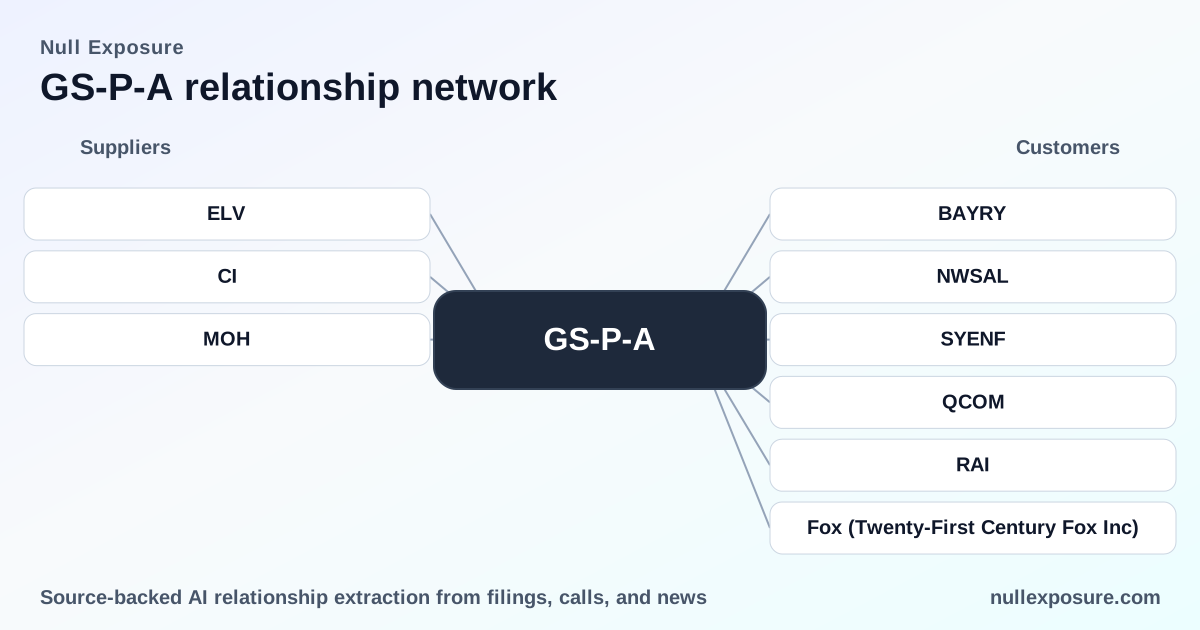
Goldman Sachs (GS-P-A): Preferred Shareholder View on Supplier Relationships and Market Signals
Goldman Sachs Group Inc. issues GS-P-A depositary shares, a preferred-equity instrument that gives investors a higher-priority claim on bank equity cash flows relative to common stock while participating in the firm’s core capital structure. Goldman Sachs monetizes its franchise through investment banking fees, trading and principal markets activity, asset and wealth management fees, and lending/deposit spreads, and GS-P-A is positioned as a capital-market instrument that reflects that franchise and credit standing.
If you want a quick view of commercial counterparties and short-term market signaling tied to Goldman’s equity research and coverage, review the supplier relationship summary below or explore more at https://nullexposure.com/.
Why GS-P-A matters to investors: a concise investor thesis
GS-P-A is a preferred instrument issued by a global banking franchise whose economics are driven by fee income and trading profits. Preferred holders trade on bank credit and income stability, not growth multiples, so upstream relationships—who Goldman covers and what market commentary it publishes—translate into reputational and market-liquidity signals rather than direct revenue for the preferred tranche. For income and credit-sensitive investors, the preferred position is a play on Goldman’s capital stability and the bank’s ability to sustain distributions through market cycles.
Explore additional firm-level supplier mappings and signals at https://nullexposure.com/.
What the record shows about Goldman’s market mentions
The relationship results in the supplied record are all drawn from a single market item in March 2026. Each mention is an example of Goldman's equity research and coverage activity, which is a visibility channel rather than a contractual supplier agreement. The Globe and Mail item dated March 9, 2026 records analyst Scott Fidel issuing a Hold on Elevance Health and listing several healthcare names he covers.
Elevance Health (ELV)
Goldman Sachs analyst Scott Fidel issued a Hold rating with a $343 price target on Elevance Health, reflecting the firm’s active coverage stance in large-cap health insurance names. Source: Globe and Mail press item reporting the Goldman Sachs coverage note (March 9, 2026) — https://www.theglobeandmail.com/investing/markets/stocks/ELV/pressreleases/35488237/elevance-health-elv-receives-a-hold-from-goldman-sachs/.
Cigna (CI)
Goldman’s coverage remit for the healthcare sector includes Cigna as a peer in the analyst’s coverage set, indicating thematic coverage breadth across managed-care incumbents rather than a bespoke supplier relationship. Source: Globe and Mail coverage of Goldman Sachs analyst Scott Fidel’s sector coverage list (March 9, 2026) — https://www.theglobeandmail.com/investing/markets/stocks/ELV/pressreleases/35488237/elevance-health-elv-receives-a-hold-from-goldman-sachs/.
Molina Healthcare (MOH)
Molina Healthcare is listed alongside Elevance and Cigna in Goldman's healthcare coverage universe, again signaling coverage concentration in major payors and the bank’s role in shaping market expectations for U.S. healthcare insurers. Source: Globe and Mail reference to Scott Fidel’s healthcare coverage (March 9, 2026) — https://www.theglobeandmail.com/investing/markets/stocks/ELV/pressreleases/35488237/elevance-health-elv-receives-a-hold-from-goldman-sachs/.
How these relationship mentions translate into investor signals
The three entries are research mentions, not procurement or vendor contracts. In commercial terms, they function as market-facing communications that influence liquidity and share-price expectations for the named companies. For GS-P-A investors, the practical implications are:
- Reputational flow-through: active, visible research maintains Goldman’s standing in institutional markets; stronger market influence supports client flows and trading volumes that underpin fee income.
- Liquidity signaling: research publications on large-cap healthcare names can create short-term market moves and trading volumes, which feed the bank’s markets business.
- No direct counterparty exposure: these mentions do not imply supplier contracts between Goldman Sachs and the named insurers.
Operating-model constraints and what they imply for GS-P-A investors
The provided record contains no explicit contractual constraints tied to GS-P-A. That absence is itself a signal: the visible relationships are public-market coverage items, not supplier agreements disclosed as part of vendor records.
At the company level, expect the following firm characteristics to be relevant for preferred-share analysis:
- Contracting posture — centralized and institutionally governed. Goldman Sachs manages commercial relationships and research publication centrally, with formal compliance and disclosure controls that reduce idiosyncratic counterparty risk.
- Concentration — skewed toward large institutional clients and corporate issuers. The bank’s client base is large and concentrated in institutional flows, which supports stable fee pools but concentrates exposure to macro and market cycles.
- Criticality — high to market infrastructure and client activity. Goldman is systemic in investment banking and markets; disruptions to its franchise have broad market implications and thus attract regulatory attention.
- Maturity — mature franchise with diversified product lines. The bank’s income streams are diversified across trading, underwriting, and management fees, supporting capital resilience more than single-product plays.
These company-level characteristics explain why preferred instruments like GS-P-A trade principally on bank credit, franchise durability, and market access rather than micro-level vendor relationships.
Market and credit implications for investors
Two practical investor takeaways:
- Income sensitivity is tied to bank credit health, not these research mentions. The Globe and Mail coverage reflects market commentary but does not materially change the credit profile supporting GS-P-A distributions.
- Dividend and yield data are not present in the supplied record; prospective buyers must consult official prospectuses and filings for distribution terms and call features before sizing a position.
If you’re mapping counterparty and supplier exposure across financial issuers, NullExposure provides concise supplier signaling and relationship visibility — start here: https://nullexposure.com/.
Final takeaways and next steps
- These results are research-driven market signals, not supplier contracts. The March 9, 2026 Globe and Mail item demonstrates Goldman’s active coverage of major healthcare insurers, which is relevant to market liquidity and reputational dynamics but not to GS-P-A’s contractual exposure.
- GS-P-A investors should focus on bank credit and capital structure. Use research mentions as short-term market indicators; prioritize regulatory filings and credit documentation for capital-structure risk.
For a deeper mapping of counterparties, coverage signals, and supplier relationships across financial issuers, visit https://nullexposure.com/ — the hub for rapid supplier intelligence that supports investment and operational decision-making.