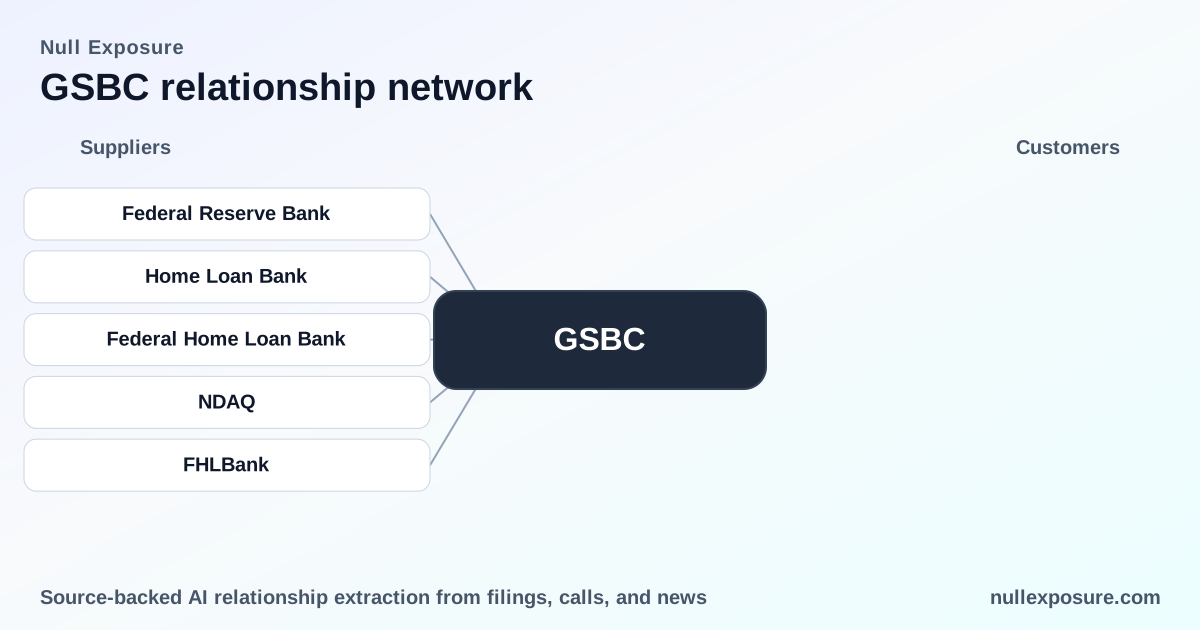
Great Southern Bancorp (GSBC): supplier and funding relationships that shape liquidity and execution risk
Great Southern Bancorp operates as a regional bank holding company through Great Southern Bank, originating residential and commercial loans and monetizing by capturing net interest margin, fee income and capital returns to shareholders; the company funds lending primarily through customer deposits, brokered deposits and wholesale liquidity lines from the Federal Home Loan Bank system and the Federal Reserve. Liquidity access and third‑party vendor governance are the primary supplier‑relationship drivers for the bank’s operating model and investor thesis. For a closer look at supplier exposures and counterparties, visit https://nullexposure.com/.
Why counterparties matter to GSBC investors
Great Southern’s balance sheet and funding flexibility are directly influenced by relationships with wholesale funding providers and market infrastructure. Borrowing capacity from the FHLB and the Federal Reserve underpins the bank’s ability to hold and grow real‑estate‑centric loans, while vendor arrangements and third‑party IT and card servicing agreements influence operational continuity and compliance cost. The remainder of this note lays out each referenced relationship from public reporting, then synthesizes firm‑level operating constraints and risk signals.
Relationship entries from recent reporting (one line each)
-
InsiderMonkey transcript (Q4 2025 / FY2026): Great Southern disclosed access to approximately $1.63 billion of additional borrowing capacity through the Home Loan Bank and the Federal Reserve Bank, signaling meaningful standby liquidity beyond deposits. (InsiderMonkey earnings call transcript, Q4 2025)
-
InsiderMonkey transcript (Q4 2025 / FY2026): The company reiterated its borrowing lines with the Home Loan Bank as a core wholesale funding source for balance‑sheet management. (InsiderMonkey earnings call transcript, Q4 2025)
-
MarketScreener (FY2025 reporting): Filings note that Great Southern funds originated loans by attracting deposits, accepting brokered deposits and borrowing from the Federal Home Loan Bank and others, clarifying the mix of retail and wholesale funding. (MarketScreener, FY2025 earnings/results commentary)
-
MarketScreener (FY2025 net charge‑offs release): The bank’s segment reporting reiterates that loan origination is funded in part by borrowings from the Federal Home Loan Bank, emphasizing recurring reliance on that facility. (MarketScreener, FY2025 charge‑offs announcement)
-
MarketScreener (loan‑portfolio presentation, Oct 16, 2025): Investor presentation language confirms FHLB borrowings as a routine funding tool used alongside deposits and brokered funds. (MarketScreener, Oct 16, 2025 presentation)
-
MarketScreener (equity buyback tranche update, Apr 16, 2025): Corporate disclosures continue to list Federal Home Loan Bank borrowings in the bank’s funding description, consistent with capital‑management communications. (MarketScreener, Apr 16, 2025 tranche update)
-
MarketScreener (tranche update, Dec 21, 2022 referenced in FY2025 commentary): Historical disclosure included the same operational funding language, showing multi‑period consistency in the bank’s use of FHLB facilities. (MarketScreener, Dec 21, 2022 tranche update)
-
Intellectia.ai news (Q4 2025 / FY2026): Quarter reporting restates that the bank funds loan originations through deposits, brokered deposits and borrowing from the Federal Home Loan Bank and others, reflecting the same funding mix in earnings communications. (Intellectia.ai, Q4 2025 earnings summary)
-
QuiverQuant notice (FY2026): Great Southern’s common stock is listed on the Nasdaq Global Select Market under the symbol “GSBC,” confirming public‑market liquidity and reporting standards. (QuiverQuant/Nasdaq notice, FY2026)
-
GlobeNewswire press release (Jan 21, 2026 / FY2026): The company reported secured borrowing line availability of $1.32 billion at the FHLBank and $305.2 million at the Federal Reserve Bank as of December 31, 2025, quantifying committed wholesale capacity. (GlobeNewswire press release, Jan 21, 2026)
-
GlobeNewswire press release (Jan 21, 2026 / FY2026): The same release references availability at the FHLBank specifically, reinforcing the significance of that system to Great Southern’s liquidity profile. (GlobeNewswire press release, Jan 21, 2026)
What these relationships imply for investors
- Funding optionality is a central operational asset. The combined FHLB and Federal Reserve lines—quantified in the company’s January 2026 release—deliver material standby capacity that supports loan growth and helps manage deposit volatility.
- Brokered deposits are a standing buyer channel. Multiple filings characterize brokered deposits as an active component of funding, which drives a tradeoff between cost and flexibility.
- Public listing under Nasdaq Global Select Market enforces transparency and governance standards, which investors should view as a quality control on disclosures about counterparties and borrowings.
Explore supplier profiles and risk matrices at https://nullexposure.com/ for a comparative view of how these relationships stack up across peers.
Company-level constraints and what they reveal about the operating model
The firm’s public excerpts disclose several structural constraints that define how management runs the business:
-
Short‑term contracting posture for liquidity instruments. The bank runs repurchase agreements and other short‑term borrowings with terms generally of one month or less and reports sizeable short‑term borrowings on its balance sheet. This creates a nimble funding profile that trades interest‑rate sensitivity for rollover risk. (Company filings and financial notes)
-
Dependence on third‑party service providers for specialized functions. Disclosures list outsourced cybersecurity services and other managed security functions, which means operational resilience is concentrated across a set of vendors and governed by the bank’s vendor‑risk program.
-
Buyer role in wholesale funding markets. The bank actively uses brokered deposits and FHLB borrowings as part of its funding mix, indicating a hybrid deposit/wholesale funding strategy rather than a purely core‑deposit funded model.
-
Evidence of vendor lifecycle actions (terminated and active relationships). Management disclosed a termination of a master agreement with a card servicing vendor during 2024 while continuing an expanded servicing arrangement—this shows the bank is willing to renegotiate vendor terms and that vendor relationships are actively managed.
-
Ongoing vendor oversight and mature third‑party risk management. The company describes a formal Third‑Party Risk Management process that reviews and monitors vendors, which is consistent with institutionalized governance and regulatory expectations.
Together these constraints imply an operational model that balances growth and liquidity flexibility against vendor concentration and short‑term rollover exposure. Investors should weigh the benefit of ready wholesale capacity against the execution risk of short‑term funding and outsourced operational dependencies.
Investment implications and next steps
- Catalyst set: Monitor usage of the FHLB and Fed lines and quarterly disclosures for changes in borrowed amounts or new collateral arrangements; those moves materially affect funding cost and liquidity ratios.
- Operational risk monitoring: Track vendor transitions and third‑party risk reports for any operational incidents that could impair servicing or regulatory standing.
- Valuation lens: Given the bank’s modest price‑to‑book multiple and steady dividends, funding and vendor execution are the primary variables that will influence earnings stability and capital returns.
For a deeper supplier‑by‑supplier assessment and to benchmark Great Southern’s counterparties against peer banks, visit https://nullexposure.com/ and review our supplier exposure analyses.
Final recommendation: treat wholesale funding partners and vendor governance as active monitoring items in any GSBC position. Liquidity lines with the FHLB and Federal Reserve are positive strategic assets, but short‑term rollovers and outsourced service concentration are material governance risks that require regular scrutiny. For tailored intelligence and supplier risk dashboards, see https://nullexposure.com/.