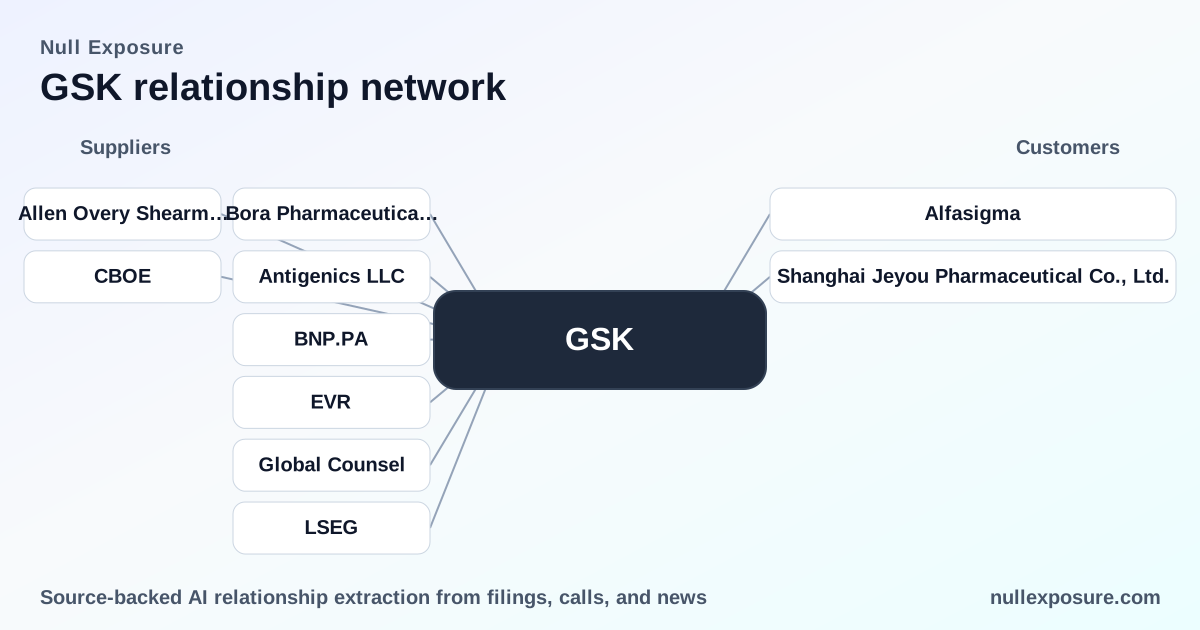
GSK supplier and partner map — what investors need to know
GlaxoSmithKline monetizes through a hybrid model of internal R&D, external licensing, and scale manufacturing: the firm acquires or licenses late-stage assets, pays structured upfront and milestone fees, then captures commercialization economics via royalties and product sales. For investors and operators assessing counterparty exposure, GSK’s supplier network is a mix of small biotech licensors (milestone-driven), royalty counterparties, contract manufacturers, and professional service providers that support buybacks and M&A execution. Learn more at https://nullexposure.com/ if you want a structured view of counterparties and payment triggers.
How GSK sources innovation and manages risk
GSK’s operating model is transaction-oriented and externally integrated. The company routinely:
- Pays upfront and milestone fees to biotech partners in exchange for exclusive development/commercial rights.
- Takes royalties or shares commercialization upside where it licenses-in assets (or conversely pays royalties to others when it outlicenses).
- Contracts manufacturing and marketing services with third parties to scale launches.
- Uses banks and advisors to execute buybacks and strategic M&A.
These traits create a contracting posture that is deal-heavy, milestone-sensitive and moderately concentrated around a set of high-value collaborations; relationships are often high-criticality to the partner (milestones can be company-making) while being modular for GSK (rights and market access centralize risk on GSK’s balance sheet).
Full partner list — plain-English summaries and sources
Below I cover every counterparty flagged in the dataset. Each entry is a concise 1–2 sentence read with a primary source cited.
-
Spero Therapeutics (SPRO) — GSK holds an exclusive license to commercialize tebipenem HBr (outside certain Asian territories), triggering milestone payments including a $25M payment after an NDA resubmission. (GlobeNewswire / Spero, Mar 2026; also Spero filings Q4/2025)
-
CAMP4 Therapeutics (CAMP) — GSK signed a strategic research, collaboration and license deal (Dec 18, 2025) paying $17.5M upfront to apply CAMP4’s RAP Platform to discover ASO candidates, with additional milestones and tiered royalties. (CAMP4 press release & news coverage, Dec 2025)
-
Alector (ALEC) — GSK committed to a multi‑hundred‑million-dollar partnership focused on progranulin-related neurodegeneration; the 2021 deal included large upfront and potential follow‑on payments tied to AL001/AL101 programs. (Biopharma reporting and Alector filings, 2021–2025)
-
Ionis Pharmaceuticals (IONS) — GSK licensed bepirovirsen from Ionis and is preparing global regulatory filings, positioning GSK to commercialize an antisense HBV therapy if approvals proceed. (GSK press release; Ionis earnings calls, 2026)
-
CureVac (CVAC) — CureVac recognized material revenue from GSK under prior licensing of flu/COVID mRNA programs and received additional monetization payments; revenue spikes in 2024 reflect that licensing. (CureVac financial releases and European press, 2024–2025)
-
Harte Hanks (HHS) — Harte Hanks lists GSK among clients for customer care, fulfillment and marketing services, indicating GSK uses third‑party marketing/fulfillment vendors. (Harte Hanks press release, FY2024/FY2026)
-
Scynexis (SCYX) — GSK licensed ibrexafungerp/BREXAFEMME from Scynexis in a deal with sizable upfronts and milestones; later, GSK resolved a dispute and agreed to pay roughly $22M (plus wind‑down costs) to Scynexis. (Scynexis press releases and market reports, 2025–2026)
-
Innoviva (INVA) — Innoviva receives royalties from GSK on respiratory products (e.g., RELVAR/BREO ELLIPTA and ANORO ELLIPTA), representing a significant recurring cash flow line for Innoviva. (Innoviva filings and press, FY2025–FY2026)
-
Codexis (CDXS) — Codexis cites the risk that large enzyme‑performance customers (including GSK) could terminate agreements, signaling GSK is a named performance‑enzyme customer in supplier disclosures. (Codexis 10‑K, FY2024)
-
Royalty Pharma (RPRX) — Royalty Pharma’s portfolio includes royalties tied to GSK products such as Trelegy, illustrating third‑party ownership of GSK revenue streams. (Royalty Pharma filings, FY2025)
-
Bora Pharmaceuticals — GSK signed a five‑year global manufacturing contract with Bora valued at $250M, showing outsourcing of oral solid dose manufacturing capacity. (Market press coverage, FY2026)
-
AnaptysBio (ANAB) — Anaptys outsources commercial and royalty management for Jemperli to GSK (and recently recognized a one‑time $75M commercial milestone tied to Jemperli hitting $1B global sales), with ongoing litigation linked to licensing arrangements. (Anaptys press releases and SEC notices, FY2025–FY2026)
-
Surface Oncology (SURF) — Surface granted GSK exclusive worldwide rights to SRF813 under a licensing agreement, transferring development/commercialization responsibility to GSK. (Surface Oncology press release, 2020–2023)
-
Rapt Therapeutics (RAPT) — GSK agreed to acquire Rapt in a transaction worth roughly $2.2B (cash per share $58), consolidating immunology and anti‑IgE assets into GSK’s pipeline. (Trade and industry reports covering the acquisition, early‑2026)
-
Wave Life Sciences (WVE) — GSK previously held rights to several Wave programs under a multi‑program collaboration; in early 2026 Wave regained full rights to WVE‑006 from GSK, with potential remaining milestone exposure. (Wave press releases, Feb–Apr 2026)
-
Fuisz Technologies / FUSE — Historical OTC collaborations list SmithKline/Boots and other consumer healthcare partners, reflecting legacy OTC supplier relationships dating back to SmithKline Beecham. (Industry press, historical)
-
Adimab, LLC — GSK internalized Adimab’s yeast‑based antibody engineering technology to support in‑house antibody discovery and optimization for targets like depemokimab. (Adimab / PR Newswire, FY2026)
-
Antigenics LLC (Agenus subsidiary) — GSK’s AS01 adjuvant system incorporates STIMULON QS‑21 adjuvant licensed from Antigenics/Agenus, showing use of third‑party adjuvants in vaccine platforms. (Regulatory notices and press, 2026)
-
Illumina (ILMN) — Illumina technologies are used by GSK in multiomic target‑discovery initiatives, indicating collaboration on multiomic datasets to accelerate target identification. (Industry reporting, 2026)
-
Zymeworks (ZYME) — Zymeworks notes milestone and option exercise revenue driven by collaborations with large pharmas including GSK, underlining GSK’s role as a clinical‑stage option‑exerciser. (Zymeworks corporate update, FY2025–FY2026)
-
Theravance Biopharma (TBPH) — Theravance historically received revenue tied to GSK’s TRELEGY under legacy agreements, illustrating long tails in respiratory economics. (Industry filings and press)
-
Evercore (EVR) — Evercore acted as exclusive financial advisor to GSK on the Rapt acquisition, illustrating advisory relationships used for M&A execution. (Marketscreener / deal disclosures, 2026)
-
BNP Paribas / BNP.PA — BNP Paribas has executed GSK’s share buybacks under the £2bn programme, acting as principal broker for multiple tranches. (Reuters/TipRanks reporting, Feb–Apr 2026)
-
London Stock Exchange / LSEG / Cboe Europe / CBOE — GSK executed buyback transactions across LSE and Cboe Europe trading venues as part of its repurchase program. (Regulatory announcements and trading notices, Feb–Apr 2026)
-
Global Counsel — Reporting indicates GSK has ceased plans to work with Global Counsel amid unrelated client controversies, showing GSK’s sensitivity to reputational risk in advisory relationships. (Reuters coverage, 2026)
-
Hansoh Pharma — GSK acquired global rights (excluding greater China) to risvutatug rezetecan from Hansoh, demonstrating continued licensing of ex‑China rights from regional biotechs. (Industry trade news, 2023–2026 mention)
-
AN2 Therapeutics (ANTX) — AN2 disclosed a collaboration with GSK to develop TB therapies, indicating GSK’s continued external partnering in infectious disease. (Investor news, FY2026)
-
Morgan, Lewis & Bockius LLP and Allen & Overy / Shearman Sterling LLP — These law firms appear as defense or legal advisors in litigation and M&A matters involving GSK, reflecting standard legal engagement for large pharma. (Court and deal notices, FY2026)
(If you want a downloadable, table‑ready export of these relationships and payment triggers, visit https://nullexposure.com/ for structured counterparty intelligence.)
What this list implies for investors and operators
- Deal‑heavy sourcing: GSK’s innovation pipeline is primarily supplemented via licensing and acquisitions with structured upfronts, milestones and royalties — partners are often small biotechs where milestones meaningfully affect partner cashflows.
- Operational concentration: A nontrivial share of external spend is on manufacturing (e.g., Bora) and specialized discovery platforms (CAMP4, Illumina, Adimab), making supplier continuity and IP assignments operationally critical.
- Financial plumbing: GSK uses major banks and exchanges for buybacks (BNP Paribas; LSE/Cboe), so execution counterparties matter for capital allocation transparency.
- Maturity and flexibility: The mix of terminated or returned rights (Wave, IDEAYA) alongside acquisitions (Rapt) shows GSK both prunes and consolidates assets — a pragmatic portfolio management posture.
Final investor takeaways
- Focus on milestone exposure and contract terms when modeling partner cash flows — many smaller suppliers rely on GSK milestones for liquidity.
- Monitor manufacturing capacity agreements and brokered buybacks as practical indicators of near‑term cash allocation and operational leverage.
- For ongoing monitoring of counterparties, licensing triggers and material payments tied to GSK, see the structured coverage at https://nullexposure.com/.
If you’d like a bespoke counterparty risk brief or a CSV of the relationships above, reach out via the home page and we’ll provide a tailored export.