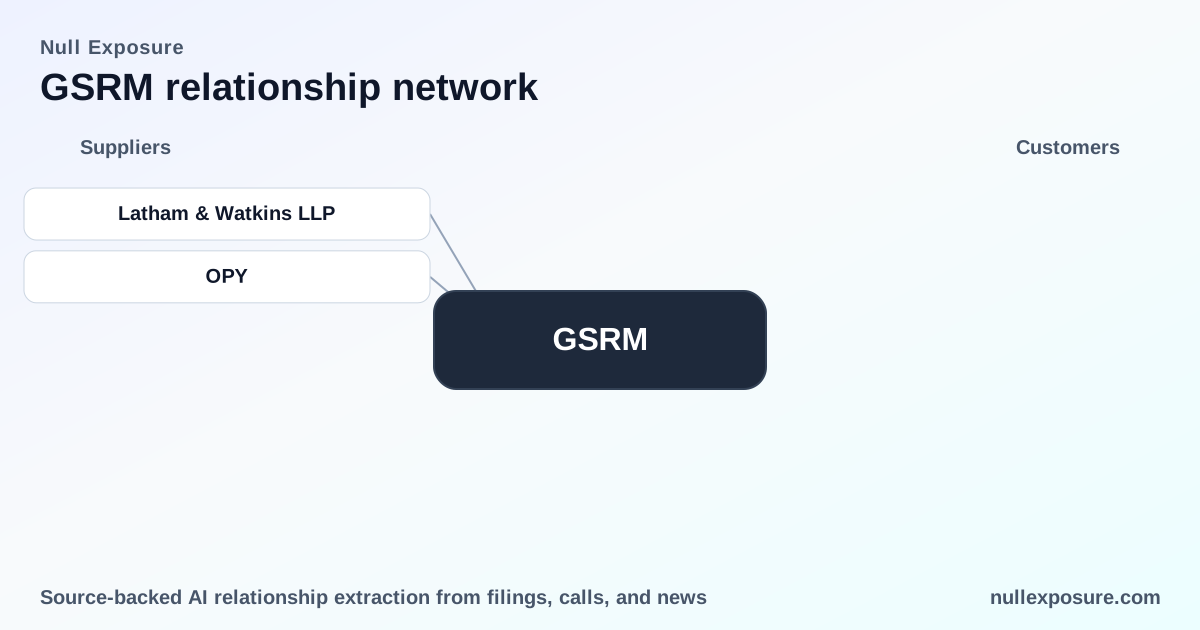
GSRM Supplier Landscape: Legal and Financial Advisors that Underpin a SPAC Transaction
GSRM operates as a special-purpose acquisition vehicle that monetizes sponsor and underwriting expertise through deal execution and transaction fees, with primary economics driven by sponsor warrants, trust cash deployment and the success or failure of business combinations. The company’s supplier posture is concentrated and transaction-centric: legal and investment banking advisors are short-duration but high-criticality suppliers whose performance directly affects deal cadence, regulatory clearance and post-merger market reception. For deeper supplier intelligence, visit https://nullexposure.com/.
Why the advisor roster matters to investors
In SPAC structures, professional advisors are not peripheral vendors — they define execution risk. Legal counsel controls disclosure, SEC interaction and deal documentation; financial advisors manage valuation, investor marketing and the pricing of the combination. A compact advisory roster signals a lean contracting posture but elevates single-counterparty criticality. For investors and operators evaluating GSRM, the advisor list is a leading indicator of underwriting quality, regulatory readiness and potential reputational exposure.
The relationships and what they mean in plain English
-
Latham & Watkins LLP — legal advisor to GSRM. According to a GlobeNewswire press release dated August 25, 2022, Latham & Watkins acted as legal counsel to GSRM in connection with the transaction that took Bitcoin Depot public via GSR II Meteora Acquisition Corp. This places a top-tier law firm on the deal, which reduces disclosure and regulatory execution risk compared with lower‑tier counsel (GlobeNewswire, Aug 25, 2022).
-
Oppenheimer & Co. Inc. — financial advisor to GSRM (OPY). The same GlobeNewswire announcement lists Oppenheimer & Co. as financial advisor to GSRM for the Bitcoin Depot business combination, indicating Oppenheimer led the transaction advisory and capital markets work (GlobeNewswire, Aug 25, 2022). Oppenheimer’s involvement brings an institutional underwriting and investor distribution capability to the transaction.
How these relationships shape GSRM’s operating model
-
Contracting posture: GSRM relies on short-term, high-expertise contracts tied to individual transactions. The company’s contracting is transactional rather than vendorized; legal and banking relationships are activated and paid specifically for the deal lifecycle rather than maintained as continuous service agreements.
-
Concentration and criticality: Advisor concentration is high — two principal advisors were named for the Bitcoin Depot combination — which means single-counterparty performance is critical. A problem with either legal or financial counsel can delay SEC clearance, impair marketing to PIPE investors or increase transaction costs.
-
Maturity and capability: Engaging Latham & Watkins and Oppenheimer signals a mature execution posture: GSRM is accessing elite legal documentation capability and an established capital markets platform, which reduces execution uncertainty and supports stronger market reception at closing.
-
Disclosure transparency: The available public disclosures for the transaction list these principal advisors clearly for FY2022; however, there are no additional supplier constraints or extended supplier relationships disclosed in the data payload, which is a company-level signal about the narrowness of published supplier links.
Risk and upside for investors
-
Upside: Having reputable advisors reduces execution friction and supports smoother regulatory interaction and investor syndication. For investors, that translates into lower near-term deal risk and improved likelihood of successful post-combination trading.
-
Risk: The advisor model is inherently episodic — performance matters in a compressed window. Concentration risk is material: if an advisor withdraws or underperforms mid-process, the time and cost to replace counsel or bankers can be high and can impair deal timing and pricing.
-
Information gap: The publicly visible roster is thin by design; the lack of wider supplier disclosures (no additional constraints or recurring vendor lists) is a signal that supplier reliance is focused on a small set of professional firms, which concentrates counterparty and reputational exposure at the company level.
For more context on supplier concentration and actionable monitoring, consult https://nullexposure.com/.
What investors should monitor next
- Track any updates to advisor rosters ahead of future combinations — new or additional financial advisors or co‑managers will change distribution capability and pricing leverage.
- Watch SEC filings for engagement letters, fee schedules and indemnification terms with advisors, because contractual allocation of liability and fee structures directly affect post-closing economics.
- Monitor press releases and relation-specific disclosures around PIPE investors and underwriters: changes in the underwriting mix will signal whether GSRM is broadening its advisory network or remaining concentrated.
Bottom line and next steps
GSRM’s supplier footprint for the Bitcoin Depot transaction is deliberately concentrated, anchored by Latham & Watkins (legal) and Oppenheimer & Co. (financial), which delivers high execution capability but elevated single-counterparty risk. Investors should value the reassurance of blue‑chip advisors while actively monitoring advisor continuity and any expansion of the advisory roster as leading indicators of deal pipeline health. For comprehensive supplier intelligence and ongoing monitoring, visit https://nullexposure.com/.
Sources: GlobeNewswire press release announcing the Bitcoin Depot business combination with GSR II Meteora Acquisition Corp., August 25, 2022 (advisors listed for FY2022).