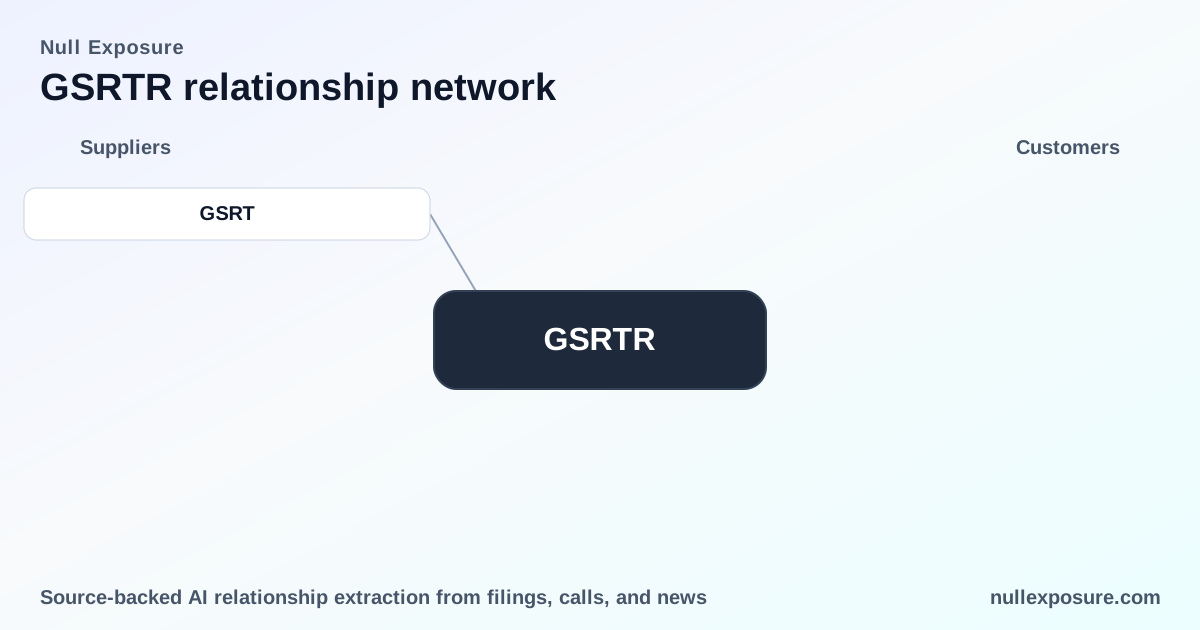
GSRTR supplier snapshot: legal counsel, capital markets focus, and what investors should know
GSRTR operates through transaction-driven supplier relationships that support capital raises and sponsor-led transactions, monetizing primarily via sponsor economics and deal fees tied to public offerings and related corporate actions. For investors and operators, the supplier footprint is a direct window into how the company executes financings and manages transaction risk: top-tier legal counsel engagement, episodic vendor workflows, and concentrated counterparty importance are the central themes to monitor. For a deeper supplier-risk view and ongoing monitoring, visit https://nullexposure.com/.
What the supplier map implies about how GSRTR runs the business
GSRTR’s supplier evidence indicates a deal-oriented operating model: the company contracts high-caliber external advisors when structuring and executing capital markets transactions rather than relying on large in-house teams. This posture drives several business-model characteristics investors should weigh:
- Contracting posture — transactional and high-stakes. Suppliers are engaged intensively around offerings and then released, which concentrates execution risk into short windows where vendor performance is critical.
- Concentration — supplier relationships are strategically selective. Working with elite advisers delivers credibility and speed in capital markets but creates single-counterparty dependency for legal and regulatory navigation.
- Criticality — counsel is mission-critical for deal completion and disclosure quality. Failures or lapses in these relationships translate directly into financing delays, increased legal fees, or adverse disclosures.
- Maturity — engagement of established firms signals institutionalized deal processes. Using proven advisors reduces execution risk but increases cost base relative to lower-tier alternatives.
These company-level signals frame how to approach diligence: focus on engagement terms, continuity planning, and the cost/benefit trade-off of top-tier external counsel.
The Latham & Watkins connection — a concise read for investors
Latham & Watkins LLP is recorded as advising GSR III Acquisition Corp. on a US$200 million initial public offering; the engagement was handled by Latham’s corporate team led out of Century City. According to Latham & Watkins’ announcement in November 2024, the firm advised on the offering and its corporate team led execution (https://www.lw.com/en/news/2024/11/latham-advises-gsr-iii-acquisition-corp-on-us200-million-initial-public-offering). This relationship shows GSRTR’s willingness to retain top-tier legal counsel for capital-raising events, reinforcing a model that prioritizes market credibility and regulatory robustness.
Every supplier relationship flagged in the records
- Latham & Watkins LLP — Latham acted as legal advisor to GSR III Acquisition Corp. in a US$200 million initial public offering, indicating the use of elite counsel for capital markets work (Latham & Watkins announcement, November 2024: https://www.lw.com/en/news/2024/11/latham-advises-gsr-iii-acquisition-corp-on-us200-million-initial-public-offering).
No other supplier relationships were present in the reviewed results. This single-entry footprint is itself a signal: when a supplier list is narrow and dominated by high-profile advisers, operational continuity and counterparty performance assume outsized importance.
What this means for risk and returns
Engaging top-tier counsel for material financings is a net positive for execution quality and market credibility, and thus supports deal completion and potentially more favorable investor reception. The trade-offs are clear:
- Cost pressure: Premier firms command premium fees, which can compress near-term economics on smaller transactions.
- Concentration risk: Heavy dependence on a few external partners raises vendor continuity risk; replacement advisers introduce onboarding frictions during live deals.
- Execution centrality: The outcome of financings is tightly coupled to supplier performance, elevating the importance of pre-engagement due diligence and contingency planning.
For investors focused on durability and margin profile, these forces balance reputational upside against higher transactional costs and single-point risks.
Practical due diligence checklist for operators and analysts
To translate supplier signals into investment decisions and operational mitigants, follow these steps:
- Review historical engagement letters and fee schedules to quantify the legal cost burden on earlier financings.
- Confirm continuity plans: does GSRTR have backup counsel relationships or multi-firm engagements for critical closing windows?
- Inspect recent offering documents for counsel sign-offs, legal opinions, and any disclosed material issues tied to adviser input.
- Evaluate concentration across suppliers beyond legal counsel — banking, accounting, and escrow partners — to understand cascading failure modes.
For a continuous lens on supplier exposure and to track changes in counsel, infrastructure, and concentration, see https://nullexposure.com/.
How investors should act now
- For event-driven investors: monitor upcoming filings and any new counsel announcements as proximate indicators of planned capital activity.
- For longer-horizon holders: stress-test sponsor economics against sustained legal and advisory cost assumptions to validate margin projections.
- For operators conducting diligence: secure copies of recent engagement letters and verify redundancy planning for mission-critical suppliers.
Conclusion — the bottom line on GSRTR’s supplier posture
GSRTR’s supplier footprint signals a capital-markets-centric operating model that leverages elite external counsel to execute offerings. That approach supports strong execution and market credibility but concentrates counterparty risk and elevates transaction costs. Investors should prioritize checks on engagement terms, continuity arrangements, and supplier concentration to properly price execution risk into valuations.
For ongoing supplier intelligence and to benchmark GSRTR against peer supplier profiles, visit https://nullexposure.com/.