Getty Realty (GTY): underwriting partners, forward sales, and what suppliers reveal about capital strategy
Getty Realty is a small-cap retail-focused REIT that monetizes through long-term net-leased convenience and automotive retail properties and periodically accesses public equity markets to fund acquisitions and balance sheet activity. The company executes large negotiated capital raises using forward-sale structures with major investment banks and brokerage affiliates, converting balance-sheet optionality into liquidity while preserving tenant cash flows. For investors and operators evaluating supplier risk and counterparty exposure, the recent book-running and forward-sale activity is the clearest window into Getty’s financing posture.
Learn more about how we track supplier relationships and capital events at https://nullexposure.com/.
Quick thesis: financing through strategic underwriting partnerships
Getty operates a concentrated financing model: it invests heavily in retail automotive and convenience assets and regularly partners with large banks to execute equity offers structured as forward sales. That model reduces immediate dilution, shifts execution risk to dealer banks, and concentrates counterparty exposure among a small set of global banks. The February 2026 equity offering is the latest evidence of that dynamic, and the counterparties involved define both execution capability and reputational risk for GTY.
The transactions and counterparties that matter right now
Below I cover every relationship found in the public reporting around the February 2026 public offering and forward-sale structure.
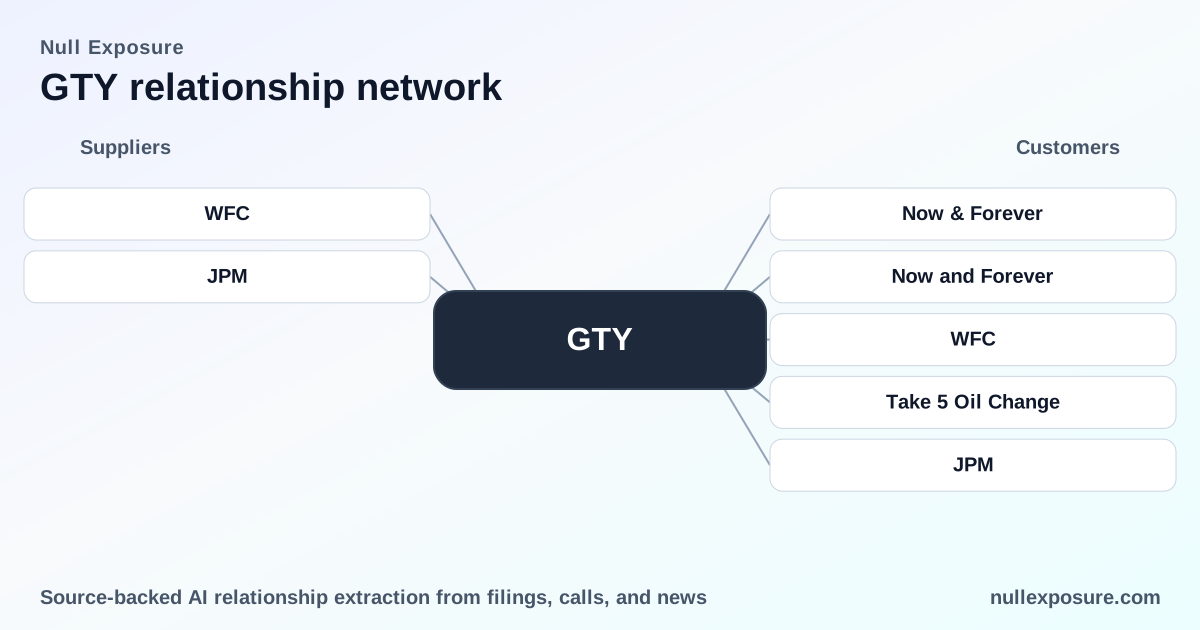
Wells Fargo Securities
Wells Fargo Securities acted as one of the book-running managers for Getty’s public offering of 4,000,000 shares in a forward-sale structure, participating in pricing at $32.48 per share. This placement role positions Wells Fargo as a primary execution partner on the transaction. (TradingView reporting; GlobeNewswire press release, Feb 18, 2026: https://www.globenewswire.com/news-release/2026/02/18/3239904/0/en/getty-realty-corp-announces-pricing-of-public-offering-of-4-000-000-shares-of-common-stock.html)
J.P. Morgan / J.P. Morgan (Parent brand)
J.P. Morgan served as a co-book-runner on the offering and executed a forward sale agreement that allowed the bank or its affiliate to borrow and sell shares to underwriters; that underscores J.P. Morgan’s central role in structuring and placing GTY equity. (TradingView and QuiverQuant coverage, March 2026: https://www.tradingview.com/news/tradingview:8a70611dc362d:0-getty-realty-prices-4-0m-share-forward-equity-offering-at-32-48-with-jpmorgan-and-wells-fargo/)
JPMorgan Chase Bank
JPMorgan Chase Bank, as the banking affiliate, was contracted in a forward-sale agreement to borrow shares and effect the placement to the underwriters, creating the operational mechanics for the forward sale. That affiliate-level participation is standard for large underwritings and signals direct balance-sheet involvement. (TradingView account of the forward sale mechanism, first seen Mar 9, 2026: https://www.tradingview.com/news/tradingview:8a70611dc362d:0-getty-realty-prices-4-0m-share-forward-equity-offering-at-32-48-with-jpmorgan-and-wells-fargo/)
J.P. Morgan Securities (and J.P. Morgan Securities LLC)
J.P. Morgan Securities and its LLC affiliate are named as book-running managers and the parties executing the forward sale agreements, indicating that the securities-trading arm handled placement and distribution mechanics while the Chase banking affiliate supported financing and borrow/sell logistics. Market participants should treat the securities affiliate as the distribution engine and the bank affiliate as the execution counterparty. (GlobeNewswire press release and eand.co coverage, Feb–Mar 2026: https://eand.co/getty-realty-corp-announces-pricing-of-public-offering-of-4000000-shares)
Wells Fargo Bank
Wells Fargo Bank is listed as a signatory to the forward sale agreements and therefore provided the borrow-and-sell capability for the Wells Fargo affiliate’s participation in the offering; its role mirrors JPMorgan’s affiliate mechanics on the transaction. The bank-level involvement creates bilateral exposure on settlement and borrow arrangements. (TradingView coverage of forward-sale agreements, Mar 2026: https://www.tradingview.com/news/tradingview:8a70611dc362d:0-getty-realty-prices-4-0m-share-forward-equity-offering-at-32-48-with-jpmorgan-and-wells-fargo/)
What these relationships imply about Getty’s operating constraints and capital posture
- Long-term leasing posture: Getty’s properties leased from third parties carry an average remaining lease term of approximately 7.8 years, which positions the company toward stable, predictable cash flows and supports bank appetite for financing those cash flows over time. This is a company-level signal about operating maturity rather than a counterparty-specific term.
- Scale of recent investment activity: Getty disclosed ~$273.0 million of acquisitions in 2025 into convenience and automotive retail — a clear indicator that the company is in a growth-through-acquisition phase and will rely on capital markets relationships to fund continued expansion. This spend band (> $100M) explains why deep, global book-runners were engaged.
- Geographic footprint signal: The mention of locations such as Largo, FL highlights active property-level deployment in North America and suggests localized operational concentration that underwriters will have evaluated during diligence.
- Concentrated counterparty exposure: Getty repeatedly used two primary banking groups (J.P. Morgan and Wells Fargo) for book-running and forward sale mechanics; concentration in underwriting relationships increases execution efficiency but elevates single-event counterparty risk if a primary underwriter changes appetite or settlement terms.
Risk and opportunity read-throughs for investors and operators
- Risk — counterparty concentration: Getty’s reliance on large banks to execute forward-sales centralizes settlement and borrow risk with a small set of counterparties; credit events or market liquidity shocks at these banks would materially affect near-term equity financing options.
- Opportunity — execution and reach: Using J.P. Morgan and Wells Fargo as book-runners gives Getty access to deep distribution channels and institutional buyers, reducing time-to-market for large capital raises and preserving optionality for further acquisitions.
- Operational maturity: The company’s long-lease weighted portfolio and substantial 2025 capital deployment indicate a mature acquisition cadence and financing sophistication that institutional lenders and underwriters find acceptable.
If you’re tracking counterparty concentration, underwriting fees, or forward-sale mechanics across REITs, this transaction is a clean case study in how mid-cap landlords convert asset-backed cash flow into scaled capital through concentrated banking relationships. Explore more relationship intelligence and transaction timelines at https://nullexposure.com/.
Final takeaway and recommended actions
Getty’s February 2026 offering demonstrates a deliberate financing strategy: leverage long-dated lease cash flows and deep banking relationships to finance rapid acquisition growth while minimizing immediate dilution. For investors, the primary questions are counterparty concentration and repeat access to the same book-runners under different market conditions. For operators and vendor partners, the takeaway is that Getty will continue to engage major banks for capital needs, making those banks’ financing terms and syndication appetite material to GTY’s growth plan.
For ongoing monitoring of Getty’s counterparties and to receive alerts on future book-runners or forward-sale activity, visit https://nullexposure.com/ and sign up for supplier relationship tracking.