Fractyl Health (GUTS) — supplier profile and what it means for investors
Fractyl Health operates as a metabolic therapeutics company that develops device- and biologic-enabled interventions for type 2 diabetes and obesity. The company monetizes through clinical-stage development of its Revita device and Rejuva gene therapy platform, relying on a combination of internal final assembly and extensive third‑party manufacturing and services to progress toward commercialization and eventual device and therapy sales or licensing. Revenue today is negligible; value rests in clinical progress and the company’s ability to secure reliable supplier and service relationships to support scale-up. For a faster supplier-risk read, visit https://nullexposure.com/.
Executive takeaway: concentrated supplier exposure under a mixed contracting posture
Fractyl’s supplier footprint shows a dual contracting posture: the company carries long‑dated obligations on the corporate side (leases, notes and enduring auditor relationships) while sourcing key manufacturing and study inputs on a short‑term or purchase‑order basis. That combination creates two persistent themes for investors: operational leverage to single/sole‑source suppliers and balance sheet obligations that extend beyond near‑term clinical milestones. Learn more at https://nullexposure.com/.
What the public relationships tell us today
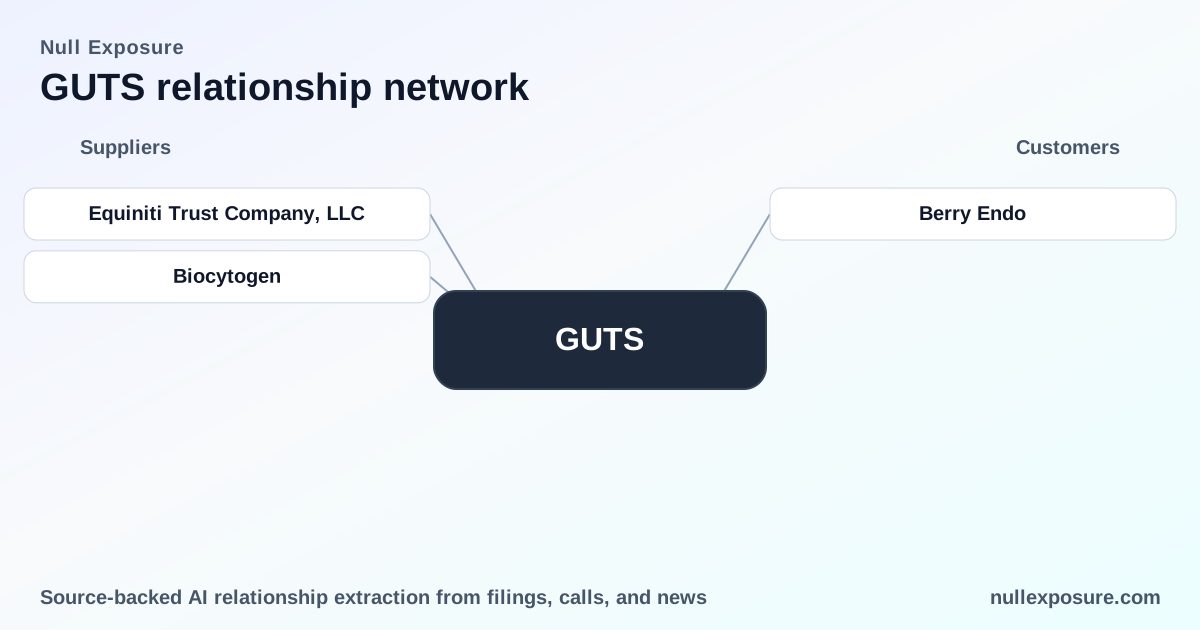
Below are the supplier or service relationships surfaced in public materials and press coverage; each is followed by a concise plain‑English description and a source citation.
Equiniti Trust Company, LLC
Fractyl directs questions about the call and exercise of Tranche A warrants to Equiniti Trust Company, LLC, indicating Equiniti acts as the company’s transfer or warrant agent for the August 2025 public offering follow‑through. According to the company’s December 15, 2025 press release on GlobeNewswire, investors and warrant holders are instructed to contact Equiniti’s Reorganization Department for execution details (GlobeNewswire, 2025-12-15 — https://www.globenewswire.com/news-release/2025/12/15/3205903/0/en/Fractyl-Health-Announces-Call-of-Tranche-A-Warrants-Tied-to-August-2025-Public-Offering-Following-Achievement-of-Clinical-and-Trading-Milestones.html).
Biocytogen
Biocytogen provided the humanized GIP‑receptor mouse model used in Fractyl’s preclinical RJVA-002 study, which supports the company’s gene‑therapy program for obesity and metabolic indications. Fractyl’s October 7, 2025 press release describes male mice engineered with a humanized GIP receptor (Biocytogen) in its preclinical cohorts, confirming Biocytogen’s role as a specialized preclinical model supplier (GlobeNewswire, 2025-10-07 — https://www.globenewswire.com/news-release/2025/10/07/3162356/0/en/Fractyl-Health-Announces-Potent-Preclinical-Results-from-RJVA-002-a-Dual-GIP-GLP-1-Gene-Therapy-Candidate-for-Obesity.html).
Constraints and what they reveal about Fractyl’s operating model
The public text and filings create a coherent signal set about Fractyl’s supplier strategy and exposure. Presenting these as company‑level operating characteristics:
- Mixed contract types: Evidence shows both long‑term corporate obligations (e.g., a promissory note maturity in September 2028 and a 10‑year lease footprint) and a predominant reliance on purchase‑order, terminable‑at‑will arrangements for manufacturing sub‑assemblies and study materials. This structure means balance‑sheet commitments coexist with operational flexibility but also with execution risk when scaling production.
- Single/sole‑source sensitivity: The company explicitly states some suppliers are single‑ or sole‑source for critical sub‑assembly components, which makes procurement continuity a business‑critical risk; loss of a supplier would create material disruption to clinical and scale‑up timelines.
- Third‑party manufacturing and services as core operations: Fractyl outsources the manufacture of key parts of its single‑use devices and sources CROs, clinical sites and specialist preclinical vendors for the gene therapy program. Manufacturing and CRO relationships are therefore mission‑critical, not ancillary.
- Global operational footprint: Fractyl maintains relationships with CROs and clinical sites domestically and internationally, indicating a geographically dispersed supplier base that increases logistical complexity but also diversifies patient‑recruitment and regulatory pathways.
- Maturity and spend signals: The company has long‑standing professional relationships (for example, a long‑term auditor relationship dating back to 2017) and nontrivial audit fees (audit fees around $616k reported), which signals institutional governance and recurring professional services spend consistent with an emerging public biotech.
- Relationship stage: Public language describes ongoing, active reliance on third‑party services for current and future clinical work, confirming these suppliers are operating now rather than hypothetical future partners.
These characteristics combine into a profile where supplier continuity, single‑source concentration, and the ability to convert short‑term POs into scalable, validated manufacturing are the principal operational gates investors should evaluate.
Investment implications and risk calibration
For investors and operators, the supplier map implies three concrete actions:
- Prioritize diligence on single/sole‑source components and the company’s contingency plans for alternative suppliers and qualification timelines. Loss of a single‑source supplier would delay clinical milestones and increase cost.
- Monitor Fractyl’s balance‑sheet obligations and lease maturities alongside its cash runway; long‑term corporate commitments limit operational flexibility during protracted clinical development.
- Evaluate the strength and continuity of CRO, preclinical model, and transfer‑agent relationships as part of governance and capital‑markets readiness—these relationships directly affect milestone delivery and investor liquidity events.
If you want a deeper supplier risk scorecard or a custom diligence brief, start here: https://nullexposure.com/.
How to proceed as an investor or operator
Fractyl’s path to value conversion is simple in concept but complex in execution: deliver clinical milestones while maintaining supply continuity and converting short‑term manufacturing relationships into validated, scalable production. Key near‑term indicators to watch are supply‑chain continuity announcements, qualification of alternative suppliers for single‑source components, and cash‑management actions around long‑dated notes and lease obligations.
For targeted supplier intelligence and monitoring tailored to public‑and‑private biotech portfolios, visit https://nullexposure.com/ for services and briefings.
Final verdict
Fractyl presents a classic clinical‑stage biotech risk profile: high scientific upside counterbalanced by supplier concentration and mixed contractual commitments that create execution risk. Investors should treat supplier diligence as central to valuation: clinical success alone will not create durable value unless manufacturing and service continuity are demonstrably in place.