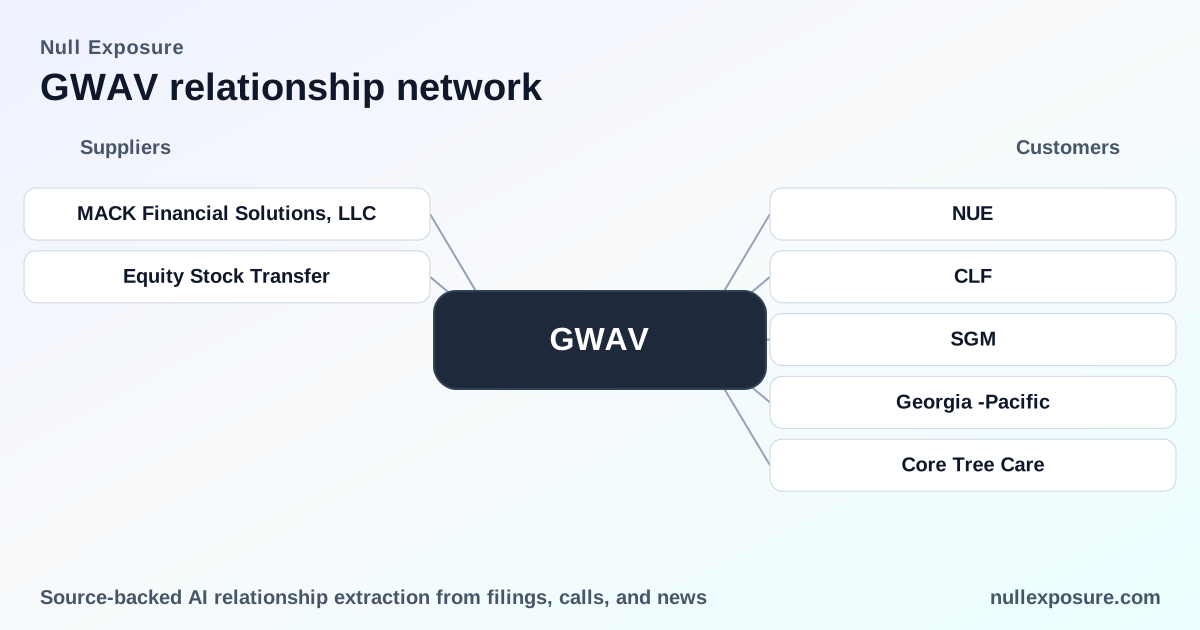
Greenwave Technology Solutions (GWAV): supplier relationships, related-party posture, and what investors should track
Greenwave Technology Solutions operates regional metal-recycling yards through subsidiary Empire Services and monetizes by purchasing end-of-life vehicles and scrap, processing and selling ferrous and non‑ferrous metal, and providing ancillary services (hauling, equipment rentals, buyback channels). Revenues come from commodity metal sales and related services, while working capital and capital expenditures are supported through short-term financing and a number of related‑party transactions that have been disclosed in company statements. For a concise supplier-risk view and ongoing monitoring, visit https://nullexposure.com/.
Why supplier relationships matter for a scrap-metal recycler
Greenwave’s economics are commodity-driven: revenue volatility tracks metal prices and feedstock sourcing, while margins depend on processing efficiency and logistics cost. Public disclosures and press releases show a company that runs with a mixed contracting posture: short-term finance instruments and operational arrangements with entities controlled by insiders, combined with a geographically concentrated operating footprint in the U.S. mid‑Atlantic and parts of Ohio. The company explicitly sources scrap from individual sellers (via ScrapApp), large enterprises, and government organizations, which spreads counterparty types but keeps operations regionally concentrated.
Key company-level signals to note:
- Short-term financing profile. Company filings disclose a note that matures within 12 months and accrues double-digit interest, indicating near-term refinancing or liquidity focus rather than long-dated capital structure stability.
- Low supplier concentration. The company states no single supplier accounted for more than 5% of cost of revenues for the year ended December 31, 2024, reducing single-vendor concentration risk.
- Related‑party operational intensity. Multiple disclosures describe leases, equipment purchases, hauling and mechanic services provided through entities controlled by the CEO, with cumulative spend that crosses both mid and high single/multi‑million-dollar bands.
- North American operating footprint. Operations are centered on Hampton Roads and northeastern North Carolina markets with an additional Cleveland, OH facility, making regional market and regulatory conditions a primary operational risk.
Publicly flagged supplier and service relationships investors should know about
MACK Financial Solutions, LLC — outsourced CFO and reporting services
According to a GlobeNewswire press release dated February 10, 2026, Greenwave entered a scope-of-work agreement with MACK Financial Solutions, LLC dated January 2, 2026, under which MACK provides bookkeeping, financial reporting and SEC reporting duties and Chelsea Pullano serves as the Company’s part‑time Chief Financial Officer subject to Board appointment. This is an outsourced finance and compliance arrangement that centralizes financial reporting functions with an external provider and was disclosed in the company’s February 2026 announcement. (GlobeNewswire, Feb 10, 2026)
Equity Stock Transfer — transfer agent services for corporate action
A GlobeNewswire announcement from August 20, 2025, describes Equity Stock Transfer as Greenwave’s transfer agent administering instructions for exchanging physical stock certificates following a reverse stock split, handling book‑entry conversions and issuance of new certificates. This is an administrative relationship tied to a corporate reorganization event rather than an operational supplier relationship. (GlobeNewswire, Aug 20, 2025)
What the relationships and constraints mean for investor risk assessment
Greenwave’s disclosures and the relationship inventory generate a focused set of monitoring priorities:
- Governance and control of finance functions: The outsourcing of core SEC reporting and CFO duties to MACK Financial Solutions shifts critical control points outside the company; governance diligence should focus on contractual deliverables, SLAs, and board oversight of the outsourced CFO role. The GlobeNewswire notice confirms the arrangement and the appointment of a named executive as part‑time CFO (Feb 2026).
- Related‑party economic exposure: The company repeatedly discloses substantial transactions with entities controlled by the CEO — equipment purchases, land and permit purchases, leases, hauling and repair services. These are material to operational continuity and capital structure: combined related‑party spend includes multi‑million dollar equipment and property deals and recurring service payments in the mid‑six figures, creating a concentration of operational dependency even if individual outside-supplier concentration is low.
- Liquidity and refinancing cadence: Note disclosures indicate a short-term note with a March 31, 2025 maturity and 10% interest, and payment mechanics that can be delayed to preserve minimum cash-on-hand thresholds; this creates a predictable near-term refinancing profile and a heightened sensitivity to working-capital swings. Presenting this as a company-level funding constraint is warranted based on the filing excerpts.
- Supplier base diversity vs. regional concentration: The mix of government, large enterprise and individual suppliers diversifies counterparty types, and the launch of ScrapApp adds a direct-to-individual sourcing channel; however, operations remain regionally concentrated in the mid‑Atlantic and northeastern North Carolina markets, keeping geographic risk elevated.
For a quick operational-risk scorecard and ongoing supplier-monitoring subscription, see https://nullexposure.com/.
Practical actions for investors and operators
- Demand transparency on related‑party contract terms (rates, durations, termination rights) and quantify how much of fixed-cost services are provided by insider-controlled entities.
- Require the board to publish clear metrics on the outsourced CFO engagement (deliverables, turnaround times for SEC filings, responsibilities retained by the company) given MACK’s custody of reporting duties.
- Track the short-term note amortization schedule against cash balance covenants; liquidity stress tests should assume continued commodity-price pressure and slower feedstock inflows.
- Maintain counterparty mapping that captures individual‑sourced volumes via ScrapApp and institutional/government supply channels so buyers and operators can forecast feedstock availability under regional demand shocks.
Bottom line
Greenwave is a small‑cap recycler that monetizes through commodity sales and related services while leaning on near-term financing and related‑party operational partnerships to run and expand facilities. The MACK outsourcing arrangement centralizes financial reporting functions and should be monitored as a governance control point (GlobeNewswire, Feb 10, 2026), while Equity Stock Transfer’s role is strictly administrative in connection with a reverse split (GlobeNewswire, Aug 20, 2025). Investors need to weight the company’s low external supplier concentration against significant related‑party exposure and short-term financing commitments when evaluating credit, governance and operational risk.
For supplier-level intelligence and a tailored monitoring plan, visit https://nullexposure.com/ for professional resources and ongoing alerts.