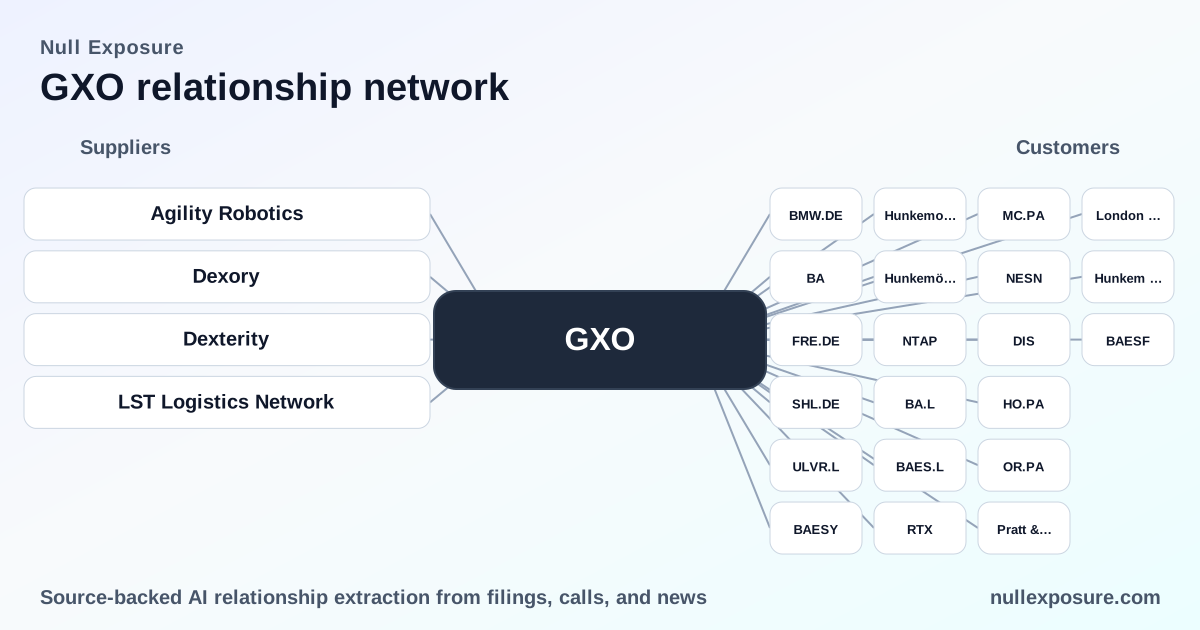
GXO Logistics: supplier relationships that shape scalability and risk
GXO Logistics operates as a global contract logistics provider that monetizes through long‑term warehousing, fulfillment and technology‑enabled operations contracts, plus large-scale equipment and real‑estate leases. Revenue derives from a mix of fixed‑fee and variable, usage‑linked service contracts with retailers, manufacturers and public‑sector customers, while the company offsets capital needs through a combination of long‑dated debt and operating leases. For investors, the practical takeaway is simple: growth is driven by contract scale and automation partnerships, while profitability is constrained by labor intensity, lease exposure and capital servicing. For a quick overview of GXO partner mapping, visit https://nullexposure.com/.
The operating model in one paragraph: how GXO gets paid and what matters
GXO sells integrated logistics services — order fulfillment, kitting, distribution and value‑added automation — on a mix of long‑term contracts and usage‑based arrangements. The company invests in material‑handling equipment, robotics and AI pilots to improve per‑order margins and scale, while financing that investment through unsecured notes, term loans and significant operating leases. Key drivers for margin improvement are automation partnerships and migration of customers to higher‑value, tech‑enabled services; key risks are labor cost inflation, regulatory compliance in EMEA and leverage from acquisition financing.
Structural constraints that influence supplier risk and opportunity
GXO’s public filings and releases show a clear set of business‑model constraints that should frame any supplier evaluation.
- Contracting posture is mixed but leans long‑term for core revenue: GXO carries substantial long‑term debt and long‑term operating leases (multi‑year notes and lease liabilities), indicating an appetite and need to lock in assets and financing for multi‑year service delivery. Evidence includes multiple term‑loan and unsecured note agreements referenced in GXO’s 2024/2025 disclosures.
- Short‑term liquidity and working capital are also meaningful: bridge facilities, short‑term lease costs and short‑dated derivatives show GXO uses near‑term instruments to finance acquisitions and working capital, creating periodic refinancing sensitivity.
- Geographic footprint is global with EMEA concentration signals: GXO operates across 27 countries and recently closed high‑profile UK activity; regulatory and labor risks in EMEA (including VAT and pension issues) are operationally material.
- Supplier criticality is high and spend is large: operating leases, equipment and M&A activity put several supplier relationships into the mid‑to‑high spend band (tens to hundreds of millions), underlining the strategic importance of major partners.
- Service delivery is labor‑intensive but accelerating automation: labor is a material cost and source of regulatory exposure; at the same time, GXO is actively deploying robotics and AI partners to reduce per‑order labor intensity.
These constraints are company‑level signals drawn from GXO’s filings and press releases; where a constraint explicitly names a counterparty, I call that out below.
The partnership map — every named relationship and what it means for investors
Prologis (PLD)
GXO is mentioned in Prologis’ FY2025 filing in a list of counterparties, implying Prologis recognizes GXO as a tenant or logistics customer in its industrial portfolio. According to Prologis’ FY2025 10‑K, GXO is one of the logistics operators occupying industrial real estate (Prologis FY2025 10‑K). This underscores GXO’s dependence on third‑party real‑estate partners for scalable warehousing.
Global Net Lease (GNL)
GNL noted lease renewal spreads driven in part by renewals with GXO Logistics during its 2025Q3 earnings call. A GNL earnings‑call transcript (2025Q3) referenced GXO as a contributor to renewal spreads 26% above expiring rents, highlighting GXO’s role as an active lessee pushing rent economics through renewals.
RDi (RDI)
GXO will manage supply and distribution of FIT kits working with RDi under the expanded NHS England partnership. A GlobeNewswire release (March 30, 2026) describes RDi as the UK diagnostic‑kitting partner collaborating with GXO on large public‑health logistics, signaling GXO’s expansion into government clinical logistics in the UK.
MAST / Mast Group
In the same GlobeNewswire announcement (March 30, 2026), GXO named MAST — characterized as a large FIT distributor — as a partner for NHS England work, showing GXO’s reliance on specialist distributors for clinical supply chains.
KION (KGX)
GXO piloted an autonomous industrial truck powered by KION at a French facility, according to a GXO press release on AI‑driven warehouse pilots (March 18, 2026). The partnership with KION reflects GXO’s strategy to integrate OEM automation into operations to lift throughput and reduce headcount risk.
NVIDIA (NVDA)
The KION pilot at GXO was explicitly described as NVIDIA‑powered Physical AI technology, positioning GXO as the inaugural real‑world pilot site for perception and edge‑AI in material‑handling (GXO press release, March 18, 2026). This elevates GXO’s profile as a testbed for enterprise AI partners.
Accenture (ACN)
Accenture participates in the strategic collaboration bringing AI, digital twins and perception tech into GXO operations alongside KION and NVIDIA (GXO press release, March 18, 2026), signaling consultative and systems‑integration support for GXO’s automation rollouts.
Dexterity
Industry coverage (Finviz summary, March 2026) lists Dexterity as a partner for deploying AI‑powered robotic arms for depalletizing and labeling at GXO facilities; this points to modular robotic investments to shave labor costs in repetitive tasks.
Dexory
The same coverage attributes to “Dexory” an automated real‑time inventory scanning role using autonomous robots, suggesting GXO is layering sensing and autonomy for inventory accuracy improvements (Finviz analysis, March 2026).
Agility Robotics
GXO is piloting Digit, Agility Robotics’ humanoid robot, in human‑centric warehouse environments as reported in market commentary (Finviz, March 2026). This positions GXO to evaluate humanoid robotics for tasks that require greater dexterity or human‑like movement.
KPMG LLP
GXO ratified KPMG LLP as its independent registered public accounting firm for fiscal 2026, per a proxy/filing notice (Quartr/gxo proxy filing, FY2026). KPMG’s role is audit assurance — a governance signal important to investors.
LST Logistics Network
GXO engaged LST Logistics Network as an advisor in forming its Defense Advisory Board, according to GXO releases and CityBiz coverage (2026). This suggests a deliberate push into defense and government logistics channels supported by specialized advisors.
Investment implications and risk checklist
- Upside: automation and partnerships with KION, NVIDIA, Accenture and robotics firms provide a tangible path to margin expansion as fixed cost converts to higher throughput.
- Execution risk: labor and regulatory exposure in EMEA are material and appear in filings as potentially material cost drivers and investigations.
- Balance‑sheet risk: large long‑term lease and debt profiles create refinancing and interest‑rate sensitivity despite a mix of long and short‑term financing instruments.
- Strategic diversification: public‑sector contracts (NHS kit distribution) and defense advisory work show deliberate sector diversification that raises revenue stickiness but requires strict compliance.
If you want a companion supplier‑risk scorecard or a quick supplier exposure heatmap for GXO’s top partners, explore the proprietary mapping at https://nullexposure.com/ — it’s built for investors who need actionable counterparty intelligence.
Bold takeaways: GXO’s growth hinges on converting automation pilots into scalable margin improvement while managing significant lease and labor risk; its partner ecosystem spans real estate, robotics, AI and professional services — all of which are strategic levers and potential concentration points for investors.