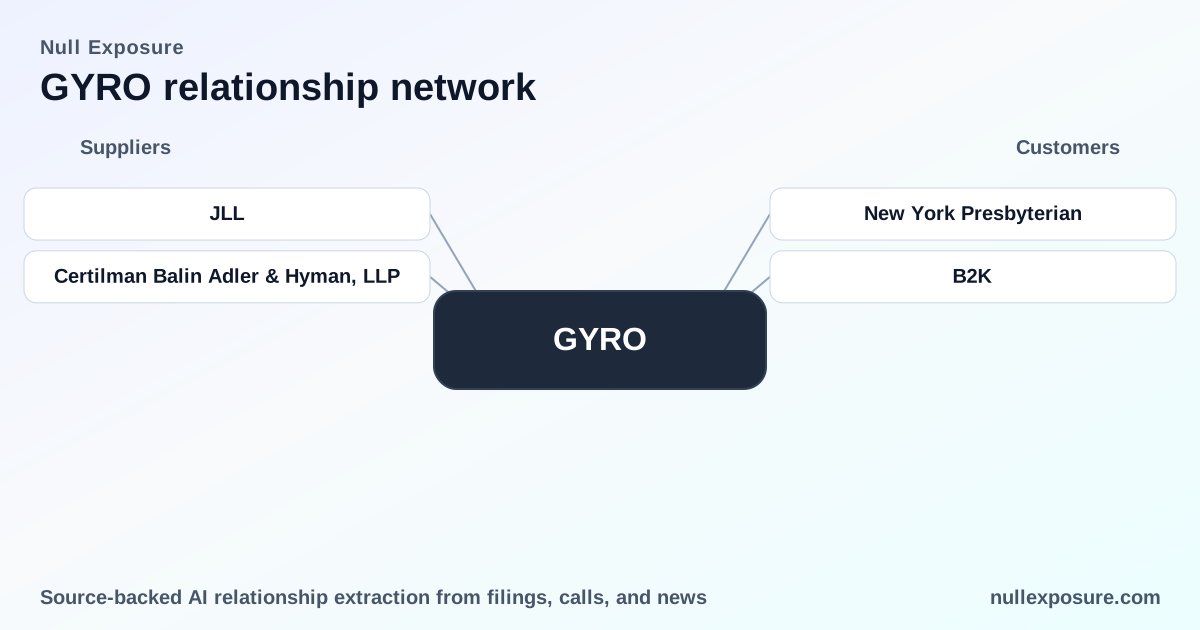
Gyrodyne (GYRO): supplier relationships shape liquidation execution and cash recovery
Gyrodyne is a small-cap New York-based real estate owner/operator that is now executing a liquidation strategy to monetize two core assets—Flowerfield and Cortlandt Manor—through entitlement work and marketed property sales. The company monetizes by selling subdivided lots and improved parcels while funding operations with a mix of mortgages, short-term vendor financing and limited lines of credit, and it outsources marketing, legal and entitlement services to specialist firms to accelerate disposition and maximize net asset value.
Explore supplier signals and counterparties that matter for deal timing and proceeds at https://nullexposure.com/.
Why supplier relationships are an investment lever for Gyrodyne
Gyrodyne’s ability to realize liquidation value is directly tied to third-party service providers. The firm is using a national broker to run a marketing campaign and has negotiated vendor deferrals and short-term loans to bridge cash flow until asset sales close. Those operational arrangements determine timing, transaction costs, and recovery rates for investors.
- Marketing capability is critical: retaining a national broker converts local listings into a wider buyer universe and potential price discovery.
- Vendor deferrals and short-term loans are tactical liquidity tools that reduce near-term cash burn but increase counterparty concentration and payment risk if sales slip.
- Long-dated mortgages create structural rigidities—prepayment penalties and fixed amortization schedules limit flexibility but also stabilize creditor expectations.
If you want a consolidated view of suppliers and counterparties used in liquidation execution, visit https://nullexposure.com/.
Company-level constraints and what they signal about the operating model
The public filings and recent media coverage reveal a multi-layered supplier posture:
- Contracting posture is mixed: long-term mortgage debt plus short-term vendor financing. Gyrodyne holds the 2021 Mortgage Loan (five-year term with a five-year extension and explicit prepayment penalties; maturity dates in 2028) and secured a 2023 two-year mortgage for working capital—clear evidence of long-term encumbrance combined with short-term liquidity measures (company filings, 2021–2024).
- Concentration and geography: highly concentrated in New York. Approvals, permits and state-level actions (DEC, DOT, state budget impacts) are material to timing and costs; the company’s assets and entitlement activity are New York-centric (FY2024–2025 filings).
- Criticality of service providers: high. Gyrodyne has outsourced national marketing to JLL and relies on legal, engineering, and accounting firms for entitlement and sale execution—service providers are central to value realization (filings, 2023–2025).
- Maturity and lifecycle: winding down. Management is executing a forecasted liquidation through end-2026 and is actively managing loan structures to preserve liquidity for disposition (company statements).
- Materiality of counterparty arrangements: mixed but meaningful. Vendor fee deferrals and converted balances (
$477,829 converted to short-term loan) and projected liquidation/operating costs ($11.1m excluding gross proceeds) indicate vendor relationships are financially significant to the outcome (FY2024–2025 disclosures). - Spend profile is varied: entitlement and professional fees sit in the $100k–$1m band, mortgage and liquidation cost estimates fall in the $1m–$10m and $10m–$100m bands, showing both tactical and strategic spend layers.
These constraints frame a company that is execution-dependent on a small set of external advisors and lenders; investors should prioritize monitoring supplier performance against sale milestones.
Supplier-by-supplier: what investors need to know (complete list)
Below are every supplier relationship identified in recent public coverage; each entry is a concise, sourced summary.
- JLL Capital Markets (JLL) — Gyrodyne retained JLL to run a national marketing campaign and to sell both the Flowerfield and Cortlandt Manor properties, positioning JLL as the primary disposition advisor tasked with generating maximum net asset value. Source: JLL press release on the Cortlandt Medical Park engagement (JLL Capital Markets, March 10, 2026: https://www.jll.com/en-us/newsroom/gyrodyne-retains-jll-to-sell-westchester-development-site) and company coverage noting JLL’s national campaign (MarketScreener / QuiverQuant, March 2026).
- Certilman Balin Adler & Hyman, LLP — This Hauppauge law firm is acting as Gyrodyne’s counsel in matters related to Flowerfield and affiliated litigation; the firm’s role is litigation-focused and supports the company’s entitlement and defense needs. Source: Newsday coverage identifying Certilman as Gyrodyne’s legal representative (Newsday, March 2026: https://www.newsday.com/long-island/towns/flowerfield-fairgrounds-lawsuit-hvgtg10n).
What these relationships imply for timing, pricing and downside
- Marketing execution will control price discovery. With JLL leading a national campaign, sale timelines compress and the buyer pool expands; successful national marketing will materially improve realized value vs. local-only efforts (JLL engagement, March 2026).
- Short-term vendor financing preserves runway but increases event risk. Several vendors agreed to defer 50% of fees until lot sales and a $477k balance was converted to a loan payable upon lot sale, creating interdependencies between vendors and sale milestones (FY2024–2025 filings). If lot sales are delayed, vendor claims and interest-bearing payables will consume sale proceeds.
- Debt structure limits early-unwind flexibility. The 2021 Mortgage Loan includes staged prepayment penalties and a maturity in 2028 that constrains early monetization without fee friction; that loan was transferred to SIG CRE 2023 Venture LLC after Signature Bank’s 2023 closure (filings, 2021–2024).
- Regulatory and local approvals are gating items. Entitlements, DEC wetlands permits, and state DOT interactions are essential inputs to any sale; delays shift cash flows and increase carrying costs (company disclosures through 2024–2025).
For a full supplier signal dashboard and to track whether marketing and sales milestones are being met, check https://nullexposure.com/.
Practical watchlist for investors and counterparties
- Track JLL campaign milestones: listing launch date, bid cadence, and closing timeline. Successful competitive bidding is the fastest route to preserve NAV.
- Monitor vendor-payable conversions and accrued-interest roll-ups; these reduce net sale proceeds if not renegotiated prior to closings.
- Watch regulatory permit timelines in New York (wetlands, subdivision approvals) as they directly affect lot closings and revenue recognition.
- Confirm loan covenant compliance and any modifications related to the liquidation schedule; the company reported covenant compliance as of 12/31/24 but is actively managing facilities through the liquidation period.
Bottom line and next steps
Gyrodyne’s liquidation outcome is disproportionately driven by a small set of suppliers—notably JLL for marketing and local counsel for entitlement and litigation defense. Investors should treat supplier performance as a proxy for execution risk: successful marketing and timely entitlements translate directly to higher recovery; vendor deferrals and short-term loans raise structural counterparty risk if sales slip.
If you evaluate counterparties or underwrite recovery scenarios, review supplier milestones and vendor-payable roll-ups alongside marketing progress at https://nullexposure.com/ to stay aligned with execution risk and timing.