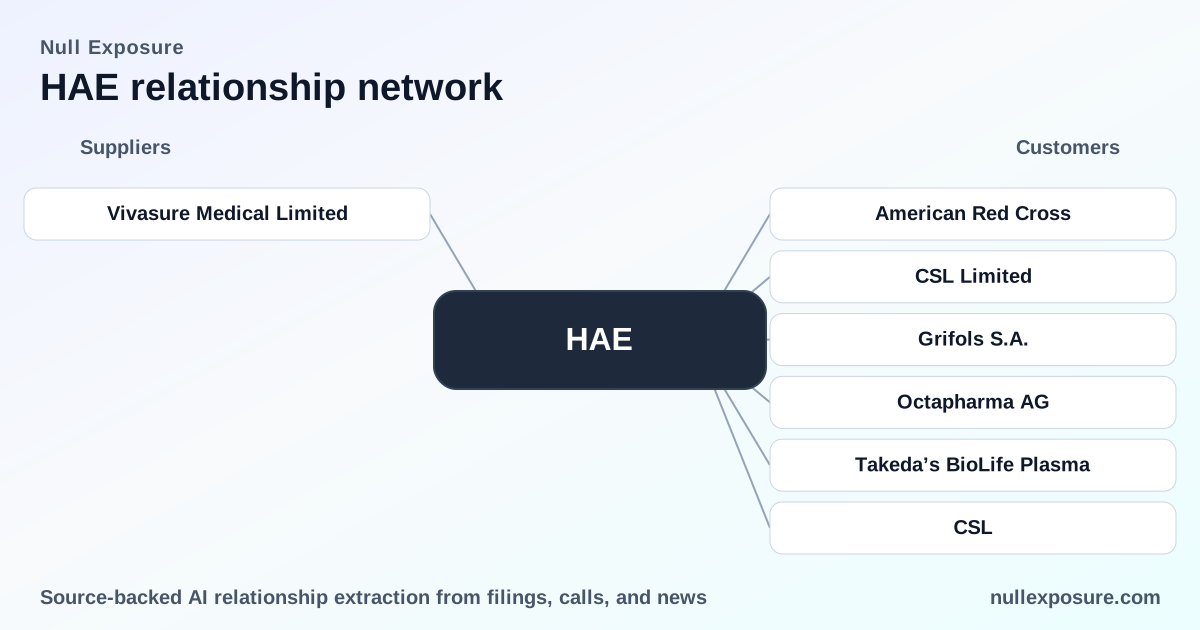
Haemonetics (HAE): Supplier relationships, contract posture and investor implications
Haemonetics monetizes by designing, manufacturing and selling medical devices and consumables across hospital and specialty care channels, supported by recurring consumable revenue and strategic acquisitions that expand clinical adjacencies. The company combines in-house manufacturing with contract manufacturers and service providers, funds growth through a mix of term debt and sizable credit facilities, and returns capital via structured buybacks—creating a commercial profile that is capital intensive, acquisition-driven and exposed to concentrated operational dependencies. For deeper counterparty intelligence, visit https://nullexposure.com/.
A compact operating thesis for investors
Haemonetics generates durable cash flow from consumables attached to capital equipment and accelerates revenue diversification through targeted tuck‑ins (OpSens, Attune Medical, OpSens acquisition activity and now Vivasure). Its capital structure and repurchase programs indicate active balance‑sheet management: material leverage paired with disciplined share repurchases supports EPS upside but increases sensitivity to supply continuity and regulatory execution. The company’s margins and ROE reflect operating leverage in medical devices, while its low beta implies lower market volatility relative to peers.
What every operator should watch before contracting with HAE
Haemonetics runs a hybrid sourcing model: core consumables are largely manufactured in‑house while capital equipment and component sets are procured from Asia and regional contract manufacturers. The company relies on a mix of short‑duration purchase commitments and long‑dated leases and credit facilities—this produces a contracting posture that is both flexible for spot production needs and committed where capacity or real estate is strategic.
Key company‑level operating signals (from the company’s filings and disclosures):
- Contracting mix: Active use of short‑term purchase orders for operating expenses and capital equipment alongside long‑term leases (weighted average remaining lease term ~7.5 years) and a multi‑year credit facility maturing in 2029. (Company disclosures, Form 10‑K FY2025)
- Framework arrangements: A three‑year share repurchase authorization and sizeable revolving credit facility act as ongoing frameworks that influence capital allocation and counterparty credit dynamics. (Company disclosures, 2024–2025)
- Counterparty profile: Haemonetics deals primarily with large financial and commercial institutions for hedging, lending and capped‑call transactions; the company also interacts with government tax authorities globally. (Form 10‑K FY2025)
- Geographic supply footprint: Manufacturing and component sourcing is global with material footprints in APAC (Malaysia, Japan, Singapore, Thailand, Indonesia, Philippines), North America (U.S., Mexico) and EMEA (liquid solutions in Europe). (Form 10‑K FY2025)
- Materiality of supplier risk: Raw material and sterilization capacity disruptions are identified as material; sole‑source vendors and contract sterilizers are flagged as potentially critical to operations—Tetakawi is named as a significant third‑party provider for certain vascular closure device services. (Form 10‑K FY2025)
- Spend scale: Procurement and capital activity operate across bands—multiple transactions in the $100m+ range (acquisitions, term loans, repurchase programs), with recurring operating and leasing spend in the $1m–$100m bands. (Form 10‑K FY2025)
- Relationship roles: Haemonetics functions as buyer, manufacturer and service integrator; it also serves as a seller to hospital and clinical end users, and as a licensee/license holder in IP matters. (Form 10‑K FY2025)
These signals create an operational profile where supplier continuity and regulatory compliance are principal risk vectors for investors and procurement teams.
Full list of disclosed supplier / partner relationships
Below is the complete set of supplier/partner relationships surfaced in the provided results, with a concise plain‑English takeaway and the attributable source.
Vivasure Medical Limited — strategic acquisition (FY2026)
Haemonetics agreed to acquire Vivasure, an Ireland‑based innovator in percutaneous vessel closure, broadening Haemonetics’ vascular access portfolio and clinical addressable market. According to a Cision news release, the LSP Health Economics Fund exited Vivasure through a sale to Haemonetics in March 2026. (Cision/press release, March 10, 2026 — https://news.cision.com/eqt/r/eqt-life-sciences-to-exit-vivasure-medical-via-sale-to-haemonetics,c4290004)
(There were no other supplier relationships listed in the results.)
What the constraints imply for procurement and risk teams
Translate the constraint inventory into action: Haemonetics’ disclosures describe a company that balances transactional flexibility with multi‑year commitments.
- Contract maturity and flexibility: The coexistence of short‑term purchase orders and long‑dated leases/credit facilities means Haemonetics can scale production quickly but is locked into property and financing obligations that constrain rapid reallocation of fixed capacity. (Form 10‑K FY2025)
- Single‑vendor concentration and criticality: The firm calls out sole‑source suppliers, contract sterilizers and a named service provider (Tetakawi) as potential single points of failure—operational continuity requires active dual‑sourcing or contingency plans. (Form 10‑K FY2025)
- Globalized component flows: Sourcing components in Asia and shipping finished goods worldwide amplifies FX, logistics and geopolitical exposure—hedging is executed on an 18‑month rolling basis to smooth net income volatility. (Form 10‑K FY2025)
- Regulatory and quality control immutability: Manufacturing and contract partners must comply with FDA QSR/cGMP and EU regulations; failure by the company or suppliers triggers material financial and reputational consequences. (Form 10‑K FY2025)
- Financial counterparties are institutional: Hedging and capped‑call counterparties are large financial institutions; credit risk is managed through selective counterparty choice and documented credit facilities. (Form 10‑K FY2025)
If you are evaluating a supplier agreement with Haemonetics, require explicit clauses on redundancy, sterilization capacity, and regulatory audit rights.
For a strategic supplier risk audit template and third‑party scoring, visit https://nullexposure.com/.
Investor implications and action checklist
Haemonetics’ profile is positive for investors who value recurring consumable revenue and disciplined capital returns, but operational concentration and regulatory dependence require active monitoring.
- Upside drivers: Attach‑rate growth from new devices (OpSens, Attune, Vivasure), improved margins from integration and a funded repurchase program that supports EPS. (Company financials, FY2025)
- Risk drivers: Material exposure to sterilization and raw‑material supply; leverage concentrated in multi‑hundred‑million dollar facilities and notes with near‑term maturities. (Form 10‑K FY2025)
- Due‑diligence checklist for operators and procurement teams: ensure multi‑sourcing, audit rights with contract sterilizers, confirm service‑level commitments with named third‑party vendors, require continuity plans for single‑site manufacturing. (Company disclosures)
For a tailored supplier risk briefing or to benchmark Haemonetics against peers, return to https://nullexposure.com/ and request a coverage map.
Conclusion — how to track the critical signals
Haemonetics combines acquisition‑led growth with a capital structure that leverages both term debt and active repurchases; that structure increases the commercial urgency for consistent supply and regulatory compliance. Operators negotiating with Haemonetics should insist on redundancy for sterilization and sole‑source components, clear audit and notification rights, and contractual remedies for service interruptions. Investors should monitor integration outcomes from Vivasure and the company’s covenant compliance as the next inflection points for valuation.
If you evaluate counterparties or want a supplier exposure briefing for portfolios or operations teams, start at https://nullexposure.com/ for research and contact options.