Huntington Bancshares (HBANP) — supplier relationships and operating constraints investors need to know
Huntington Bancshares operates as a regional banking organization that monetizes through a combination of net interest margin on loans and securities, fee income from investment banking and mortgage activities, and capital-market financing (debt and preferred issuances). Its operating model relies heavily on third‑party service providers for technology, data processing, and property services while managing a mix of short‑ and long‑term funding sources to support liquidity and growth. For a concise supplier-risk view and ongoing monitoring, visit https://nullexposure.com/.
Why supplier strategy is a critical lever for a regional bank
Huntington’s business is inherently people‑ and infrastructure‑intensive: branch networks, loan origination channels, payment systems and market operations all depend on vendors and counterparties. The company spends at scale on outside data processing and professional services, and maintains purchase commitments into the high hundreds of millions — a profile that generates both operational leverage and concentrated vendor risk.
- Cost and control trade-off: Huntington outsources data and technology to achieve scale, which reduces near‑term costs but increases reliance on third parties for uptime, security, and regulatory compliance.
- Funding posture: The bank uses both short‑term wholesale instruments (repo agreements and short borrowings) and long‑dated debt to finance its balance sheet, creating a mixed maturity profile that must be actively managed.
These structural facts create a supplier risk vector that is material to credit and operational outcomes; for further supplier intelligence, see https://nullexposure.com/.
Recent counterparties picked up in public reporting
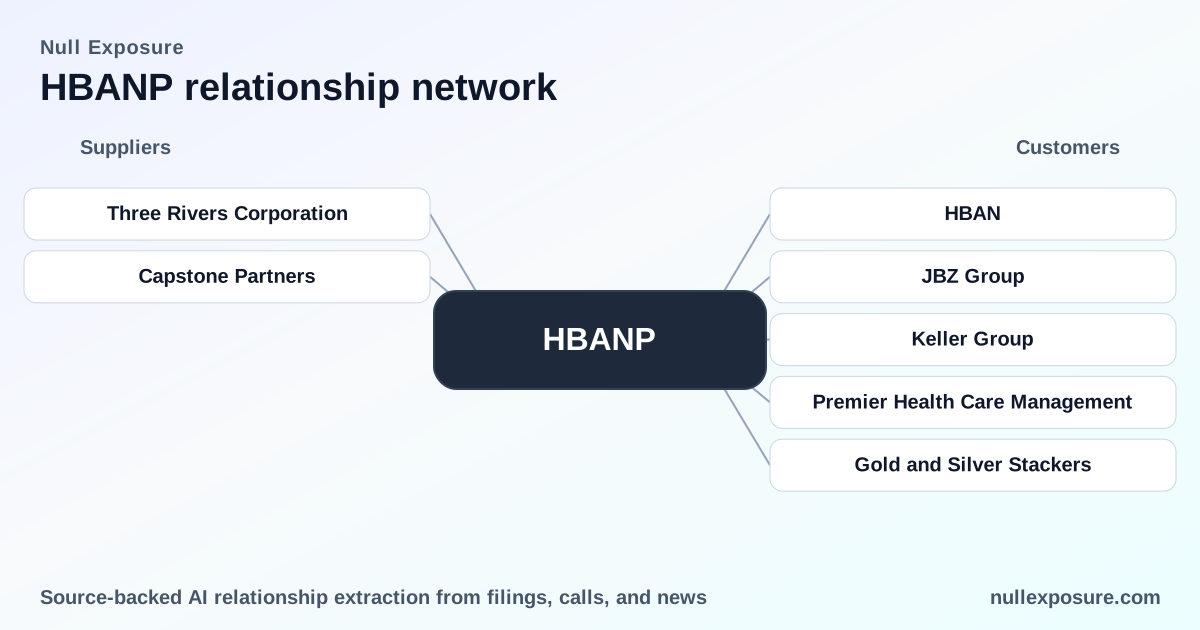
Three Rivers Corporation — local construction partner for a branch rebuild
Huntington invested $1.65 million to rebuild a branch facility in Sanford and engaged Three Rivers Corporation alongside local subcontractors and suppliers for work on the 2,461 square foot site. This is an example of Huntington sourcing local construction and facilities services to maintain its retail footprint. (MidMichiganNow, March 10, 2026)
Capstone Partners — strategic acquisition to build fee income and middle‑market capability
Huntington agreed to acquire investment bank Capstone Partners to expand its middle‑market investment banking and fee income capabilities, signaling an active strategy to grow non‑interest revenue through M&A and integrate advisory services into its commercial banking franchise. (American Banker, March 10, 2026)
What the constraints tell you about Huntington’s operating model and supplier posture
The text excerpts and disclosures collectively describe a set of company-level characteristics investors should interpret as enduring features of the Huntington supplier ecosystem.
- Contracting posture — mixed maturity with long tails. Huntington runs a portfolio of long‑term leases and long‑dated debt instruments (senior notes and subordinated debentures) alongside short‑term borrowings and repurchase agreements. The combination creates multi-year contractual commitments for facilities and funding, increasing the significance of long‑dated supplier and creditor relationships.
- Short‑term liquidity tools are material. Repurchase agreements and other short‑term borrowings are used routinely, so operational continuity depends on both vendor performance and market access.
- Framework agreements and collateral arrangements exist. Huntington uses collateral and master netting agreements with trading counterparties, indicating formalized counterparty frameworks that reduce bilateral credit exposure but require active collateral management.
- Counterparty mix is institutionally heavy and government‑centric. Many held‑to‑maturity securities are U.S. government or agency instruments; the bank also transacts with large financial institutions and central counterparties. Government exposures are both strategic and regulatory, and disruptions in government debt markets are identified as material risks.
- Geography is predominantly North America but operational footprints can be global. Headquartered in Columbus, Ohio, most securities and primary operations are U.S.‑centric, but Huntington uses third‑party providers both domestically and offshore for specialized services.
- Materiality is mixed: some single‑issuer exposures are immaterial, but system and market shocks are material. The company reports no non‑government single issuer that exceeds 10% of shareholders’ equity, yet recognizes that systemic events (e.g., a U.S. government debt default or cyber incident) would have material impact.
- Primary relationship roles are buyer and service‑consumer, not vendor aggregator. Huntington generally acts as the purchaser of services (data processing, software, cybersecurity assessments, appraisals, and professional services) rather than as a distributor — although it also distributes loans via indirect channels in auto finance.
- Spend profile is large. Line items like $665m for outside data processing and purchase commitments totaling $716m indicate a vendor spend band in the $100m+ range, with additional categories in the $10m–$100m band for professional services.
These characteristics mean Huntington’s supplier risk is simultaneously broad (many third parties, some offshore) and deep (large-dollar central relationships and long contractual tails).
Investment implications: what matters to due diligence
- Operational resilience is a top risk: Huntington outsources critical functions; any major third‑party cyber incident or outage would directly affect customer servicing and markets operations. Monitor vendor security certifications and incident history.
- Funding mix sensitivity: The blend of repos, brokered deposits, FHLB/Federal Reserve access and long‑term notes creates interest‑rate and liquidity policy exposure. Assess counterparty concentration and collateral rehypothecation practices.
- Cost and contract renewal risk: Long leases and multi‑year service contracts lock in cost base; inflation and technology refresh cycles can increase vendor spend and compress margins. Track purchase commitment rollovers and lease renewal terms.
- Acquisitions change supplier scope: The Capstone deal increases fee‑based activity and likely brings new vendor relationships associated with advisory and capital‑markets operations; integration risk and vendor rationalization will be actionable monitoring points.
For a practical supplier‑risk dashboard tailored to financial institutions, check https://nullexposure.com/ — it’s the quickest way to move from public disclosures to monitoring priorities.
Bottom line
Huntington’s supplier footprint is large, multi‑tiered and mission‑critical: large dollar commitments to data and technology, long‑term leases and market funding relationships make vendor performance central to both earnings and resiliency. Recent activity — from local branch rebuilds to strategic M&A — shows the bank balancing retail upkeep with a push into fee businesses, which will broaden supplier needs and integration tasks. For investors and operators evaluating counterparty risk, focus on vendor concentration, contractual maturities, collateral and framework agreements, and the bank’s vendor governance as the primary determinants of near‑term operational and financial risk.
To translate these signals into an active monitoring program, begin here: https://nullexposure.com/.