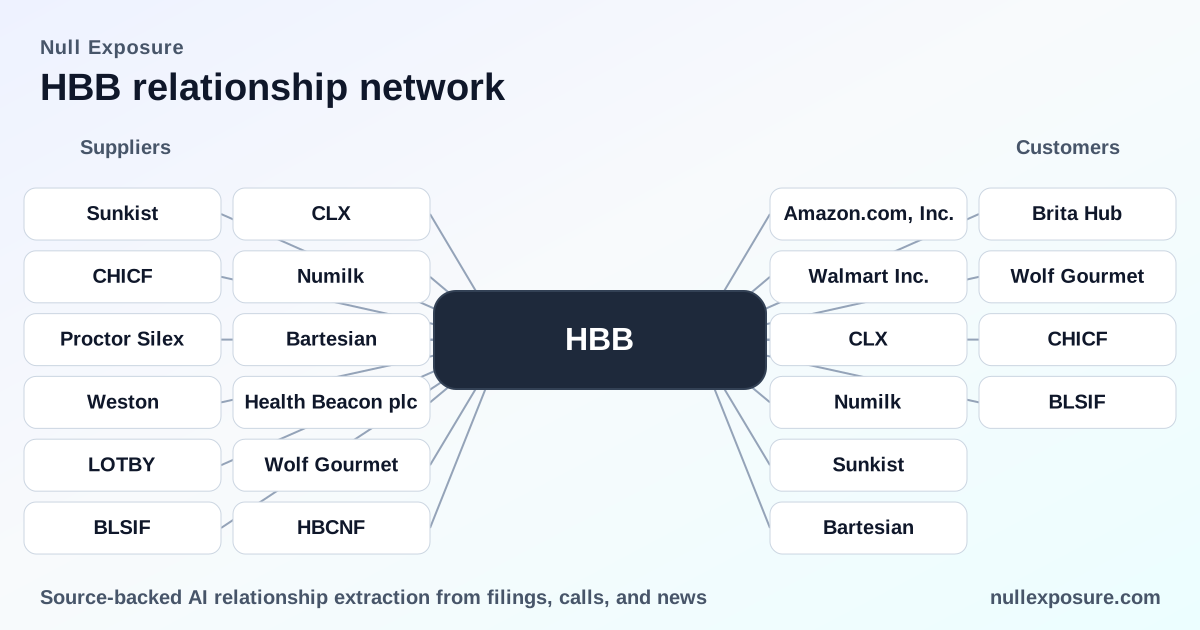
Hamilton Beach Brands (HBB): supplier relationships, contracts and concentration you need to price into risk models
Hamilton Beach Brands designs, markets and distributes small and specialty appliances globally and monetizes through direct product sales, brand licensing and exclusive co‑development agreements that convert intellectual property into shelf and online revenue. The company combines branded manufacturing with multiyear licensing deals and exclusive distribution arrangements to generate recurring streams from product launches and licensed royalties. For a focused supplier-risk assessment, read the relationship summaries and operating constraints below. For more supplier intelligence and matchup analysis, visit https://nullexposure.com/.
How Hamilton Beach turns brands into revenue — a practical investor thesis
Hamilton Beach converts design, sourcing and brand access into cash flow through three levers: (1) direct sales of Hamilton Beach‑branded appliances, (2) licensed product programs where HBB designs and distributes products under third‑party brands, and (3) exclusive development/distribution agreements for specialty categories (for example, plant‑based milk makers and premium cocktail systems). Licensing and exclusives shift product development risk onto HBB while creating higher margin, brand‑driven SKUs. The company supports that model with concentrated Asia‑based manufacturing, hedging programs and a mix of long‑ and short‑term commercial contracts.
Explore a supplier-focused perspective at https://nullexposure.com/ for comparative scoring and contract-level signals.
Contracting posture, concentration and operational constraints — what investors should price
- Contract mix is hybrid: HBB runs long‑term licensing and trademark agreements alongside a largely purchase‑order based procurement model. The company reports multiyear licensing and distribution agreements and also operates with short‑term leases and spot purchase orders for much of its sourcing. This dual posture means HBB captures durable licensed revenue while maintaining flexibility in procurement costs.
- Geographic concentration is critical: Approximately three‑quarters of finished goods suppliers are based in China, exposing cash flow and margins to tariffs, freight volatility and compliance regimes such as the UFLPA. Tariff exposure affects roughly 40% of annual purchases under Section 301 lists, translating into direct margin pressure or retail price risk.
- Supply relationships are material to performance: HBB identifies supplier disruptions, raw material cost swings (plastic, steel, aluminum) and transportation congestion as potential material risks to revenue and profitability. The company actively hedges FX and interest rate exposure and uses a third‑party payment administrator for supplier finance activity.
- Roles and maturity: Company signals show HBB acts as buyer, distributor and licensee, and engages third‑party manufacturers and service providers for tooling, logistics and regulatory compliance. Financial arrangements include long‑term debt facilities with hedges and active operating leases for production tooling.
These constraints frame where premium finance providers and operators should concentrate diligence: tariff risk, supplier traceability, lease and tooling commitments, and the structure of licensing economics.
For prioritized supplier exposure scoring and contract tags, go to https://nullexposure.com/.
Relationship inventory — partners to watch (concise, sourced)
Below are every partner mentioned in the source material, with a plain‑English summary and a source note.
Clorox (The Clorox Company, CLX)
Hamilton Beach entered an exclusive multiyear trademark licensing and product development agreement to develop and market Clorox‑branded True HEPA air purifiers and related home appliances. Source: Licensing International coverage of the 2021 agreement (reported in the HBB relationship data for FY2022) and PR Newswire (Q3 2023 release) referencing Clorox‑branded product lines.
Brita (BLSIF)
HBB signed an exclusive multiyear trademark licensing and product development agreement with Brita to bring countertop electric water filtration appliances to market under the Brita Hub name. Source: Licensing International announcement (reported FY2022) and HBB Q3 2023 PR Newswire disclosure.
Bartesian
Hamilton Beach holds exclusive multiyear agreements to design, sell, market and distribute Bartesian premium cocktail delivery machines, positioning HBB as the commercialization partner for the Bartesian system. Source: Company disclosures summarized in Quantisnow and PR Newswire (FY2025–FY2026 references).
Numilk
HBB has an exclusive multiyear agreement to develop and distribute Numilk plant‑based milk makers for home and commercial use, including next‑generation specialty appliances to create fresh non‑dairy milk on demand. Source: PR Newswire (March 2023 disclosure) and Quantisnow company summaries (FY2025–FY2026).
HealthBeacon (Health Beacon plc / HBCNF)
Hamilton Beach signed a 2021 agreement to be the exclusive marketer and distributor in the U.S. and Canada for HealthBeacon’s injection care management system, and has powered the Smart Sharps Bin product through its Hamilton Beach Health platform. Source: Licensing International (reporting on 2021 agreement, FY2022) and PR Newswire (Q3 2023 release referencing the Smart Sharps Bin).
Wolf Gourmet
HBB licenses Wolf Gourmet for countertop appliances targeted at premium markets, incorporating a licensed brand strategy for higher margin products. Source: PR Newswire Q3 2023 release listing Wolf Gourmet among licensed brands.
CHI (CHICF)
Hamilton Beach licenses the CHI brand for premium garment care products as part of its licensed product portfolio. Source: PR Newswire Q3 2023 release and Simply Wall St company profile (FY2025).
Sunkist
HBB has multiyear agreements to design, sell and distribute Sunkist‑branded commercial juicers and sectionizers, extending the company’s presence in commercial foodservice equipment. Source: PR Newswire (FY2026 Q4 and full‑year 2025 results) and Simply Wall St profile (FY2025).
Lotus (LOTBY)
Lotus‑branded small kitchen appliances are included in HBB’s portfolio through product programs and licensing/brand arrangements that broaden its mid‑market offering. Source: Simply Wall St company profile (FY2025).
Proctor Silex
Proctor Silex is a legacy consumer brand sold and distributed by HBB across core appliance categories as part of its in‑house brand portfolio. Source: Simply Wall St company profile (FY2025).
Weston
Weston‑branded consumer products appear in HBB’s product roster and are part of the company’s consumer goods segmentation. Source: Simply Wall St company profile (FY2025).
What this means for investors and operators
- Revenue diversification through licensing reduces reliance on commodity SKUs but concentrates execution risk in product development and brand management. HBB’s mix of exclusive multiyear deals and spot purchasing creates both upside from new branded launches and downside if suppliers or logistics fail.
- China/Asia concentration is a dominant operational risk: tariffs, UFLPA compliance and freight volatility are direct drivers of margin and working capital volatility given the supplier geography signal.
- Financial posture is mature and active: HBB uses hedges (FX and interest rate swaps), a sizable credit facility and operating leases tied to tooling — indicators of a company managing financial risk while running concentrated global sourcing.
For lender diligence, model scenarios should stress tariff shocks, a one‑quarter supply disruption from China, and royalty‑sharing dynamics under the licensing agreements.
If you want a contract‑level risk map and supplier concentration dashboard, get enterprise‑grade analysis at https://nullexposure.com/.
Final takeaway: Hamilton Beach leverages licensing and exclusives to lift margins while operating a supply chain that is heavily APAC‑centred and materially significant to revenue, making supplier diligence and tariff/compliance modeling the most valuable inputs for credit and equity underwriting.