Health Catalyst (HCAT) — supplier relationships that shape delivery risk and margin
Health Catalyst provides data and analytics software and professional services to healthcare organizations, monetizing through subscription and services revenue tied to its analytics platform, hosted infrastructure, and licensed third‑party technologies. The company operates a cloud‑centric, services‑heavy model that converts software IP into recurring revenue while depending on external infrastructure, licensed software, and credit markets to fund growth and M&A. For a practical view of supplier exposure and counterparty risk, see https://nullexposure.com/.
How Health Catalyst sells value — and why suppliers matter
Health Catalyst sells a combination of cloud‑hosted analytics, licensed application modules, and implementation/consulting services to hospitals and health systems. Revenue derives from recurring platform contracts plus professional services and acquisition‑driven add‑ons; delivery is materially dependent on third‑party hosting, licensed software, and a network of professional services partners. Margin and uptime are therefore a function of vendor performance, licensing continuity, and access to capital — not just product adoption.
If you evaluate HCAT as a supplier or investor, focus on three operating characteristics: contracting posture (a mix of long‑term commitments and short‑term leases), concentration in cloud/infrastructure providers, and the degree to which particular suppliers are critical to service delivery. For ongoing monitoring and supplier mapping, visit https://nullexposure.com/.
Supplier map — the relationships disclosed in filings and press
Below I list every counterparty identified in the available results, with a concise plain‑English summary and the primary source.
-
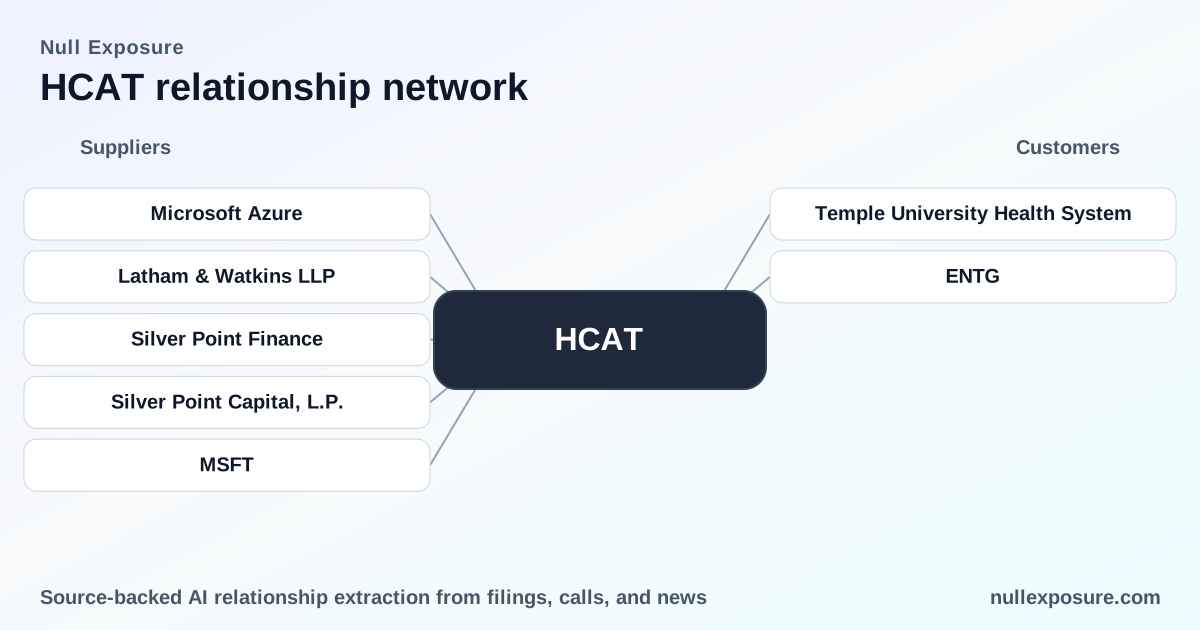
Microsoft Azure — Health Catalyst relies on third‑party providers, including Microsoft Azure, for computing infrastructure, network connectivity, and other technology‑related services needed to deliver its Solution, making Azure a key hosting partner in FY2024, according to Health Catalyst’s 2024 Form 10‑K. (Health Catalyst 10‑K, FY2024)
-
Microsoft (MSFT) — The company’s 2024 filing repeats that problems at its computing infrastructure service providers, including those operated by Microsoft, could adversely affect client experience, signaling Microsoft’s importance to platform availability and client satisfaction (Health Catalyst 10‑K, FY2024).
-
Latham & Watkins LLP — Latham & Watkins acted as legal advisor to Health Catalyst in connection with a secured growth financing, with a deal team led by named partners; the firm provided transactional counsel on the July 2024 credit agreement. (Latham & Watkins press release, July 2024)
-
Silver Point Finance (Silver Point Capital) — Health Catalyst entered into a credit agreement providing a multi‑year term loan facility provided by Silver Point Finance, the direct lending arm of Silver Point Capital, as part of its July 2024 secured financing. (Latham & Watkins press release; Health Catalyst 10‑K summary of Credit Agreement, FY2024)
-
Silver Point Capital, L.P. — The press materials and Health Catalyst disclosure identify Silver Point Capital as the sponsor/parent of the lender group behind the new credit facility supporting the company’s capital structure in FY2024. (Latham & Watkins press release; Health Catalyst 10‑K, FY2024)
What the supplier list implies for operations and risk
Health Catalyst’s supplier footprint is concentrated around a small number of high‑impact vendors and financial counterparties:
- Infrastructure concentration: The company explicitly commits to Microsoft Azure and other infrastructure vendors for hosting and delivery, creating a single‑point operational exposure that translates into potential client credits, reputational risk, and remediation costs if outages occur (Health Catalyst 10‑K, FY2024).
- Financial counterparty dependence: The July 2024 Credit Agreement with Silver Point Finance establishes a multi‑year indebtedness profile that both provides liquidity and creates covenant and interest‑cost exposure that will influence capital allocation and M&A cadence (Health Catalyst 10‑K; Latham & Watkins, July 2024).
- Professional services and legal advisers: Use of external legal counsel for financing and outside consultants for security testing and valuation work is baked into the operating model, raising variable professional services spend and legal costs when executing financings or acquisitions (Latham & Watkins press release; Health Catalyst 10‑K).
These are not abstract: the 10‑K records committed cloud spend, active draws on the delayed draw facility, and material references to Azure outages and cloud costs, anchoring supplier risk to identifiable line items in operating expense and contractual commitments (Health Catalyst 10‑K, FY2024).
Contracting posture, maturity and materiality — constraints that shape procurement choices
The company disclosures show a mix of contract types and relationship stages that define how procurement and operations behave:
- Long‑term commitments coexist with short‑term flexibility. Health Catalyst has long‑dated leasing commitments and a five‑year term loan facility that mature in 2029, demonstrating durable capital and facilities commitments, while also recognizing short‑term leases and short‑duration software licenses where agility is needed (Health Catalyst 10‑K, FY2024).
- Licensing dependency with defined terms. Health Catalyst licenses third‑party AI technologies and software modules and records computer software licenses in the 1–5 year band; licensed software and royalties are recurring cost drivers for the technology stack (Health Catalyst 10‑K, FY2024).
- Operational criticality is elevated. The company classifies several third‑party providers as critical, maintains a third‑party risk management process, and quantifies contractual cloud commitments that will be consumed in the ordinary course — all signals of high operational dependency and active supplier governance (Health Catalyst 10‑K, FY2024).
- Materiality is mixed. Certain vendor exposures are labelled immaterial in isolation (for example, specific acquisition earn‑outs), while other third‑party risks are described as material or critical when they affect delivery of PHI or platform availability (Health Catalyst 10‑K, FY2024).
Collectively, these constraints indicate a procurement posture that balances long‑dated financial and facility commitments with tactical licensing and hosting arrangements, and that places supplier risk squarely in core operational metrics.
For a deeper supplier risk profile and ongoing tracking, check the supplier intelligence hub at https://nullexposure.com/.
Investment and operational takeaways
- Positive: Health Catalyst’s cloud‑first model and strategic financing give management the tools to scale product delivery and pursue M&A that expands addressable market. Silver Point financing provides committed capital that funds near‑term growth and acquisitions (Health Catalyst 10‑K; Latham & Watkins, July 2024).
- Watchpoints: Concentration in Microsoft Azure and other infrastructure providers creates outsized operational risk; outages translate quickly into service disruption and potential revenue impact. The company’s reliance on third‑party licensed AI and software components is a recurring cost and continuity risk (Health Catalyst 10‑K, FY2024).
- Operational action: Active vendor governance, cloud failover planning, and careful monitoring of covenant and liquidity metrics under the term loan are priority items for operators and counterparties assessing the company.
Closing recommendation
For investors and procurement teams, the Health Catalyst supplier picture is clear: a cloud‑dependent analytics provider funded by structured credit and active M&A, with supplier concentration that elevates operational risk. Build monitoring around Azure availability, contract spend bands and the company’s draw/covenant profile under the Silver Point facility.
If you need a structured supplier risk briefing or to track counterparty events for Health Catalyst and peers, start here: https://nullexposure.com/. For tailored monitoring and alerts, visit https://nullexposure.com/ to set up supplier coverage.