Healthcare Services Group (HCSG): Supplier Relationships and Operational Constraints
Healthcare Services Group (HCSG) provides outsourced housekeeping, dietary, laundry and facility services to long-term care and hospital customers and monetizes by charging contractually backed service fees and per-site management margins while capturing procurement and operating efficiencies across its network. The business model combines recurring service revenue with centralized procurement and a thin operating margin profile, making supplier logistics and contract structure a direct driver of profitability. For strategic diligence and ongoing monitoring, start with the supplier snapshot on the HCSG homepage: https://nullexposure.com/.
The single-distributor dynamic that drives dietary supply flow
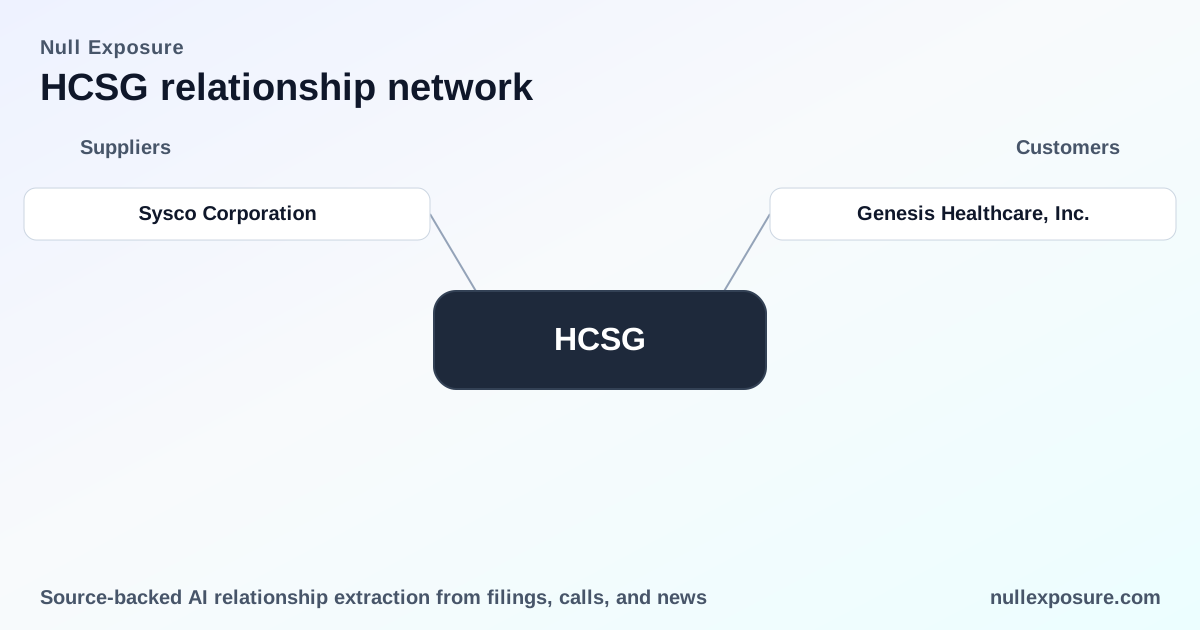
HCSG distributes the bulk of its food and non-food dining supplies through a single national distributor. According to HCSG’s FY2025 Form 10‑K, Sysco Corporation handled more than 50% of the company’s food and non-food dining supplies for the year ended December 31, 2025 and is responsible for tracking orders and delivering products to HCSG locations. That arrangement concentrates logistics and execution risk into one counterparty while HCSG continues to negotiate pricing with manufacturers. (Source: HCSG FY2025 Form 10‑K filing.)
Key takeaway: A dominant distributor relationship amplifies operational leverage — both to the upside on negotiated pricing and to the downside if distribution is disrupted.
All of the disclosed supplier and counterparty relationships (short list)
- Sysco Corporation — HCSG procures more than 50% of its food and non‑food dining supplies through Sysco, which manages order tracking and deliveries to HCSG customer locations, as disclosed in the company’s FY2025 10‑K. (Source: HCSG FY2025 Form 10‑K.)
This article discusses the Sysco relationship in depth and covers the company‑level constraints that shape how HCSG contracts and mitigates vendor concentration. For a deeper supplier map and monitoring tools, visit https://nullexposure.com/.
How contract types and time horizons shape exposure
HCSG operates with a mix of short‑term and long‑term contractual exposures, and that mix influences both cash volatility and negotiation leverage.
- Short‑term signals are visible in the company’s lease portfolio and operating commitments; the 10‑K details leases with remaining terms from less than one year up to five years and notes that many leases include options to terminate within one year. Short‑term lease expense and variable lease payments are recorded in SG&A. (Source: HCSG FY2025 10‑K.)
- Long‑term obligations are present in financing and strategic arrangements: the company’s revolving credit facility was amended in November 2022 to a five‑year unsecured facility (initially $300 million, with capacity to increase), and certain acquisition‑related royalty obligations create multi‑period payment commitments. (Source: HCSG FY2025 10‑K.)
- HCSG also uses framework agreements with national vendors to consolidate purchases under negotiated prospective pricing, which centralizes buying power but increases dependence on negotiated terms. (Source: HCSG FY2025 10‑K.)
Investor implication: Mixed tenure contracts allow HCSG to adjust operating cost structure over time, but short‑term leases and a dominant distributor mean operational shocks can transmit quickly to margins.
Concentration, criticality and materiality — how risky is the setup?
HCSG’s filings make two complementary points:
- The company explicitly relies on a limited number of vendors for a substantial portion of Housekeeping and Dietary supplies, which the 10‑K categorizes as a meaningful operational vulnerability. This is a material vendor concentration signal for investors. (Source: HCSG FY2025 Form 10‑K.)
- At the same time, certain incidents (for example, a disclosed cybersecurity event) were stated as not expected to be material as of the filing date, indicating HCSG treats some operational disruptions as manageable in isolation. (Source: HCSG FY2025 Form 10‑K.)
Net effect: Supplier concentration is a material risk to operating continuity and cost structure; other operational incidents are often contained but require monitoring.
Financial scale and procurement spend that matter to decision‑makers
The company’s financial profile provides context for procurement sensitivity:
- Revenue TTM: $1.837 billion; Market cap: $1.418 billion; EBITDA (latest): $57.0 million. Operating margin and profit margin are slim (operating margin ~5.5%, profit margin ~3.2%). (Source: company financials, FY2025 metrics.)
- Procurement scale is meaningful: Food, chemicals and supplies for Housekeeping and Dietary totaled $353.3 million in the year‑end disclosures — a line item where distribution execution and pricing directly affect margins. (Source: HCSG FY2025 Form 10‑K.)
- Capital expenditures are modest (capex $6.3 million in 2024) and short‑term lease liabilities are in the low‑tens of millions, indicating procurement and distribution have a larger P&L effect than capex. (Source: HCSG FY2025 Form 10‑K.)
Investor takeaway: With tight margins and large procurement spend, incremental supply cost or distribution disruption can move EPS materially.
[Evaluate HCSG supplier exposure and monitor concentration trends at https://nullexposure.com/]
Operational posture and third‑party services
HCSG outsources many non‑core functions and relies on third‑party service providers for actuarial reserves, cybersecurity response, legal and IT advisory, and custodial banking services. The company documents review processes (SOC 1/SOC 2 reviews where applicable) and notes collateral trust arrangements tied to insurance programs. (Source: HCSG FY2025 Form 10‑K.)
Why this matters: Outsourced services reduce fixed cost burden but create dependency on vendor controls and continuity; investors should track vendor audit outcomes and any changes in letter‑of‑credit or trust structures.
Practical actions for operators and investors
- Monitor the Sysco relationship and ask HCSG management about contingency plans, alternative distributor arrangements and inventory buffers. Supplier concentration is the primary operational lever.
- Watch vendor pricing pass‑through and input inflation in the Dietary/Housekeeping lines; small percentage swings in those categories materially affect margins.
- Track covenant compliance on the $300M credit facility and any changes to lease portfolio metrics that could increase near‑term cash outflows. (Source: HCSG FY2025 Form 10‑K.)
What to watch next and closing recommendation
Watch for three triggers that change the investment case: any public disruption of the Sysco distribution relationship, signs of sustained input cost inflation in food and supplies, and a meaningful shift in liquidity or covenant status on the company’s revolving facility. HCSG’s profitability is tied to operational execution and procurement discipline; supplier concentration is the most salient single risk factor.
For ongoing diligence and supplier relationship intelligence, visit https://nullexposure.com/ — start with the supplier dashboard and alerts on concentration shifts. For a tailored monitoring setup and supply‑risk briefings, return to https://nullexposure.com/ and request coverage.