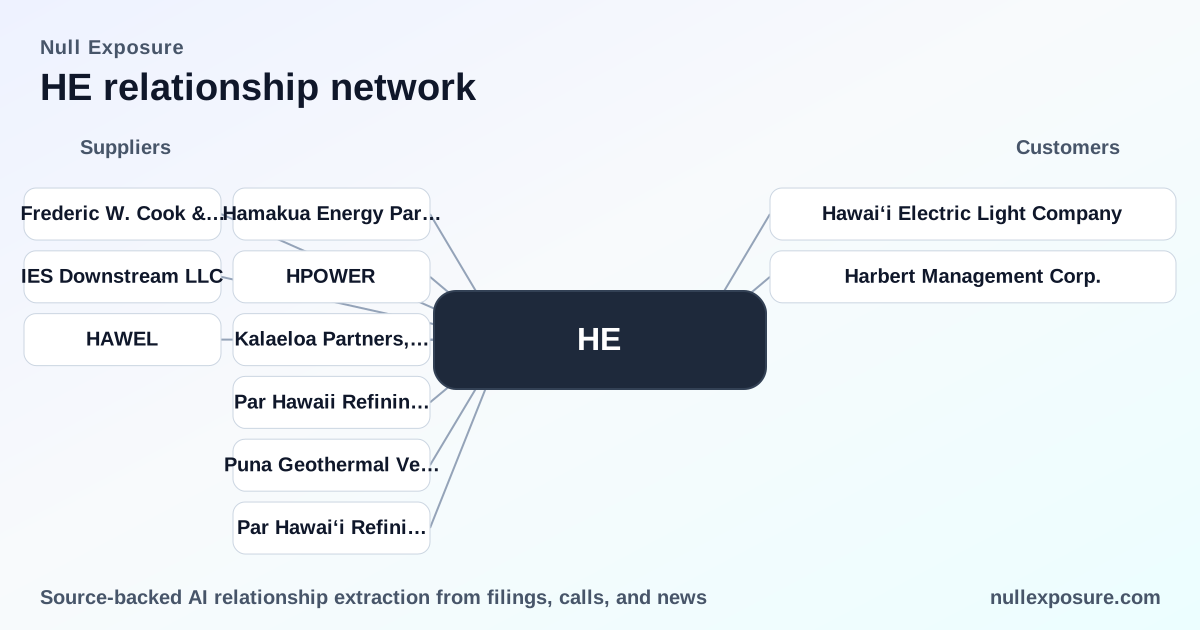
Hawaiian Electric (HE) supplier map: what investors need to know
Thesis — Hawaiian Electric operates as a regulated island utility holding company that monetizes through regulated retail electricity sales, long‑dated power purchase agreements and fuel supply contracts. Its earnings profile depends on recovering fuel and purchased‑power costs through regulatory mechanisms, while liquidity and credit carry sensitivity to long‑term PPAs, fuel supply economics and insurance/settlement obligations.
If you want a single view of counterparties and contractual risk for underwriting or supplier diligence, start here and then review the primary filings on the company site and regulators’ dockets: https://nullexposure.com/
Quick read: the commercial model that drives value
Hawaiian Electric’s subsidiaries generate and buy electricity under a large stock of long‑term PPAs and fuel supply contracts and pass those costs to customers through established recovery clauses subject to Public Utilities Commission oversight. The company’s revenue stability is anchored in regulated rate mechanisms, but profitability and capital access are exposed to fuel price volatility, counterparty performance and large litigation/settlement cash requirements recorded in recent years.
Explore supplier diligence tools and downstream analytics here: https://nullexposure.com/
Supplier roll call — each relationship summarized (source indicated)
Below are every counterparty referenced in the dataset with a one‑to‑two sentence plain‑English summary and a source.
-
Hamakua Energy Partners, L. P. — Hawaii Electric Light is contractually required to purchase up to 60 MW (net) of firm capacity for 30 years under an agreement that succeeded Encogen; the PPA term is recorded through December 31, 2030. Source: HEI Form 10‑K, FY2024 (he-2024-12-31).
-
HPOWER — Hawaiian Electric has a PPA obligation to purchase 68.5 MW of firm capacity annually, with the PPA scheduled to expire April 2, 2033. Source: HEI Form 10‑K, FY2024 (he-2024-12-31).
-
Kalaeloa Partners, L.P. — Under an amended 1988 PPA, Hawaiian Electric is committed to purchase 208 MW of firm capacity from Kalaeloa Partners. Source: HEI Form 10‑K, FY2024 (he-2024-12-31).
-
Par Hawaii Refining, LLC / Par Hawaiʻi Refining LLC — HE pays fuel prices to PAR that are primarily linked to Asian crude oil pricing, and the company was the defendant in litigation alleging substandard fuel caused plant damage that resulted in millions of dollars of lost generation. Sources: HEI Form 10‑K, FY2024 (he-2024-12-31) and Civil Beat reporting, December 2025 (https://www.civilbeat.org/2025/12/hawaiian-electric-sues-par-hawaii-claiming-faulty-fuel-ruined-turbines/).
-
Puna Geothermal Venture (PGV) — Hawaii Electric Light holds a 35‑year PPA (as amended) for 34.6 MW of firm geothermal capacity, with that contract noted to expire December 31, 2027 (and related amendments extending terms are discussed in the filings). Source: HEI Form 10‑K, FY2024 (he-2024-12-31).
-
IES Downstream LLC — Named as a defendant alongside PAR in Civil Beat’s coverage of alleged fuel quality issues; the company delivered fuel to Hāmākua under relevant logistics arrangements. Source: Civil Beat, December 2025 (https://www.civilbeat.org/2025/12/hawaiian-electric-sues-par-hawaii-claiming-faulty-fuel-ruined-turbines/).
-
Frederic W. Cook & Co. Inc. — Identified as the independent compensation consultant used by HEI’s Compensation and Human Capital Management Committee in executive pay benchmarking and incentive design. Source: Civil Beat, March 2025 (https://www.civilbeat.org/2025/03/hawaiian-electric-execs-pocketed-huge-raises-despite-1-4b-in-losses/).
-
Hawaiian Electric (subsidiary / service provider role) — HEI relies on Hawaiian Electric under an amended Service Level Agreement (as of November 30, 2023) for most IT and CRM services; Hawaiian Electric also functions as the operating utility that buys and sells power and manages many supplier contracts. Source: HEI Form 10‑K, FY2024 (he-2024-12-31).
What the contract signals say about HE’s operating model
The constraint evidence in the filings reads as a clear set of operating characteristics for investors:
-
Contracting posture: long‑term commitments dominate. The company’s operations are structured around multi‑decade PPAs, leases and long‑dated debt, which creates revenue predictability but locks in exposure to legacy fuel‑linked pricing and counterparty performance.
-
Mix of short and spot exposure for fuel. While capacity is largely secured under long‑term PPAs, the company uses short‑term borrowings, asset‑based credit facilities and spot buys for fuel and biodiesel to manage near‑term needs and working capital.
-
Concentration and criticality are material. A small set of IPPs and fuel suppliers constitute a meaningful share of island capacity and fuel supply; HE records this as a material operational and financial risk because failure or substandard supply imposes direct reliability and cost consequences.
-
Maturity profile is lumpy and financing‑sensitive. HE’s debt maturities and large settlement and insurance items create material cash requirements; HE has added an ABL facility and other credit lines to manage short‑term liquidity.
-
Supplier role fragmentation: buyer, seller and service provider overlap. HE plays both buyer and seller roles in the island system and outsources many IT, logistics and specialist services, increasing operational dependency on third‑party vendors.
Investment implications — what to underwrite and what to watch
-
Counterparty performance is a direct earnings lever. Long PPAs stabilize base volumes, but fuel indexation and supplier failures (for example, allegations against PAR and deliveries by IES Downstream) translate into repair costs, litigation and operational downtime that hit margins.
-
Regulatory recovery is the safety valve but not a full hedge. HE relies on PUC mechanisms to recover fuel and purchased‑power costs; regulatory timing and approvals control the firm’s cash timing and ultimate recoverability.
-
Credit and liquidity risk are top of the scoreboard. Recent downgrades and large settlement obligations increase the company’s cost of capital and limit access to commercial paper, elevating refinancing and covenant sensitivity.
-
Operational resilience requires vendor oversight. The SLA with Hawaiian Electric for IT/CRM and the broad use of third‑party service providers create concentrated operational dependencies that investors must evaluate in any diligence.
Explore supplier counterparty profiling and dispute alerts for underwriting and operations teams: https://nullexposure.com/
Final verdict for investors and operators
Hawaiian Electric’s business is structurally predictable in volume but exposed to concentrated supplier and fuel risks. Long‑term PPAs provide stability while creating legacy exposures to oil‑linked pricing and aging assets; recent litigation over fuel quality sharpens the need for operational and contract governance. Investors should underwrite HE with emphasis on counterparty performance, regulatory recovery timing and liquidity runway; operators must prioritize supplier quality controls and contingency fuel/logistics arrangements.
For a consolidated view of counterparties, contract terms and ongoing risk signals, use the tools and research at https://nullexposure.com/ — they accelerate decision making for underwriting and supplier oversight.