HEICO Corporation (HEI-A): supplier relationships and what they mean for investors
HEICO designs, manufactures and services aerospace, defense and high‑reliability electronic components, and monetizes through a mix of OEM/aftermarket parts sales, repair and overhaul services, exclusive licensing arrangements, and acquisitive growth. The company captures aftermarket margin by converting licensed or acquired product lines into recurring repair, distribution and spares businesses, while financing larger strategic purchases through a multi‑year revolving credit facility and contingent consideration structures. For targeted supplier and counterparty intelligence, visit https://nullexposure.com/.
Why HEICO’s supplier footprint matters to investors
HEICO’s model is acquisitive and integration‑driven: it buys product lines and repair capabilities, then folds them into its Flight Support and Electronic groups to extract aftermarket economics. That operating posture creates distinct contracting and counterparty signals:
- Long‑term contracting posture: HEICO runs long‑dated lease obligations and a revolving credit facility extended to 2028, signaling commitment to multi‑year manufacturing capacity and M&A financing. This is documented in HEICO’s Form 10‑K disclosures for fiscal 2025 describing lease maturities and the July 2023 amendment to increase capacity and extend maturity to July 2028.
- Licensing as a strategic lever: HEICO has executed multiple exclusive license and asset acquisitions from Honeywell to secure product rights and repair capability rather than relying on ephemeral supply relationships — a structural source of recurring revenue and control over aftermarket spares (HEICO filings, 2023–2024).
- Global exposure with diversified end markets: filings and disclosures reference EMEA operations and functional currencies other than the USD, while noting risks associated with global raw materials and trade rules — indicating a geographically diversified supply and customer base.
- Mixed materiality profile for deals: most bolt‑on acquisitions are disclosed as immaterial to consolidated financial statements, but HEICO also executes larger, strategic purchases in the >$100m band and uses contingent consideration across several deals. The company’s M&A program is therefore a portfolio of small-to-mid tuck‑ins combined with occasional large transactions.
- Active, multi‑role relationships: HEICO acts as buyer, manufacturer, licensor/licensee, distributor and service provider in parallel — a vertically integrated supplier posture that shifts risk from third‑party vendors to HEICO’s owned operations (Form 10‑K, fiscal 2025).
For deeper supplier intelligence and tailored counterparty analysis, see https://nullexposure.com/.
How HEICO sources product and capture aftermarket economics
HEICO’s commercial playbook combines three monetization mechanics:
- Exclusive licensing and asset purchases (securing production and repair rights, often from OEMs such as Honeywell).
- Manufacturing and repair services (moving acquired product lines into HEICO’s repair network to win recurring MRO work).
- Distribution and resale of FAA‑approved factory‑new and replacement parts to airlines, defense operators and independent distributors.
Together these create a cash flow profile where upfront acquisition or licensing costs buy long‑dated revenue streams from spare parts, repairs and certification services.
Supplier relationships identified in public reporting
Below are every supplier/partner relationship surfaced in the results set and the concise investor takeaways.
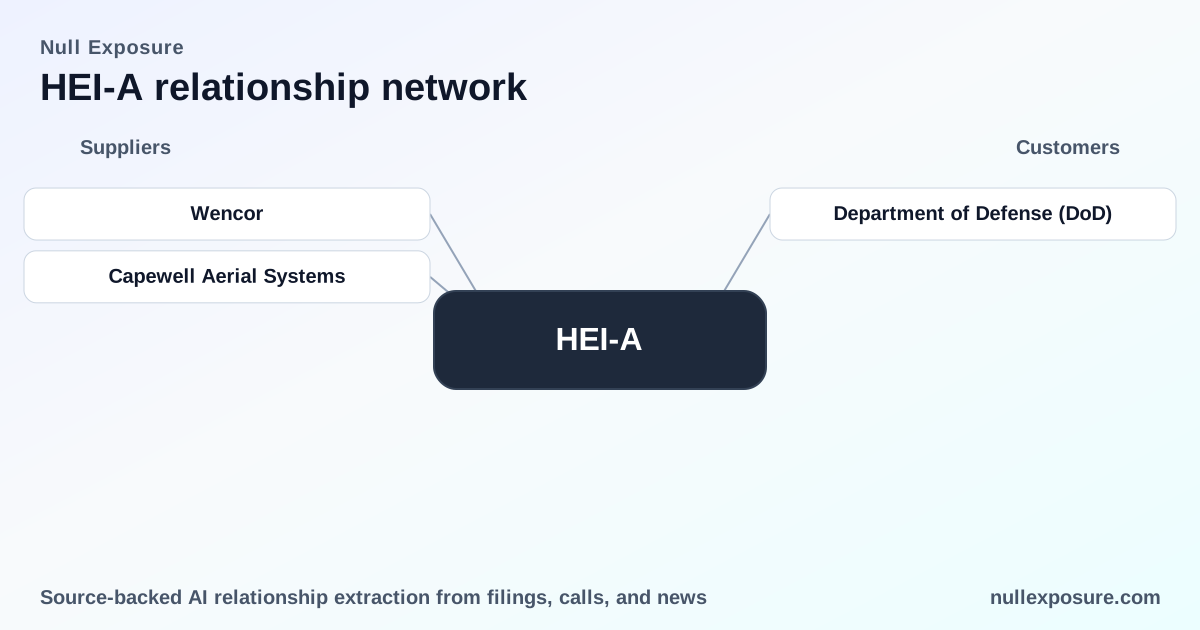
Wencor — large aftermarket parts supplier acquisition
HEICO announced a definitive transaction to acquire Wencor, a supplier of aircraft replacement parts, in a deal publicized as roughly $2 billion. That purchase expands HEICO’s distribution and aftermarket parts scale and was reported in trade press on March 10, 2026. (Source: MDM, March 10, 2026 — "Heico to Buy Aircraft Parts Supplier Wencor for $2B".)
Capewell Aerial Systems — Aerial delivery and descent device divisions
HEICO’s Flight Support Group acquired the Aerial Delivery and Descent Devices divisions of Capewell, adding parachute and aerial delivery hardware and associated repair/distribution capability; public filings describe Capewell as a critical supplier to OEMs, end‑users and distributors, underscoring strategic importance to mission‑critical product lines (HEICO press release / AccessWire; referenced in HEICO FY2024 commentary, first reported March 2026).
What the constraints and disclosures signal to buyers and portfolio managers
HEICO’s disclosures and constraint excerpts give a clear, actionable profile for procurement and portfolio risk managers:
- Contract maturity and financing: The company uses a revolving credit facility sized for growth (capacity increased to $2.0B with an option to expand further) and holds leases with weighted average remaining terms of multiple years, creating predictability for capital allocation but also leverage sensitivity if cyclical aerospace demand softens (Form 10‑K, fiscal 2025).
- Licensing is core to product control: Multiple exclusive license deals (notably with Honeywell across 2023–2024) show HEICO selectively buys intellectual property and repair rights to capture aftermarket economics rather than depending on external suppliers.
- Counterparty mix includes government and large enterprise exposure: Filings reference tax and compliance items and the potential impact of OEM and regulatory disruptions, reflecting sales into defense and major airline/airframe customers.
- Spend profile is layered: HEICO executes a mix of deals from <$10m to well north of $100m and carries contingent consideration liabilities stretching into future years; investors should price integration risk and contingent payout structures accordingly.
- Materiality nuance: The company consistently describes many acquisitions as not material to consolidated financials while also executing selective large purchases — a disciplined capital deployment model that favors many small tuck‑ins with occasional transformational transactions.
Investment implications — risks and runway
- Upside: HEICO’s strategy converts acquired product lines into recurring aftermarket revenue and repair margins, which are structurally higher margin and defensible by certification and licensing barriers.
- Risk: Integration and contingent consideration liabilities create execution risk, and concentration in aerospace/end‑market cycles plus lease and debt maturities require active covenant and cash‑flow management.
- Actionable monitoring items for investors and operators: watch HEICO’s use of the credit facility, contingent consideration realizations, OEM certification backlogs, and the pace at which licensed product lines migrate into HEICO’s repair/distribution network.
For operationally focused intelligence on how supplier stakes affect valuation and counterparty risk, explore https://nullexposure.com/.
Bottom line and next steps
HEICO runs a purposeful, acquisition‑first aftermarket strategy that secures product control via licensing and buys scale through targeted M&A, creating predictable repair and spares revenue while concentrating execution risk in integration and financing. Investors should value HEICO for its ability to convert licensed assets into recurring margin, but also price in contingent liabilities and the cyclicality tied to aerospace OEM production.
To evaluate HEICO’s supplier and counterparty footprint in your portfolio or procurement strategy, visit https://nullexposure.com/ for additional intelligence and tailored analysis.