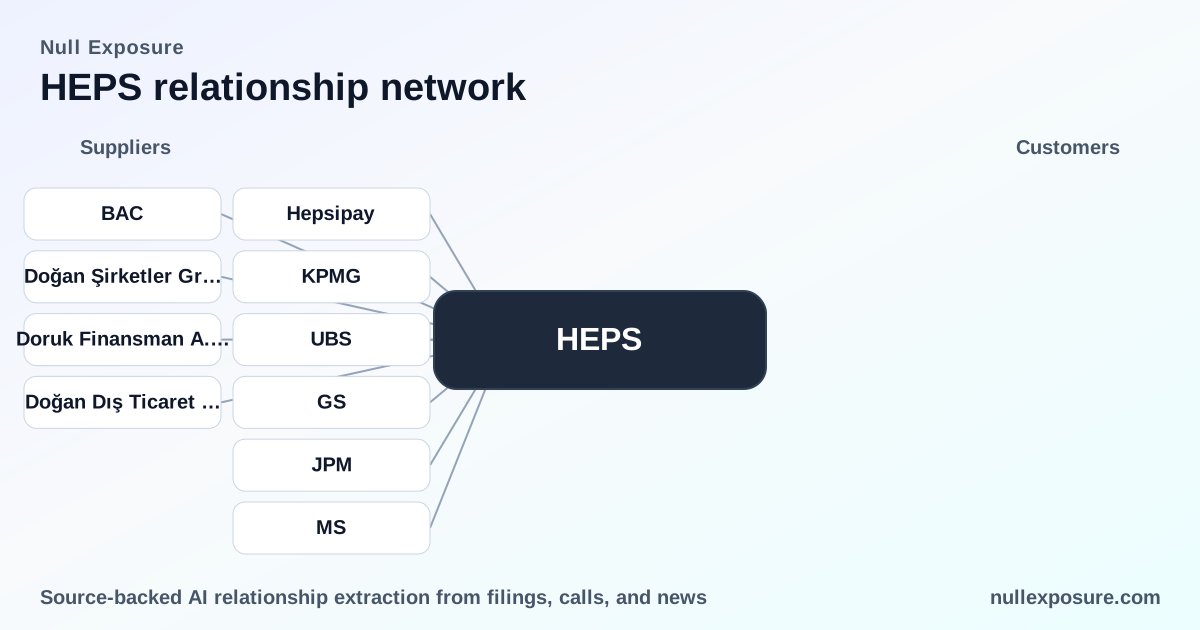
Hepsiburada (HEPS): Supplier relationships that shape an e‑commerce ecosystem
Hepsiburada operates a vertically integrated Turkish e‑commerce marketplace that monetizes through transaction fees, advertising, logistics and payment services — including an embedded payments/BNPL arm — while selectively extending financial services to consumers and merchants. For investors and operators evaluating HEPS as a supplier or partner, the company’s core value comes from scale in customer reach and control over last‑mile, payments, and advertising monetization, balanced by negative operating margins, elevated volatility and concentrated strategic partners from its IPO and M&A history. Explore the platform relationships below and the implications for contracting, risk and commercial leverage.
Discover more supplier intelligence at https://nullexposure.com/.
How Hepsiburada makes money and why supplier relationships matter
Hepsiburada converts marketplace traffic into multi‑product revenue streams: marketplace commissions, seller services and advertising, plus revenue from logistics and Hepsipay payment flows. That integrated model produces recurring contractual touchpoints with merchants (fulfilment, delivery SLAs), financial providers (valuation, underwriting and acquisition advisers) and in‑house finance operations (Hepsipay and BNPL). These relationships shape bargaining power, service continuity and compliance exposure — all material to merchant partners and institutional buyers.
- Contracting posture: Hepsiburada’s operating model shows a mix of own‑stack services (logistics, payments) and third‑party financial/legal providers; expect standard SaaS/commerce supplier contracts for merchants but bespoke engagement terms with financial and underwriting partners.
- Concentration and criticality: Institutional ownership is modest (~15.8%) while insiders hold ~15%; operational criticality of Hepsipay and logistics is high for merchants because these services are embedded into the platform.
- Maturity and margin profile: The company reports substantial top‑line scale (RevenueTTM ~62.56B) alongside negative EBITDA and operating margins, signaling that supplier pricing and capital intensity remain central return drivers.
- Commercial leverage: Control of payments and last‑mile increases Hepsiburada’s ability to capture value, but also concentrates operational risk in a smaller set of critical supplier and service relationships.
If you are assessing Hepsiburada as a counterparty, treat the platform as both a distribution channel and an operational supplier — negotiating on SLAs, payment settlement terms and advertising guarantees will materially affect merchant economics. For direct sourcing or competitive intelligence, visit https://nullexposure.com/ for deeper supplier profiles.
Relationship catalog — what the public record shows
Below are every relationship found in the provided results, each described in plain English with source context.
-
Hepsipay — Hepsiburada operates Hepsipay as its payment companion and BNPL provider, embedding payments, installments and other checkout finance options into the platform; this is described in the company’s Form 20‑F/annual report material. (PR Newswire, referencing Hepsiburada’s 2023 annual report, published March 2026: https://www.prnewswire.com/news-releases/hepsiburada-files-its-2023-annual-report-on-form-20-f-302132297.html)
-
KPMG — Hepsiburada retained KPMG to produce an independent valuation report related to a consumer finance acquisition under Turkish regulatory requirements, signalling the use of large global auditors/advisers for transactional and compliance work. (FinancialIT coverage of the acquisition announcement, FY2021: https://financialit.net/news/e-commerce/hepsiburada-announces-plans-acquire-consumer-finance-company-turkey)
-
UBS Securities / UBS Investment Bank — UBS participated as one of the IPO underwriters and lead managers on Hepsiburada’s offering, consistent with international capital markets engagement during the company’s listing process. (Duvar English and Renaissance Capital IPO coverage, FY2021: https://www.duvarenglish.com/hepsiburada-becomes-first-ever-turkish-nasdaq-ipo-news-58032; https://www.renaissancecapital.com/IPO-Center/News/83096/Turkish-e-commerce-platform-D-MARKET-Electronic-Services-and-Trading-sets-t)
-
Goldman Sachs & Co / Goldman Sachs — Goldman Sachs served as an underwriter/lead manager on Hepsiburada’s IPO, demonstrating access to global investment bank distribution and capital markets advisory. (Duvar English and Renaissance Capital, FY2021: https://www.duvarenglish.com/hepsiburada-becomes-first-ever-turkish-nasdaq-ipo-news-58032; https://www.renaissancecapital.com/IPO-Center/News/83524/Turkish-e-commerce-platform-D-MARKET-Electronic-Services-and-Trading-prices)
-
J.P. Morgan — J.P. Morgan acted as an underwriter on Hepsiburada’s U.S. listing, reflecting reliance on large international banks for market access and bookrunning. (Duvar English and Renaissance Capital, FY2021: https://www.duvarenglish.com/hepsiburada-becomes-first-ever-turkish-nasdaq-ipo-news-58032; https://www.renaissancecapital.com/IPO-Center/News/83096/Turkish-e-commerce-platform-D-MARKET-Electronic-Services-and-Trading-sets-t)
-
Morgan Stanley — Morgan Stanley was one of the joint bookrunners/lead managers on the IPO, indicating institutional distribution relationships established at listing. (Duvar English and Renaissance Capital, FY2021: https://www.duvarenglish.com/hepsiburada-becomes-first-ever-turkish-nasdaq-ipo-news-58032; https://www.renaissancecapital.com/IPO-Center/News/83096/Turkish-e-commerce-platform-D-MARKET-Electronic-Services-and-Trading-sets-t)
-
BofA Securities — BofA Securities participated as a lead manager/underwriter on the IPO, supporting the company’s capital markets placement and signaling global bank coverage. (Duvar English and Renaissance Capital, FY2021: https://www.duvarenglish.com/hepsiburada-becomes-first-ever-turkish-nasdaq-ipo-news-58032; https://www.renaissancecapital.com/IPO-Center/News/83096/Turkish-e-commerce-platform-D-MARKET-Electronic-Services-and-Trading-sets-t)
-
Doğan Şirketler Grubu Holding A.Ş. — Listed as a seller in the share sale and purchase agreement for Doruk Finansman, indicating the transaction counterparties in Hepsiburada’s consumer finance acquisition narrative. (FinancialIT transaction coverage, FY2021: https://financialit.net/news/e-commerce/hepsiburada-announces-plans-acquire-consumer-finance-company-turkey)
-
Doğan Dış Ticaret ve Mümessillik A.Ş. — Named among sellers in the SPA for Doruk Finansman; shows the original ownership structure of the acquired consumer finance target. (FinancialIT, FY2021: https://financialit.net/news/e-commerce/hepsiburada-announces-plans-acquire-consumer-finance-company-turkey)
-
Doruk Finansman A.Ş. — Hepsiburada entered into an agreement to acquire Doruk Finansman, a Turkish consumer finance company, as part of expanding its financial services footprint and payment capabilities. (FinancialIT, FY2021: https://financialit.net/news/e-commerce/hepsiburada-announces-plans-acquire-consumer-finance-company-turkey)
What these relationships tell investors and operators
The relationship map highlights three practical takeaways for commercial and risk decisions:
- Control over payments is strategic. Hepsipay and the Doruk Finansman acquisition indicate Hepsiburada’s deliberate move to internalize payment and consumer finance flows — this increases monetization opportunities but concentrates regulatory and credit risk on the platform.
- Capital markets and advisory ties are deep but historical. Multiple global banks served as IPO underwriters; these relationships matter for fundraising and credibility but do not substitute for day‑to‑day operational suppliers.
- Regulatory and valuation advisers are in place for transactions. Use of KPMG for valuation during an acquisition demonstrates standard governance for cross‑border M&A and regulatory compliance.
If you are negotiating supply or merchant terms, prioritize settlement cadence, chargeback/return allocation, and advertising performance measurement, because these levers directly affect merchant unit economics on Hepsiburada.
For a deeper supplier risk assessment and tailored negotiation playbook, visit https://nullexposure.com/ to request an intelligence brief.
Final read: positioning and action
Hepsiburada is a high‑scale marketplace with integrated payments and logistics that materially alter counterparty economics, trading off improving monetization against negative margins and higher operational complexity. For investors, the combination of platform control and historical global banking relationships supports future capital options; for operators and suppliers, contractual terms around payments, fulfilment and advertising define profitability more than headline revenue figures.
Actionable next steps: evaluate settlement terms against comparable marketplaces, require clear SLAs for last‑mile services, and insist on transparent reporting on Hepsipay flows and BNPL risk. For tailored supplier and competitor analysis, go to https://nullexposure.com/ and commission a focused HEPS relationship dossier.