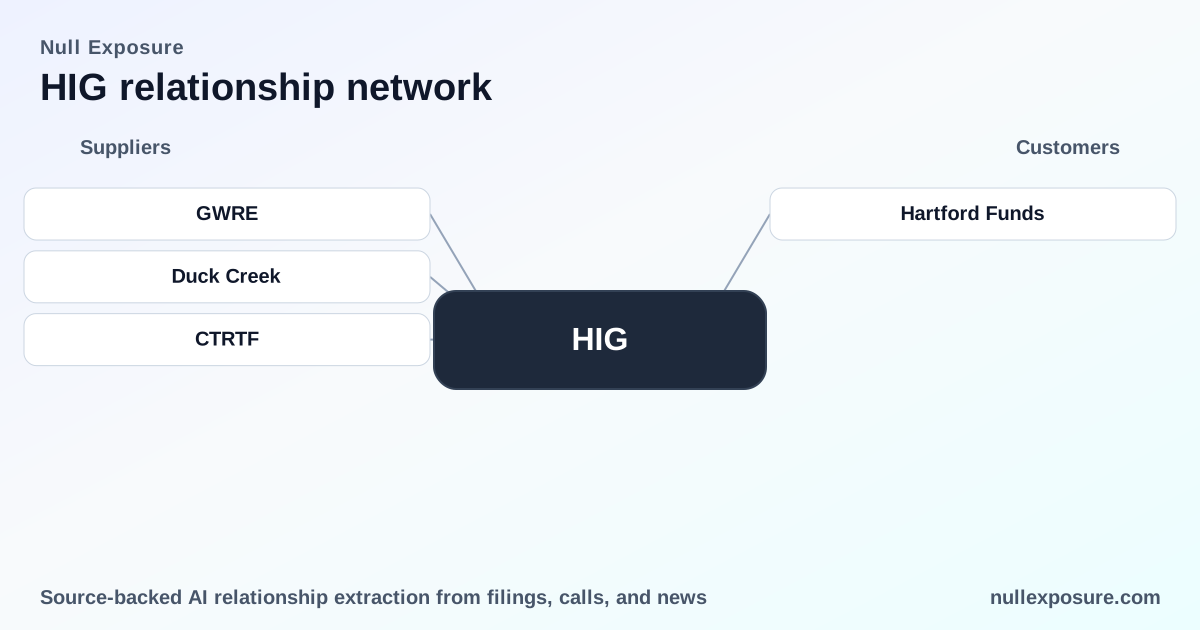
The Hartford (HIG) — supplier relationships that shape underwriting and operations
The Hartford (HIG) is a diversified U.S. insurer that monetizes through underwriting profit, investment income and dividends from operating subsidiaries, using reinsurance and third‑party technology to scale distribution and manage capital. Its supplier footprint combines large, enterprise software vendors for policy and claims platforms, API partners for distribution, and capital markets instruments (cat bonds, reinsurance) that transfer risk — a mix that drives operating leverage but also concentrates counterparty and operational risk. For direct insight into counterparties and contract posture, visit https://nullexposure.com/ for supplier-level exposure mapping.
Quick financial context that matters to supplier risk
The Hartford reports substantial scale — ~$28.4B revenue TTM and a $37.6B market capitalization (latest quarter 2025-12-31). That scale underwrites significant third‑party spend: reinsurance programs, long‑ and short‑term financing, and enterprise software investments all sit above typical vendor‑risk thresholds. High institutional ownership (95.7%) and consistent dividend policy make counterparty stability and capital access relevant to investors assessing supplier risk.
Who HIG buys from and why it matters
Below I cover each supplier relationship found in public reporting and press, with a concise investor‑oriented take and source reference.
Guidewire (GWRE)
Hartford has pursued a decade‑long investment in policy/claims platforms including Guidewire, positioning Guidewire as a core platform for small‑business digital workflows that support underwriting and distribution scale; the vendor contributes to Hartford’s digital ranking and automation of customer lifecycle processes. A March 2026 Tikr blog referenced Hartford’s multi‑year platform investments in Guidewire as part of its digital lead in small‑business channels (FY2026 commentary).
Duck Creek
Hartford’s platform strategy also includes Duck Creek as a complementary policy/claims/workflow vendor, reinforcing a multi‑vendor approach to digitization and redundancy in core insurance operations; this strengthens capacity for product velocity and third‑party integration. A March 2026 Tikr blog highlighted Hartford’s decade of platform investment across Guidewire, Duck Creek and AI workflows (FY2026 commentary).
Centro (CTRTF)
Centro added The Hartford to its API‑powered RFP and quoting platform, expanding Hartford’s distribution into API RFP marketplaces and streamlining carrier access for brokers and MGAs. MarketScreener reported Centro’s press release in February 2026 announcing The Hartford joining Centro’s carrier ecosystem and API quoting network (CI Feb. 04, 2026).
What the contract and vendor signal set tells investors
Hartford’s public filings and press create a clear profile of contracting posture, concentration and criticality.
- Contracting posture — mixed maturity: The company runs long‑term commercial constructs (senior unsecured facilities, multi‑year reinsurance arrangements, long‑dated leases and retroactive ADCs) alongside short‑term facilities and annual reinsurance renewals (per‑occurrence treaties, revolving credit through 2026, yearly renewable term reinsurance). This mix supports balance‑sheet flexibility while locking critical risk transfer in multi‑year structures.
- Framework arrangements are material to risk management: Hartford uses master agreements and industry standard frameworks (ISDA for derivatives, treaty arrangements for reinsurance) that enable netting, collateralization and centralized counterparty governance, reducing but not eliminating counterparty credit and liquidity risk.
- Licensing and hosted software are integral, not incidental: The company both licenses vendor loss‑modeling tools and uses hosted software arrangements, putting operational continuity and data integrity at stake if vendor service falters.
- Geographic footprint is global but U.S.‑centric for operations: Reinsurance and catastrophe programs have global reach, but principal subsidiaries and the bulk of operations remain North America‑centric, with targeted presence in the U.K. and limited LATAM exposure.
- Spend and materiality profile: Several vendor and program commitments sit at >$100M scale (e.g., ceded treaty limits, intercompany liquidity and dividends), signaling that supplier failures or pricing shocks would create material financial impact rather than immaterial line‑item noise.
Constraints that define the operating model (company‑level signals)
The filing excerpts surface constraints that are structural to Hartford’s business model:
- Long‑term capital and risk transfer commitments: long‑dated debt instruments, interest‑rate swaps, and ADC retroactive reinsurance demonstrate multi‑year lock‑ins that influence capital planning.
- Short‑term liquidity tools and renewables: revolvers, FHLB advances and yearly renewable reinsurance provide flexibility for near‑term liquidity and underwriting cadence.
- Framework governance and collateral mechanics: ISDA masters, netting and collateral practices standardize exposures across derivatives and reinsurance, affecting recoverability and settlement timing.
- Vendor dependency and cyber/operational exposure: broad outsourcing for claims administration, cloud services and third‑party models makes vendor stability and cybersecurity high‑priority risks.
- Concentration controls but residual counterparty risk: investment and issuer limits are enforced, yet reinsurance collectibility and exhausted treaty limits (e.g., A&E ADC) create residual, material counterparty risk.
Investor implications and where to focus due diligence
- Operational resilience is as important as credit risk. Vendors like Guidewire and Duck Creek drive core processing and customer experience; investors should evaluate contract terms around uptime, transition assistance, and exit costs.
- Reinsurance exhaustion is a capital risk trigger. The exhaustion of certain ADC treaty limits is a material event that affects reserve volatility and liquidity planning.
- High spend relationships warrant contract scrutiny. Where public excerpts indicate >$100M exposure bands, investors should prioritize covenant, collateral and termination terms in diligence.
- Vendor diversity reduces single‑point failure but increases integration risk. Multiple platform suppliers reduce concentration but increase operational complexity; governance and third‑party oversight are decisive.
If you want granular supplier exposure maps and contract posture summaries for HIG, see the interactive supplier intelligence on https://nullexposure.com/.
Practical next steps for investors and operators
- Request counterparty contract terms and SLAs for core platforms (Guidewire, Duck Creek) and distribution APIs (Centro) to quantify transfer, transition and termination risk.
- Review reinsurance recovery timelines and collateral structures to assess reserve sensitivity under adverse development scenarios.
- Validate vendor cybersecurity and business continuity attestations for third‑party claim platforms and hosted services.
For direct access to supplier‑level intelligence and to compare HIG’s vendor posture against peers, visit https://nullexposure.com/ and request a supplier report tailored to your diligence needs.
Bottom line
The Hartford’s supplier strategy is deliberate: mix high‑quality enterprise software and API distribution with layered reinsurance and capital market instruments to scale underwriting and manage volatility. That architecture improves product velocity and capital efficiency but creates material counterparty, operational and reserve‑timing risks investors must quantify through contract review, stress testing and vendor governance checks. Learn more and secure supplier‑level evidence at https://nullexposure.com/.