Hims & Hers: supplier relationships, concentration risks, and operational levers for investors
Hims & Hers operates a vertically integrated telehealth and consumer health platform that connects patients to licensed providers, fills prescriptions through affiliated and partner pharmacies, and sells consumer health products under its brand; the company monetizes through subscription services, prescription fulfillment, white‑label product sales, and telehealth consultation fees. For investors and operators evaluating supplier exposure, the most important signals are a mix of long-term structural arrangements (provider affiliations, facility leases), targeted vertical investments (compounding and peptide manufacturing acquisitions), and high dependence on a small set of critical service providers. Explore supplier intelligence and scenario implications at https://nullexposure.com/.
How Hims structures its supplier relationships in practical terms
Hims runs an ecosystem business where third parties deliver the core medical and fulfillment functions while Hims owns the customer interface, brand, and increasingly, manufacturing assets. The company’s public disclosures and recent activity reveal a clear operating pattern:
- Contracting posture is mixed but skewed long-term for core infrastructure. Provider arrangements with affiliated medical groups often carry decade-long terms with renewal options; the company also holds multi‑year leases (e.g., a 127‑month lease in Arizona and a 120‑month manufacturing facility lease in Menlo Park). These are complemented by shorter, renewable pharmacy contracts (typically one year with automatic renewals) and three‑year revolver financing commitments.
- Concentration is material on certain product lines. Management discloses that several newer offerings are “primarily manufactured by one supplier,” creating single‑source risk for high‑margin or strategic categories (including compounded GLP‑1s).
- Criticality is high for several partner types. AWS, affiliated medical groups, and the company’s pharmacies/outsourcing facility are all described as critical to platform availability, prescription fulfillment, and regulatory compliance.
- Maturity: active, moving toward partial verticalization. Hims is actively buying manufacturing and lab capabilities (MedisourceRx, a peptide facility and Trybe Labs), shifting some supplier roles in‑house while retaining a broad roster of service providers.
These characteristics create an operating model where strategic suppliers are both core to customer experience and a source of regulatory and operational concentration risk.
Relationship inventory: the documented external signals
Below I cover each relationship found in the supplier results and provide a concise investor‑grade read and source reference.
-
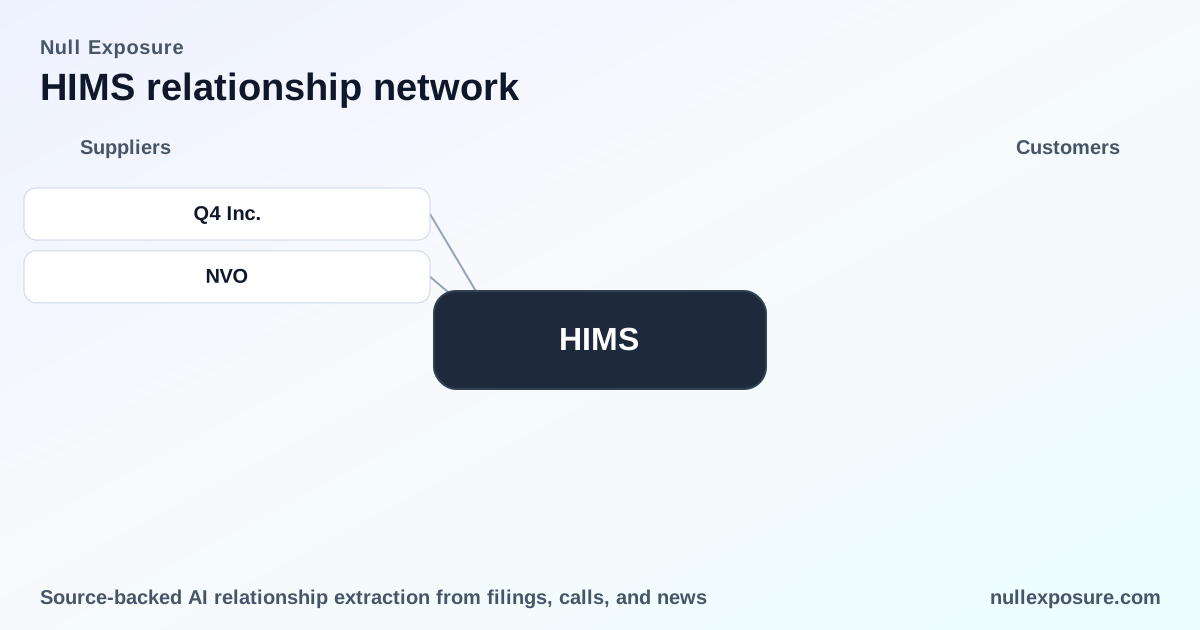
Q4 Inc. — Hims uses Q4 Inc. to power its investor relations presence, as noted on the corporate press release page for the company’s FY2025 share repurchase announcement; the site footer includes “Powered By Q4 Inc.”, indicating a vendor relationship for IR hosting and communications (investors.hims.com, FY2025).
Source: Hims & Hers investor news release (share repurchase program), posted on the company IR site in 2025. -
Novo Nordisk — Market reports in early 2026 indicated Novo Nordisk was positioned to partner with Hims & Hers to distribute weight‑loss drugs through the Hims channel, representing potential commercial scale for GLP‑1 access via the platform (Markets.FinancialContent, FY2026).
Source: FinancialContent market report headline, March 2026. -
Novo Nordisk (legal dispute context) — Hedge‑fund and news coverage in February 2026 documents that Hims withdrew a low‑cost pill product under FDA scrutiny and faced litigation from a former partner, Novo Nordisk, a sequence that produced material share‑price volatility; the episode highlights regulatory and counterparty litigation risks tied to prescription product partnerships (Sahm Capital / Hazeltree reporting, Feb 13, 2026).
Source: Sahm Capital / Hazeltree‑data report, February 2026.
These three results capture investor‑facing vendor relationships (IR platform) and one high‑impact commercial/legal relationship with a major pharmaceutical partner.
What the constraints say about supply risk, in plain terms
Hims’ disclosures contain a rich set of constraints that tell a coherent story for suppliers and investors:
- Long‑term backbone, short‑term peripherals. Core items (facility leases, provider arrangements, and certain manufacturing asset commitments) are multi‑year and create switching costs; in contrast, partner pharmacies and some service contracts are renewed annually.
- Regulatory overlay drives supplier choice and criticality. Pharmacy fulfillment, compounding (503B), and peptide/API manufacturing carry FDA and state licensing obligations that make supplier substitution costly and time‑consuming.
- High spend bands with concentrated exposures. The company runs a secured $175m revolving credit facility and has completed acquisitions in the $10–$65m range for manufacturing assets and lab businesses, indicating meaningful strategic capital deployed to control supply rather than outsource entirely.
- Operational single points of failure. Outsourcing Facility, AWS hosting, and affiliated medical groups are cited as critical; an interruption at any could materially impair service delivery or lead to regulatory scrutiny.
- Geography: predominantly U.S. operations with global vendor inputs. The company operates its network across all 50 states and locates fulfillment/compounding capacity in Ohio and Arizona, while sourcing product ingredients from domestic and international suppliers.
Taken together, these constraints define a supplier risk profile that is highly regulated, moderately concentrated, and strategically important, which drives the firm’s pattern of acquiring manufacturing capability while retaining a distributed set of service providers.
Investment implications and operational plays
For investors and operators the implications are straightforward and actionable:
- Concentration risk requires monitoring. Track product‑level supplier concentration metrics—especially for GLP‑1s and other regulated prescription offerings—and the status of any FDA interactions that affect suppliers.
- Verticalization is a risk‑mitigant and capital draw. Hims’ purchases of MedisourceRx and peptide manufacturing assets reduce supplier dependency but increase operational complexity and capital intensity.
- Counterparty litigation is a valuation factor. The Novo Nordisk headlines underscore how commercial deals with large pharmas can convert into litigation and reputational loss; legal overhang is a real earnings and perception risk.
- Operational resilience is measurable. The company’s long leases and reliance on AWS give persistence to the operating model but also create fixed obligations that compress flexibility under stress.
If you want deeper counterparty maps and scenario stress tests for Hims’ supplier exposures, start your research at https://nullexposure.com/.
Practical takeaways for due diligence
- Prioritize GLP‑1 supply chain transparency: identify the number of unique manufacturers and the regulatory status of each compounding/503B supplier.
- Quantify single‑source products: flag SKUs where one supplier covers the majority of supply and model downtime impact.
- Monitor legal and regulatory cadence: follow FDA notices, state board actions, and major partner litigation headlines (e.g., Novo Nordisk developments) as leading indicators of disruption.
For an operational partner or investor, the decision vector is balancing the upside of platform monetization (subscription and prescription margins) against the downside of concentrated regulated supply and evolving legal risk.
Continue analysis and get supplier‑level risk scoring at https://nullexposure.com/ — our platform aggregates counterparties, contract tenure signals, and regulatory red flags so you can convert public disclosures into actionable exposure maps.
Conclusion: Hims’ supplier profile is a hybrid of long‑dated commitments and tactical outsourcing. The company is reducing some concentration through acquisitions while remaining dependent on critical third parties; investors should value that transition as both an operating improvement and a new source of execution risk.