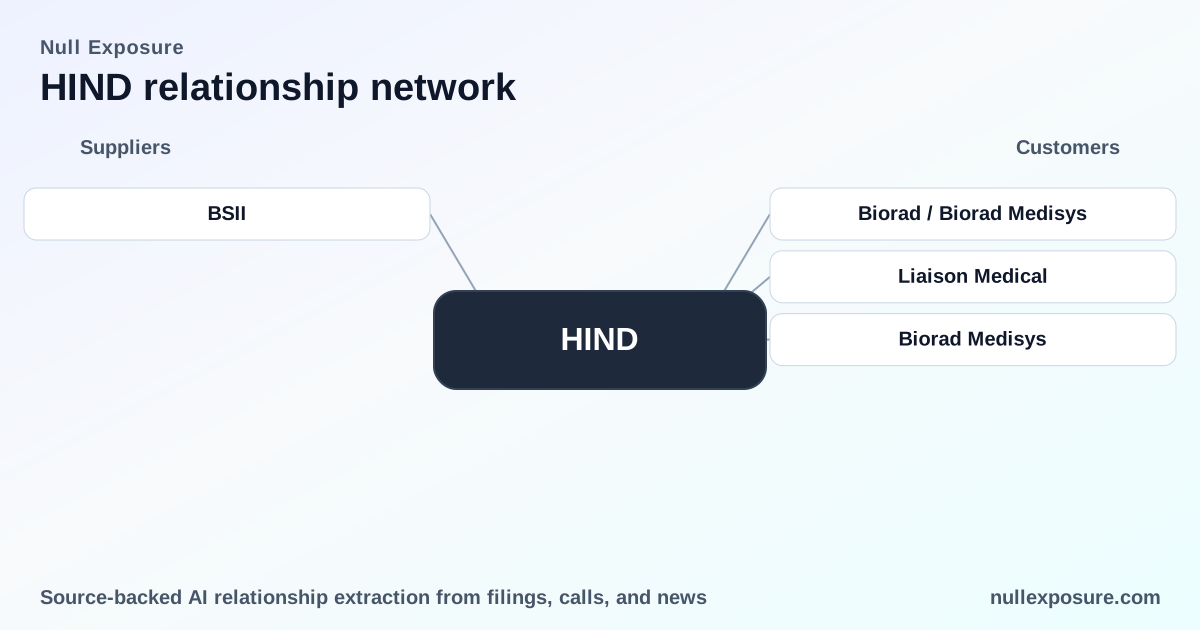
Vyome Holdings (HIND): Supplier relationships, regulatory dependencies, and procurement risk
Vyome Holdings operates as a clinical‑stage healthcare company developing therapeutic products for immuno‑inflammatory and rare diseases and monetizes through commercial sales of approved devices, licensing of intellectual property, and milestone/license revenues tied to clinical development and manufacturing agreements. For investors and operators evaluating supplier exposure, the business combines low current revenue with high regulatory dependence and a supplier base that is largely service‑oriented and concentrated at modest spend levels. If you want the full supplier map and continuous updates, start here: NullExposure homepage.
Executive snapshot — why suppliers matter to HIND investors
Vyome runs a lean operating model: product commercialization and clinical programs rely on contract manufacturers, third‑party service providers, and regulatory conformity assessments. The company’s supplier risk is dominated by regulatory touchpoints (Notified Bodies and FDA inspections), mid‑range contractual spend, and a mix of short‑ and medium‑term commercial commitments. These factors make supplier continuity and qualification a direct driver of time‑to‑market and revenue realization.
The single disclosed supplier relationship investors must track
BSI — Notified Body for CE marking
Vyome uses BSI as the Notified Body for its CE marking approval process, establishing BSI as the external conformity assessment authority for European market access. According to Vyome’s 2024 Form 10‑K, BSI serves this role for the company’s CE marking requirements (FY2024 10‑K).
How contract types and timelines shape procurement posture
Vyome’s public filings show a mix of contract durations that define operational flexibility:
- Short‑term operational commitments dominate procurement of inventory and services, with open purchase orders of roughly $0.4 million expected to be fulfilled within one year and weighted‑average lease terms around 1.4 years at year‑end 2024. This implies the company can pivot suppliers on routine purchases but faces execution risk if short‑notice suppliers are capacity constrained.
- Medium‑term real estate commitments exist through operating leases (office/warehouse space in Irvine, CA) that run through May 2026. These fixed overhead obligations support operations but limit near‑term cost flexibility.
- Licensing exposure is present as a business signal: Vyome has stated it could be required to obtain third‑party licenses for patent infringement avoidance, which introduces potential recurring royalty obligations under negotiated license terms.
These contract characteristics create a hybrid posture: tactical agility on inventory and services, with some structural inflexibility from leases and intellectual property arrangements.
Supplier roles, concentration and spend realities
Vyome’s supplier ecosystem is heavily service‑provider centric: legal, audit, clinical trial management, placement agents, and IT/security vendors dominate the relationship roster. The filings emphasize third‑party manufacturers and service providers for clinical and commercial supplies. Key takeaways:
- Service providers are primary — financial advisors, auditors, clinical sites and IT vendors are repeatedly identified in filings and footnotes.
- Manufacturers remain critical — contract manufacturers produce device components under stringent regulatory rules and require ongoing qualification and audits.
- Spend is modest but material — most vendor spend is in the $100k–$1m band, with isolated line items in the $1m–$10m range; this implies suppliers are not large revenue drivers to counter‑parties but still hold meaningful operational leverage over Vyome’s production and compliance timelines.
Regulatory criticality — why a Notified Body relationship matters
Certification by a Notified Body like BSI is a gating factor for European market access and triggers periodic audits and unannounced inspections. Loss, delay, or adverse findings from a Notified Body will directly interrupt sales and commercialization in EMEA, and the filings explicitly flag regulatory inspections as a persistent operational risk (FY2024 disclosures).
Materiality and vendor stability signals
Vyome’s disclosures present a clear view of material risk: several paragraphs in the 10‑K treat vendor failure, capacity constraints, and regulatory noncompliance as events that would have a material adverse impact on the business. The firm holds a relatively small cash and revenue base (Revenue TTM modest) and concentrates cash in a few financial institutions historically — a structure that amplifies supplier continuity risk in a liquidity stress scenario.
Relationship lifecycle and maturity
Most supplier relationships are active and operational. The filings also document prior terminations (for example, changes in independent auditors) and the potential for vendors to terminate relationships post‑merger or transaction activity. This indicates an operationally mature but changeable supplier base that requires continuous governance.
If you want a deeper view of active supplier engagements and historical vendor changes, explore the company profile at NullExposure homepage.
Practical implications for investors and operators
- Regulatory dependencies are the single biggest supplier risk. BSI’s role as Notified Body places compliance and audit performance at the center of commercial execution.
- Supplier concentration is mixed: while per‑supplier spend is typically small (100k–1m), the operational criticality of contract manufacturers and Notified Bodies makes replacement costly and slow.
- Contracts are predominantly short‑term for inventory and services but combined with medium‑term leases and potential licensing obligations that lock in costs and require contingency planning.
- Financial fragility amplifies vendor risk. Limited revenue and concentrated cash positions make supplier disruptions a higher‑impact event than for larger peers.
Mid‑report next step: to track these dynamics continuously and get alerts when material suppliers change status, visit NullExposure homepage.
Risk mitigation checklist for monitoring HIND supplier exposure
- Maintain a live watch on Notified Body status and audit schedules with BSI and any successor organizations.
- Verify dual sourcing for manufacturing‑critical components and require documented qualification windows for alternates.
- Monitor legal and IP proceedings that could force licensing — license exposure can convert product economics rapidly.
- Track vendor payment cycles and supplier concentration metrics given the company’s modest working capital base.
- Review service provider contracts (clinical sites, financial advisors, auditors, IT) for termination clauses that could trigger service discontinuity.
Conclusion — what investors should do now
Vyome’s supplier profile is manageable but concentrated in regulatory and manufacturing vectors where disruptions produce outsized commercial impact. Investors should treat regulatory certification status and contract manufacturer performance as primary monitoring metrics, and operators must prioritize dual sourcing and documented qualification plans.
For ongoing supplier intelligence and automated monitoring on HIND and comparable small‑cap healthcare suppliers, subscribe or start your research at NullExposure homepage.