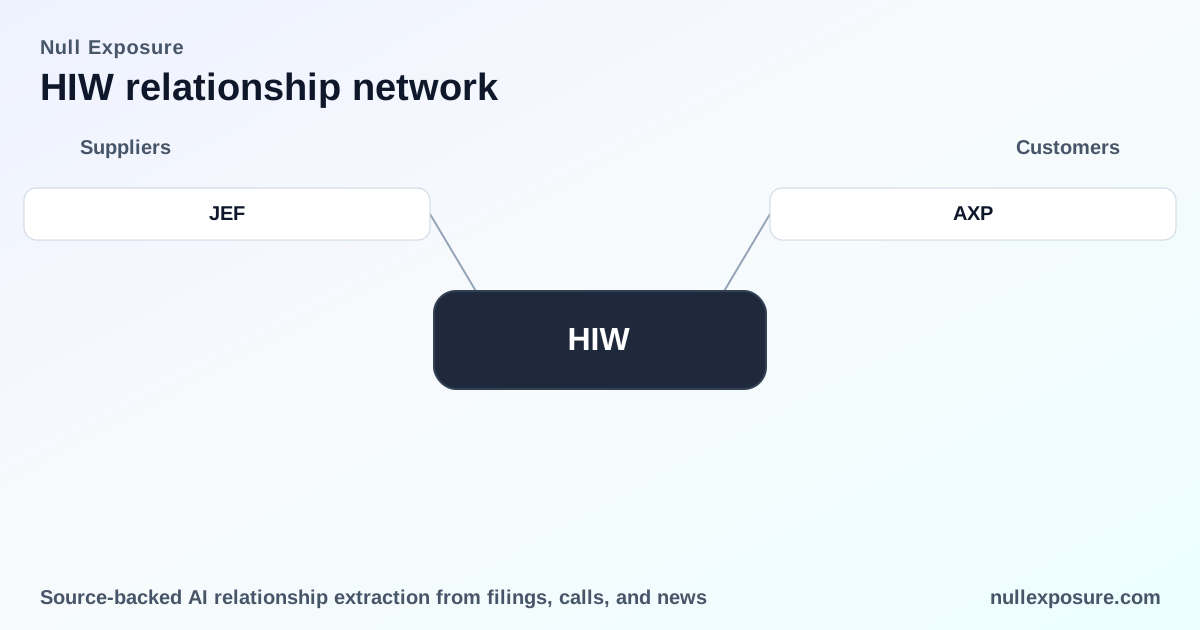
Highwoods Properties (HIW): Supplier relationships, capital partners and what they mean for investors
Highwoods is a geographically concentrated, office-focused REIT that monetizes through leasing and active portfolio rotation—acquiring and developing office buildings, leasing space, and financing the portfolio via long-term debt and capital markets activity. The company supplements organic cash flow with equity distribution programs and credit facilities to fund acquisitions and development. For investors evaluating counterparty exposure and supplier risk, the critical lenses are Highwoods’ contracting posture (long-duration leases and debt), its reliance on large capital providers, and the operational importance of service providers across finance, construction, insurance and property management. Learn more about supplier mapping and counterparty risk at https://nullexposure.com/.
Quick investor thesis
Highwoods generates steady recurring cash flow from office rent and extracts value through selective acquisitions and developments in southeastern and mid‑Atlantic U.S. markets; capital partners and distribution agents are integral to liquidity management, and credit facilities plus long-term notes drive both funding flexibility and refinancing risk. Equity and debt counterparties therefore influence dilution, cost of capital and timing of growth.
Who Highwoods is doing business with right now
Highwoods’ public record shows active engagement with investment banks and distributors to execute at‑the‑market equity programs and forward/warrant sale structures. These relationships are operationally material because they affect capital availability and dilution timing.
Jefferies — underwriting and equity distribution counterparty
Highwoods uses forward sale and warrant sale agreements primarily with Jefferies to time the physical settlement of shares and manage dilution; commissions paid to such counterparties are capped at 1.5% and can be treated as underwriting discounts or commissions. According to a Globe and Mail press release on March 10, 2026, Jefferies is a primary counterparty in those structured equity arrangements. (Source: Globe and Mail press release, March 10, 2026 — https://www.theglobeandmail.com/investing/markets/stocks/HIW/pressreleases/182618/highwoods-properties-launches-300-million-at-the-market-equity-program/)
In addition, Highwoods’ 2025 disclosures show it paid aggregate sales commissions to Jefferies LLC and J.P. Morgan Securities LLC in the fourth quarter of 2025 when it issued shares under its equity program, underscoring Jefferies’ active role in equity flows for the company. (Source: Highwoods FY2025 financial statements and related disclosures, December 31, 2025 / January–February 2026 filing)
How the supplier and counterparty profile shapes the business
Highwoods’ supplier footprint and contractual posture produce several investment‑relevant signals. These observations come from the company’s 2025 financial disclosures and public press filings.
- Long‑term financing and leases dominate the posture. The Operating Partnership carries multi‑year unsecured notes and mortgages (maturities through the early 2030s) and ground leases with weighted average remaining terms near 50 years for specific assets, which positions Highwoods as a long‑duration borrower and lessee. This structure secures stability of cash flows but concentrates refinancing and interest‑rate risk over long horizons. (Source: Highwoods FY2025 financial statements)
- Short‑term liquidity is managed through a large revolver and active capital markets access. A $750 million unsecured revolving credit facility (maturity January 2028 with extension options) and equity distribution agreements underpin near‑term funding needs for development and acquisitions. Availability under these facilities and the company’s ability to tap equity distribution agents are operationally critical. (Source: Highwoods FY2025 financial statements)
- Counterparty mix is broad but includes governments, small vendors and very large financial institutions. Highwoods documents exposure to government‑qualified asset tests for REIT status, prioritizes small/minority vendors for procurement, and competes with very large institutional investors for deals—indicating a diverse but strategically important counterparty set. (Source: Highwoods FY2025 financial statements)
- Supplier spend is meaningful and skewed to high‑value transactions. The company’s recent acquisitions totaled hundreds of millions (e.g., 6HUNDRED in Charlotte for ~$193.4M; Advance Auto Parts Tower for ~$137.9M), and material contractual obligations exceed $100M in several categories—this creates large single‑transaction counterparties and material vendor/payment flows. (Source: Highwoods FY2025 financial statements)
What constraints tell investors about operational risk
The company disclosures read like a REIT that is operationally mature but exposed to capital market cycles.
- Contracting maturity and concentration: Long‑dated notes and ground leases provide cash flow resilience but create concentrated maturities and covenants that can be tightened by lenders. The revolver’s earlier maturity window increases near‑term refinancing focus. (Company filings, FY2025)
- Critical dependencies: Maintaining REIT qualification is legally and financially critical—asset composition tests and timely compliance drive treasury behaviors and counterparty choices. Covenant defaults on major credit facilities can accelerate borrowings and restrict access to working capital. (Company filings, FY2025)
- Materiality of counterparty failures: Insurance coverage limitations and the potential for uninsured losses are flagged as material; cybersecurity and third‑party service provider resilience are explicitly managed at an executive committee level. These are company‑level signals that affect operational continuity across assets. (Company filings, FY2025)
- Spend profile: Transactions in the >$100M band are routine; routine vendor spend also includes mid‑sized categories ($1M–$100M). Highwoods’ procurement policy to include small and minority vendors reduces single‑supplier concentration but does not eliminate large, deal‑level counterparty risk. (Company filings, FY2025)
For a mapped view of financial counterparties and supplier concentrations, visit https://nullexposure.com/ — the platform consolidates these relationships for investor due diligence.
Risk / reward for supplier exposure and capital partners
- Upside: Access to distribution agents and forward sale structures (e.g., Jefferies) gives Highwoods optionality to raise equity without immediate heavy dilution, enabling opportunistic acquisitions and preserving balance sheet flexibility. This supports growth and same‑property NOI expansion in targeted markets. (Source: Globe and Mail press release; Highwoods FY2025 filings)
- Downside: Heavy reliance on capital markets and a revolver that must be managed within a 2028 maturity window increases execution risk if credit markets tighten. Long-term debt stock increases interest exposure and could compress free cash flow if occupancy or leasing velocity softens. (Source: Highwoods FY2025 filings)
What investors and operators should do next
- Review covenant language and revolver extension mechanics in the company’s credit agreements to assess refinancing risk and lender concentration.
- Monitor equity distribution program activity and counterparty commissions (Jefferies and peers) for signs of accelerated issuance or dilution timing.
- Validate insurance and cybersecurity compensating controls given the materiality of uninsured events and third‑party IT risk.
For deeper counterparty analytics and to track commission and equity distribution flows for HIW, see https://nullexposure.com/. If you need a supplier risk briefing tailored to your portfolio or operating exposure, request a custom map at https://nullexposure.com/.
Final take
Highwoods is a capital‑markets‑driven, office REIT that depends on large financing relationships and distribution agents to execute growth; Jefferies is an explicit partner in equity execution. The operating model delivers stable rental cash flow but places strategic importance on lender relationships, equity distribution capacity and insurance/cyber resilience—areas investors must watch closely.