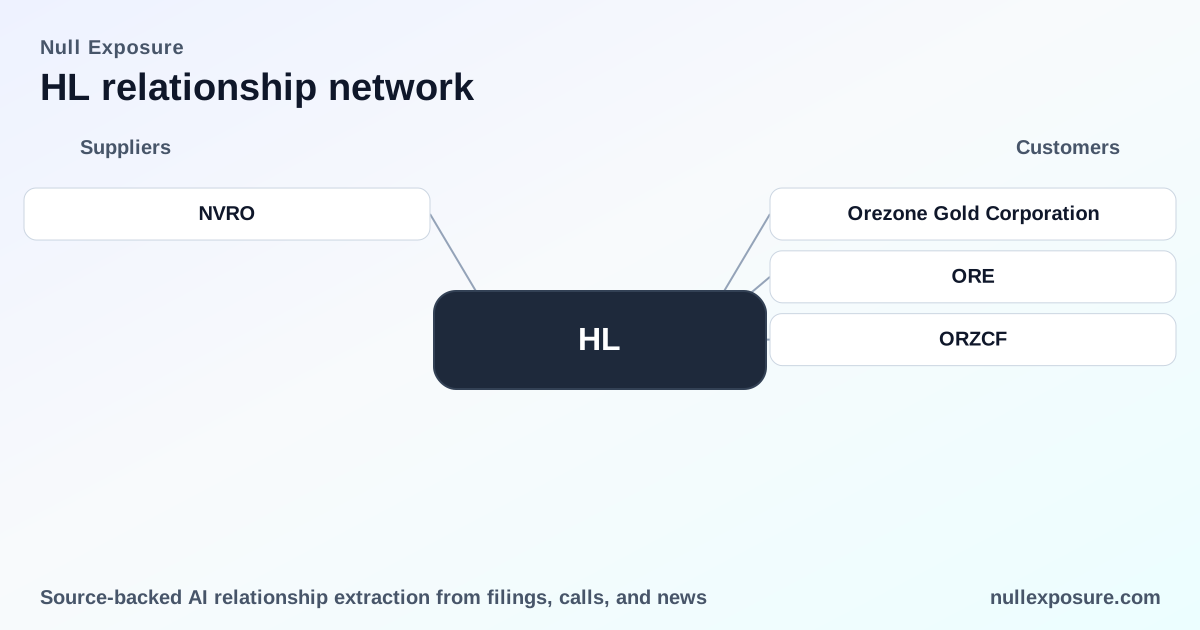
Hecla Mining (HL): supplier posture, counterparty map and actionable risks for investors and operators
Hecla Mining is a vertically integrated precious- and base‑metals miner that monetizes by producing doré and concentrates and selling refined metals to traders and refiners, supplemented by financial programs that hedge currency and some cost exposures. Revenue flows derive from mine operations across North America and contract sales through third‑party processors and refiners; balance‑sheet flexibility and off‑take/processing arrangements determine supplier leverage and operational continuity.
For a quick supplier‑risk dashboard and relationship indexing, visit the Null Exposure homepage: https://nullexposure.com/
How Hecla runs the business and where suppliers plug in
Hecla operates multiple North American mines and processes metal via a chain of third‑party processors and refiners rather than vertically integrating smelting capacity. Production is converted into doré and concentrates, third‑party processors refine or smelt product, and Hecla sells finished metal to precious‑metals traders. The company reported trailing twelve‑month revenue of roughly $1.423 billion and EBITDA of $696 million as of the latest reporting period ending 2025‑12‑31, reflecting profitable operations but significant operating and capital commitments across sites.
Operationally, Hecla uses a mix of contracting approaches:
- Long‑term commitments dominate for labor, leases and some financing (notably multi‑year collective bargaining agreements and operating/finance leases), which creates predictable base costs but reduces near‑term flexibility.
- Shorter‑term financial hedges and forward contracts are used to manage currency and input costs, establishing near‑term obligations that affect working capital.
- The company is an active buyer of inputs and services (power, contractors, equipment), and relies extensively on third‑party service providers and refiners for final metal conversion and logistics.
For stakeholder tools and supplier monitoring, see https://nullexposure.com/
The supplier relationships you must know (one by one)
EnviroGold Global Limited
EnviroGold disclosed that a previously unnamed “North American Tier‑1 customer” for a Greens Creek tailings project is Hecla, confirming a supply/contract relationship tied to tailings management at Greens Creek. This identification was published in a GlobeNewswire press release on March 2, 2026. (GlobeNewswire, EnviroGold press release, March 2, 2026.)
Constraints and what they tell investors and operator teams
The public record exposes a set of durable operating constraints that shape supplier negotiations, counterparty risk and capital allocation. These are company‑level signals and should be read as structural characteristics of Hecla’s operating model.
- Contracting posture: long‑term core commitments with tactical short‑term hedges. Hecla carries multi‑year labor agreements (a six‑year CBA through May 2029) and multi‑year operating and finance leases, while using forward contracts and an equity distribution framework (ATM program) for tactical financing and currency exposure management. These commitments give suppliers stable baseline demand but limit Hecla’s ability to rapidly re‑price or re‑allocate spend.
- Financial structure and maturity profile concentrate near‑term refinancing and liquidity risk. The company’s indebtedness includes 7.25% Senior Notes due February 15, 2028 and Investissement Québec notes maturing July 9, 2025, alongside a $225 million revolving credit facility with letters‑of‑credit usage. Forward‑contract obligations (378 contracts to buy CAD ~$279.3 million notional) create real working‑capital flows. Suppliers should price for counterparty risk where indebtedness and upcoming maturities increase leverage on working capital.
- Geographic concentration across North America with site‑specific operational fragility. Operations and supply chains are concentrated in the U.S., Canada and Mexico; for example, power shortfalls at Yukon Energy materially impacted Keno Hill production and financials. Site‑level utilities and marine/logistics nodes (Greens Creek island access) are single points of failure that affect supplier delivery schedules and revenue timing.
- Material and sometimes critical supplier relationships. Hecla classifies many supplier dependencies as material; shortages of critical parts and equipment are explicitly flagged as potential production‑stopping events. For investors, this elevates the value of suppliers who provide long lead‑time spares, field support and guaranteed uptime.
- Relationship maturity mix: active, renewing and selective wind‑down. Most supplier relationships are active; some contracts and capital items are being renewed or wound down (for example equipment write‑downs for discontinued machines). That dynamic generates pockets of procurement opportunity for vendors offering retrofit/upgrade paths.
Credit, operational and supply risks that change valuation
Hecla’s supplier economics are embedded in capital intensity and commodity exposure:
- Large capital and operating spend bands. Corporate disclosures show multi‑hundred‑million dollar capital programs (2024 capex ~$214–224 million), and a mix of purchase orders and lease commitments across mines. Suppliers that can scale to mid‑cap and enterprise deals capture the bulk of spend.
- Counterparty types matter. Hecla transacts with government bodies (Investissement Québec financing, permitting authorities), institutional lenders and numerous contractors; compliance and surety requirements are routine. Suppliers should expect surety or collateral demands where reclamation or environmental exposure exists.
- Operational criticality raises supplier bargaining power for specialized equipment and maintenance. Shortages of parts or discontinued vendor support have previously forced write‑downs; suppliers offering long‑term maintenance or replacement pathways command pricing premium.
Key implications for investors: operational interruptions (power, parts, permitting) can produce material swings in cash flow; capital markets sensitivity to near‑term maturities and forward positions can amplify valuation volatility.
Actionable recommendations for investors and supplier managers
- Investors should stress‑test Hecla’s liquidity against near‑term debt maturities and the operational impact of site‑specific outages (e.g., Yukon Energy). Favor counterparties and service providers with contractual mechanisms that protect cash‑flow timing.
- Supplier managers should prioritize multi‑year maintenance contracts, spare‑parts availability and rapid field support offerings, because Hecla values uptime and third‑party processing continuity.
- Operational risk teams should model power supply and marine/logistics interruptions into scenario plans for Greens Creek and Keno Hill and factor in the potential for surety collateral calls.
If you want a deeper supplier‑risk map or tailored counterparty scoring for Hecla, start here: https://nullexposure.com/
Final verdict: why this matters to investors now
Hecla's business model is resilient in a higher‑price metals environment, but the combination of concentrated North American operations, meaningful near‑term debt and material supplier criticality creates a risk profile that rewards active supplier diligence and credit oversight. The EnviroGold announcement simply confirms Hecla’s role as a large, Tier‑1 counterparty for project work at Greens Creek—illustrative of the type of supplier relationships that are commercially important and operationally sensitive. For investors and operator teams, the opportunity is to underwrite these relationships with contract terms, insurance, and contingency planning that reflect their materiality.
For practical tools to convert this analysis into procurement or investment actions, visit Null Exposure: https://nullexposure.com/