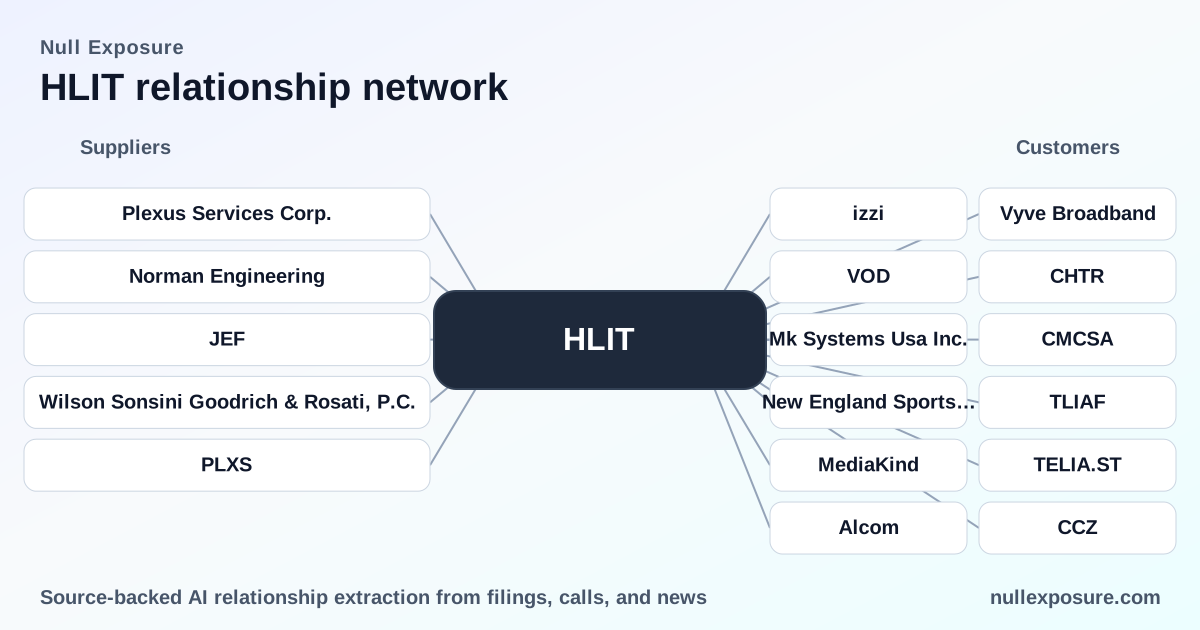
Harmonic Inc (HLIT) — supplier profile and what it means for investors
Harmonic Inc. sells video-delivery hardware, software and professional services to cable, telco and media operators and monetizes through product sales, recurring software/service contracts and professional services tied to deployments. The company outsources manufacturing and portions of R&D/support, runs a mix of short- and long‑term commercial commitments, and funds operations with a multi‑year credit facility—making supplier relationships a direct lever on gross margin, delivery cadence and operational continuity. For a quick vendor-risk snapshot and tracking of counterparty roles, see https://nullexposure.com/.
How Harmonic’s supplier posture shapes the business
Harmonic operates a hybrid supplier model: product manufacturing and key components are outsourced, while software and professional services are delivered in‑house or via partners. The firm’s public filings reveal a deliberate mix of contract horizons—the company discloses both short‑term supplier relationships and specific long‑term financial arrangements (leases and a five‑year credit agreement that matures in 2028). This structure delivers flexibility in sourcing but concentrates operational risk because a single contract manufacturer accounts for the majority of contract‑manufactured purchases.
Key operating characteristics investors should internalize:
- Concentration: Plexus Services Corp. is identified as the primary contract manufacturer and supplies most third‑party assembled products, which creates outsized supply risk if Plexus capacity, quality or geography is disrupted (the 10‑K names Plexus explicitly).
- Contracting posture: The company discloses it “does not generally maintain long‑term agreements with any of our suppliers,” yet it maintains long‑dated leases and a five‑year credit facility—reflecting a strategy of flexible supplier engagement coupled with stable capital structure commitments.
- Geographic exposure: Most contract manufacturing is conducted outside the U.S.; Plexus operates facilities in Malaysia and components are sourced through Taiwan, creating exposure to APAC supply chains and tariff/regulatory shifts.
- Materiality and criticality: Supplier disruptions are described as able to materially and adversely affect revenue and operations—Harmonic’s disclosures classify supplier dependence as a material risk.
- Spend and liquidity signals: Public statements show meaningful commitments (approximately $113.9M of purchase commitments as of Dec 31, 2024) and credit activity (draws on both Revolving and Term Facilities), indicating meaningful ongoing procurement scale.
If you want a concise supplier map for portfolio due diligence, start here: https://nullexposure.com/.
What the relationships reveal for investors
Harmonic’s disclosed counterparties show a classic vendor mix: a dominant contract manufacturer, regional engineering partners for deployments, and high‑profile advisors for strategic transactions. Together these relationships underline that Harmonic outsources scale manufacturing and relies on partners for regional deployments and capital‑markets work—each relationship has a distinct operational and financial implication for investors.
Supplier and advisor relationships — line by line
Plexus Services Corp.
Harmonic’s contract manufacturing is concentrated with Plexus, which “currently serves as our primary contract manufacturer” and produces products at facilities in Malaysia, accounting for the majority, by dollar amount, of contract‑manufactured purchases. This places supply continuity and quality control squarely on the Plexus relationship. According to Harmonic’s FY2024 Form 10‑K (filed Dec 31, 2024) and summarized in a 2026 TradingView recap of the company’s filings, Plexus is the primary third‑party manufacturer.
Norman Engineering
Norman Engineering is a long‑standing European deployment partner; Harmonic highlighted joint DOCSIS and fiber deployments across Austria and Germany, noting a 20‑deployment milestone in remarks from its Q4 2025 earnings call. This relationship signals local engineering capacity that supports regional sales and services (Harmonic Q4 2025 earnings call).
Jefferies LLC
Jefferies LLC is serving as Harmonic’s exclusive financial advisor in the announced strategic combination of its video business with MediaKind, showing Harmonic’s use of an investment bank to execute deal processes and capital advisory. This engagement is referenced in the MediaKind announcement from March 2026 and confirms Jefferies’ role in the transaction advisory (MediaKind news release, March 2026).
Wilson Sonsini Goodrich & Rosati, P.C.
Wilson Sonsini is serving as legal advisor to Harmonic on the same video‑business combination with MediaKind, reflecting the use of top‑tier transaction counsel for corporate divestiture or combination activity. The legal engagement is disclosed in the MediaKind announcement (March 2026).
Constraints and what they imply about the operating model
The company‑level constraints Harmonic discloses map to four investment considerations:
-
Contract horizon mix: Public filings record both long‑dated corporate commitments (leases through 2032; a five‑year credit agreement sized at $160M) and the company statement that it “does not generally maintain long‑term agreements with any of our suppliers.” That implies operational flexibility in sourcing but financial fixedness through debt and leases—a combination that amplifies supplier disruption risk if working capital tightens.
-
Concentration and materiality: Multiple excerpts label supplier dependence as material; Plexus specifically accounts for the majority of contract manufacturing spend. For investors, that creates a single‑point operational dependency that translates directly into revenue and margin risk if Plexus capacity, cost or geopolitical exposure is disrupted.
-
Geographic and currency exposure: Most contract manufacturing occurs outside the U.S. (APAC focus, Malaysia and Taiwan components) and the company uses short‑dated foreign‑currency hedges—this produces sensitivity to tariffs, trade policy and FX that can hit COGS and gross margin quickly.
-
Maturity and stage: Most supplier relationships are active; the company reports ongoing borrowings and purchase commitments. The firm’s spend profile includes $100M+ level commitments, placing Harmonic in a procurement band where supplier negotiations and continuity materially affect financial outcomes.
Taken together, these constraints point to an operating model that is flexible on sourcing contracts but concentrated on execution partners and tied to mid‑cycle financial leverage—a classic supplier‑risk premium for investors in hardware + services businesses.
For a practical risk checklist and ongoing monitoring feed for portfolio reviews, visit https://nullexposure.com/.
Bottom line: what investors should do now
- Treat Plexus concentration as a top vendor risk—confirm backup manufacturers and the terms for automatic renewal/termination embedded in the Plexus agreement (disclosed in the 10‑K).
- Monitor APAC trade policy and component availability as near‑term drivers of gross margin volatility.
- Follow the MediaKind transaction process—Jefferies and Wilson Sonsini’s roles indicate active strategic repositioning that can materially change revenue mix and supplier footprints.
If you need a tailored supplier‑risk brief or a vendor heat map for HLIT, NullExposure can deliver targeted diligence and monitoring: https://nullexposure.com/.