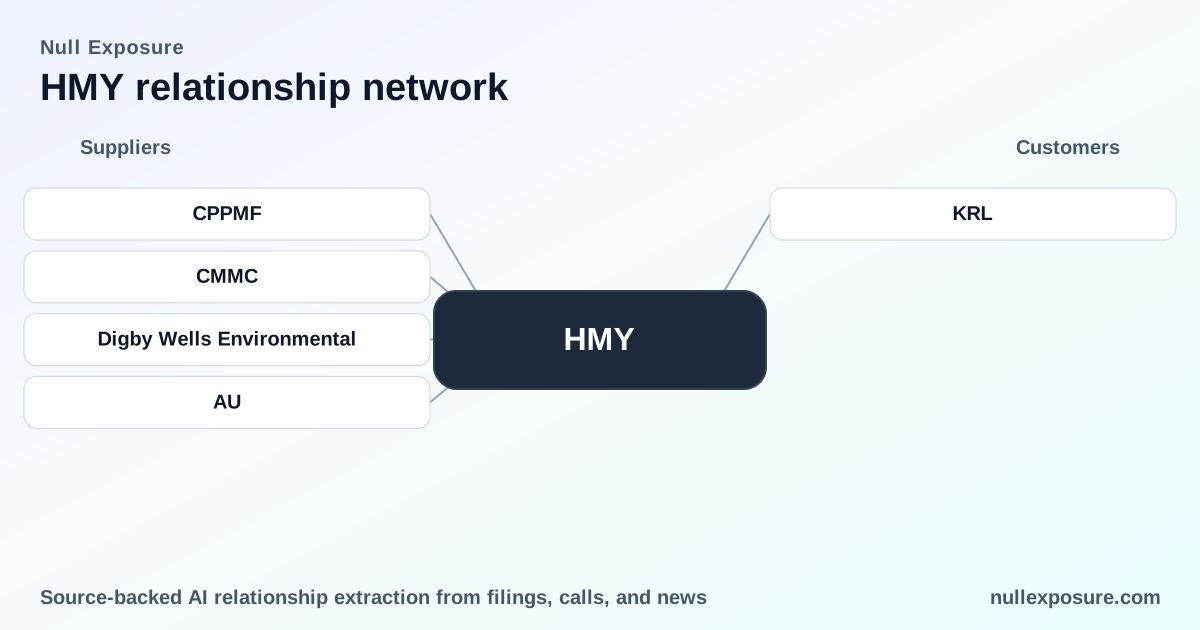
Harmony Gold (HMY) — Supplier relationships and what they tell investors
Harmony Gold Mining Company Limited operates as an integrated gold producer: it explores, extracts and processes gold in South Africa and Papua New Guinea and monetizes through metal sales, asset monetization and value extraction from acquisitions and mine closures. Revenue generation is a mix of ongoing production cashflow and strategic asset transactions, and recent reports of project purchases and closure planning show Harmony is actively reshaping its asset base while outsourcing specialized environmental and transactional work.
Explore supplier-relationship intelligence and comparable profiles at https://nullexposure.com/ for deeper due diligence.
Why supplier relationships matter for a mining operator
Harmony’s supplier network is an operational lever, not just a procurement ledger. Large asset acquisitions change the supplier mix overnight (engineering contractors, environmental advisers, logistics), while closure and social-licence work relies on specialist consultants. Investors should read supplier items as signals of capital allocation, operational transition and regulatory exposure.
From a company-level perspective, Harmony’s financials support an acquisitive posture: FY trailing revenue of roughly $81.2B and market capitalization near $9.66B underpin a capacity to fund transactions and retain specialist suppliers. Profitability metrics — operating margin ~33% and return on equity ~33.5% — indicate operational scale that gives Harmony negotiating leverage with contractors. Institutional ownership at ~21.5% suggests a moderate external investor base watching capital deployment closely.
No supplier-specific constraints are flagged in the available sourcing; that absence itself is a signal of no publicly identified contractual red flags in the supplier dataset. Treat that as a company-level indicator rather than evidence for any single relationship.
How to think about Harmony’s contracting posture, concentration and criticality
- Contracting posture: transactional and project-driven, with significant supplier demand arising around acquisitions and closure activities.
- Concentration: asset purchases imply shifting supplier concentration by geography and discipline (environmental services in closure, mining contractors on new projects).
- Criticality: environmental and regulatory advisers are high-criticality suppliers because closure and permitting materially affect mine life and social licence.
- Maturity: relationships range from mature long-term production suppliers to one-off transactional partners tied to M&A and remediation work.
What the public record shows — every supplier-related mention
Below are the supplier and transaction mentions found in our sourcing, each with a concise summary and the original source for follow-up.
-
Copper Mountain Mining Corporation — Harmony agreed to buy the Eva Copper Project and a 2,100 sq km Queensland exploration land package for up to US$230 million, reflecting targeted copper exposure via asset acquisition. Source: Canadian Lawyer Magazine report on the transaction (reported March 2026). https://www.canadianlawyermag.com/practice-areas/crossborder/davies-assists-in-two-cross-border-ma-mining-deals/370554
-
Copper Mountain Mining Corp. — Independent reporting confirmed the same purchase: Canada’s Copper Mountain agreed to sell the Eva copper project and associated 2,100 km² land package to Harmony for US$230 million in cash, reinforcing the deal’s market visibility across mining press. Source: Engineering & Mining Journal (e-mj) coverage (March 2026). https://www.e-mj.com/news/australia-and-oceania/copper-mountain-to-sell-australian-project-and-land-package-to-harmony/
-
Digby Wells Environmental — Digby Wells produced a closure plan for Kusasalethu on behalf of Harmony, documenting the environmental, social and economic aspects of mine closure and indicating Harmony’s engagement of specialist environmental consultants for end-of-life site management. Source: local press report (Citizen) referencing the closure plan (FY2023 reporting context). https://www.citizen.co.za/carletonville-herhald/news/2023/08/31/kusasalethus-closure-being-planned/
-
AngloGold Ashanti — Regulatory and transactional coverage notes that conditions were met for the sale of AngloGold Ashanti’s remaining South African mines to Harmony, a move that materially shifted the supplier and operational footprint in the country and increased Harmony’s asset and workforce responsibility. Source: e-mj breaking news on the sale approval (FY2020 reporting context). https://www.e-mj.com/breaking-news/anglogold-ashanti-receives-approval-for-sale-of-south-african-mines/
Strategic implications for investors and operators
Each relationship signals a different operational lever:
-
Acquisition-driven supplier change: The Eva Copper transaction pushes Harmony into buyer mode, immediately creating new supplier needs for Australian project development and potentially introducing copper-focused contractors into a historically gold-biased supplier base. The consistency of reporting across outlets confirms the deal’s materiality.
-
Specialist environmental reliance: Engagements like Digby Wells show Harmony paying for high-criticality, specialist advisory services tied to closure and permitting — these suppliers directly affect remediation cost certainty and social-licence outcomes.
-
Industry consolidation effects: The AngloGold Ashanti asset transfer increased Harmony’s SA footprint, concentrating operational risk and expanding its supplier roster for regional services, labour management and regulatory interface.
From a risk-reward lens, asset purchases improve growth optionality but increase operational complexity and near-term capital requirements. Harmony’s strong operating margin and EBITDA profile provide financial cover for this strategy, yet investors should monitor integration execution and contractor concentration in new jurisdictions.
Take a closer look at supplier dynamics and comparative profiles at https://nullexposure.com/ — our coverage highlights counterparty exposures that matter for valuation.
What to watch next
- Integration execution on the Eva Copper acquisition: supplier onboarding, local contractor awards, and capex timing will determine when copper revenue could contribute to free cash flow.
- Closure provisioning and environmental outcomes at Kusasalethu: vendor reports and community engagement milestones will frame downside risk to mine economics.
- Post-acquisition regional supplier concentration in South Africa: increasing scale brings negotiating leverage, but also heightened country-specific regulatory and labour risk.
If you track Harmony for investment or counterparty risk, prioritize updates on contractor awards and regulatory filings that document supplier terms and liabilities.
Explore supplier risk dashboards and deep-dive reports at https://nullexposure.com/ for actionable counterparty intelligence.
Bottom line
Harmony’s supplier signals are consistent with an operator that balances production cashflow with opportunistic asset consolidation and regulated closure obligations. The company’s profitability and balance-sheet posture provide capacity for M&A and specialist contracting, but the complexity introduced by new jurisdictions and closure responsibilities elevates execution risk. Monitor supplier awards, environmental deliverables and integration milestones to evaluate whether these activities will expand margin delivery or compress near-term free cash flow.
For ongoing monitoring of Harmony’s counterparty exposures and supplier relationships, visit https://nullexposure.com/ — our platform aggregates the signals institutional investors use to assess operational counterparties.