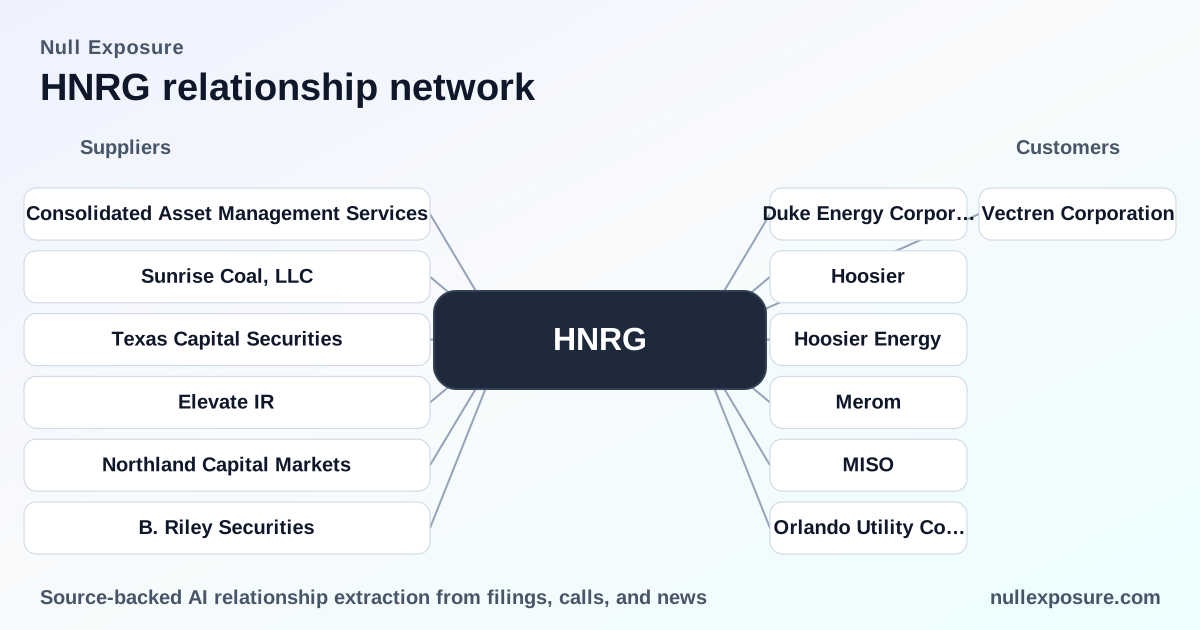
Hallador Energy (HNRG): Supplier and advisor map for investors and operators
Hallador Energy monetizes by producing and selling steam coal from the Illinois Basin and by operating a one‑gigawatt thermal power plant (Merom) that sells electricity and capacity into MISO; the company captures margin through integrated coal production (Sunrise Coal) feeding its power operations and through market and contract sales of power, while accessing capital markets for growth and liquidity. Revenue drivers are coal sales and power generation, and margins are highly sensitive to coal procurement costs, power market spreads, and the company’s capital structure. For a concise view of supplier risk and counterparty relationships, see more at https://nullexposure.com/.
What investors need to know up front
Hallador runs an integrated upstream‑to‑plant model: it owns coal production assets and a merchant power station and relies on a blend of long‑term and short‑term contracts, third‑party service providers, and capital‑markets counterparties to keep operations running and liquidity intact. Its operating profile combines commodity exposure (coal, fuel, power), infrastructure concentration (one primary generating station), and reliance on third‑party operators and underwriters for day‑to‑day execution and financing. Key sensitivities: fuel price swings, permit and bond availability, and access to bank and public capital.
Explore supplier risk dashboards and relationship analytics at https://nullexposure.com/ to benchmark Hallador’s counterparties and contracting posture.
How Hallador contracts and where concentration shows up
Hallador’s contract posture is mixed and pragmatic: material long‑term obligations coexist with short‑term and seasonal arrangements. The company documents multiyear coal contracts, bank debt with term maturities, and operating leases that extend up to eight years; simultaneously it runs short‑term coal purchases and an active position in hourly MISO spot purchases when plant economics require. This hybrid posture supports operational flexibility while preserving committed capacity — but it also creates exposures.
- Long‑term anchors: multi‑year coal agreements, surety bonds for reclamation, and bank term loans create predictable cash flow commitments and covenant constraints.
- Short‑term flexibility: spot power purchases in MISO and shorter coal purchase terms allow the company to manage margin when market prices diverge from plant economics.
- Capital market dependence: recent moves to terminate an ATM and engage an underwriter signal active balance‑sheet management ahead of capital raises.
These signals create a profile where procurement flexibility reduces some commodity risk, but financial covenants and bond availability are critical constraints for near‑term liquidity and ongoing operations.
Constraints that shape supplier risk and operational resilience
Hallador’s filings and disclosures reveal several company‑level constraints that shape supplier strategy and operational risk:
- Contract mix and maturity: Evidence of both long‑term and short‑term contracts — operating leases up to eight years and coal contracts that expire or are renewed frequently — indicates a deliberate balance between stability and flexibility. Long‑term bank debt and revolver maturity schedules impose financing deadlines that influence supplier payments and collateral needs.
- Regulatory and permitting friction: Federal and state permits (Section 404, SMCRA, EPA oversight) are binding inputs to operations; permit or bond failures directly reduce mining capacity and cash flow.
- Materiality of supplier inputs: Many supplier relationships are material — surety bonds, transportation (rail carriers), major plant equipment and reagents — and disruptions can materially affect production and profitability.
- Service provider reliance: Hallador outsources critical plant operations and maintenance functions, and uses external advisors for reserve validation and audit. This creates operational dependence on third‑party providers for regulatory compliance and day‑to‑day performance.
- Spending scale: Procurement ranges from $1m–$10m suppliers (leasing, short‑term financing) up to $10m–$100m (capital expenditures, amortizations), showing a mid‑market vendor footprint with occasional larger capital vendors.
Mid‑article note: if you want a parsed supplier scorecard for Hallador’s counterparties, start here: https://nullexposure.com/.
Counterparty and advisor relationships — the full list investors need
Below I cover every named relationship surfaced in public filings and press: concise, plain‑English takeaways with source context.
Consolidated Asset Management Services (CAMS)
CAMS manages operations, maintenance and asset management at the Merom Generating Station and employs represented workers who perform day‑to‑day plant functions, making CAMS a critical service provider for Merom’s operational continuity. According to Hallador’s 2024 Form 10‑K, Hallador contracts with CAMS for ongoing operations and oversight (FY2024, 10‑K).
Sunrise Coal, LLC
Sunrise Coal is Hallador’s coal production arm and primary fuel supplier for Merom; it supplies coal to both Hallador Power and external customers, underpinning the company’s integrated fuel‑to‑plant model. Multiple press releases and investor statements in FY2025–FY2026 describe Sunrise Coal as the coal production and supply business for Merom (GlobeNewswire via EnergyDigital and The Globe and Mail, FY2025–FY2026).
Texas Capital Securities
Texas Capital Securities is acting as the sole bookrunner/representative for Hallador’s proposed public offering of common stock under an Underwriting Agreement executed in early 2026, replacing the prior at‑the‑market program. TradingView and press filings report the underwriting agreement and Texas Capital’s role (FY2026 press coverage).
B. Riley Securities
B. Riley Securities was the prior at‑the‑market placement agent; Hallador terminated that ATM program as part of the move to a traditional underwriting with Texas Capital. TradingView’s coverage of the underwriting transaction notes the termination of the B. Riley ATM arrangement (FY2026 press coverage).
Northland Capital Markets
Northland Capital Markets is serving as co‑manager on Hallador’s proposed equity offering, supporting the bookbuilding alongside Texas Capital and contributing distribution capacity to the transaction. The company’s January 2026 offering announcement lists Northland as co‑manager (GlobeNewswire/ManilaTimes distribution, FY2026).
Elevate IR
Elevate IR is Hallador’s investor relations contact and listed communications provider for the public offering and investor outreach; contact details appear in the company’s January 2026 press release and investor communications (GlobeNewswire/ManilaTimes and Globe and Mail references, FY2025–FY2026).
Investment implications and operational risk summary
- Operational criticality: The Merom plant operator (CAMS) and Sunrise Coal are operationally central; any disruption to either function would immediately affect power generation and margins. Service provider dependence is a live, material risk.
- Commodity exposure: Integrated coal supply reduces some procurement risk but does not eliminate sensitivity to coal pricing, transportation cost shifts, or permit constraints that can be material to cash flow.
- Liquidity and covenant risk: Term debt maturities and revolver expirations, alongside recent capital markets activity, make near‑term financing and covenant compliance important watchpoints for investors.
- Advisory and distribution changes: Moving from an ATM with B. Riley to a managed offering with Texas Capital and Northland signals urgency in accessing primary capital markets rather than relying on dribbled‑out liquidity.
If you want a side‑by‑side risk and spend profile for these counterparties, view Hallador’s supplier intelligence page at https://nullexposure.com/.
Final read: what to watch next
Monitor operational KPI cadence from Merom (availability, dispatch economics), Sunrise Coal production and reclamation bond renewals, rail capacity and freight rates, and the outcome and proceeds of the 2026 equity offering — each will directly affect Hallador’s ability to meet covenants, fund capital projects, and maintain supplier relationships. For investors deploying capital or operators underwriting supplier risk, the intersection of permit/bond availability and financing maturity is the most consequential axis.
For deeper counterparty scoring and a downloadable supplier risk dossier, go to https://nullexposure.com/.