Direxion’s HODU: A concentrated, sponsor‑driven levered play on Robinhood
Thesis — Direxion’s HODU (Direxion Daily HOOD Bull 2X ETF) is a fee‑generating, sponsor‑managed leveraged exchange‑traded fund that monetizes investor demand for amplified exposure to a single equity (Robinhood Markets). The product makes money through management and financing spreads embedded in the fund’s expense structure and derivatives usage, while counterparties and listing venues supply market access, clearing, and the swap mechanics that deliver daily 2x exposure.
If you evaluate supplier relationships or operate around leveraged single‑stock ETFs, decide quickly how HODU fits your counterparty risk and market‑making capacity — and see more on structural exposures at https://nullexposure.com/.
What HODU is and how the business model works
HODU is a sponsor‑issued, single‑stock leveraged ETF that targets twice the daily return of Robinhood’s equity. Direxion, as sponsor, packages the product, charges fees and funds the portfolio construction; the fund uses swaps and financing to achieve leverage rather than holding the underlying outright. The economics are straightforward: investor flows create fee revenue and financing spreads, while the fund’s structure concentrates counterparty and market access risk around the swap counterparties, the issuer, and the listing/clearing ecosystem.
This is a product that trades in public markets but operates through a small set of commercial relationships — each relationship defines execution, liquidity, and legal exposure for investors and intermediaries.
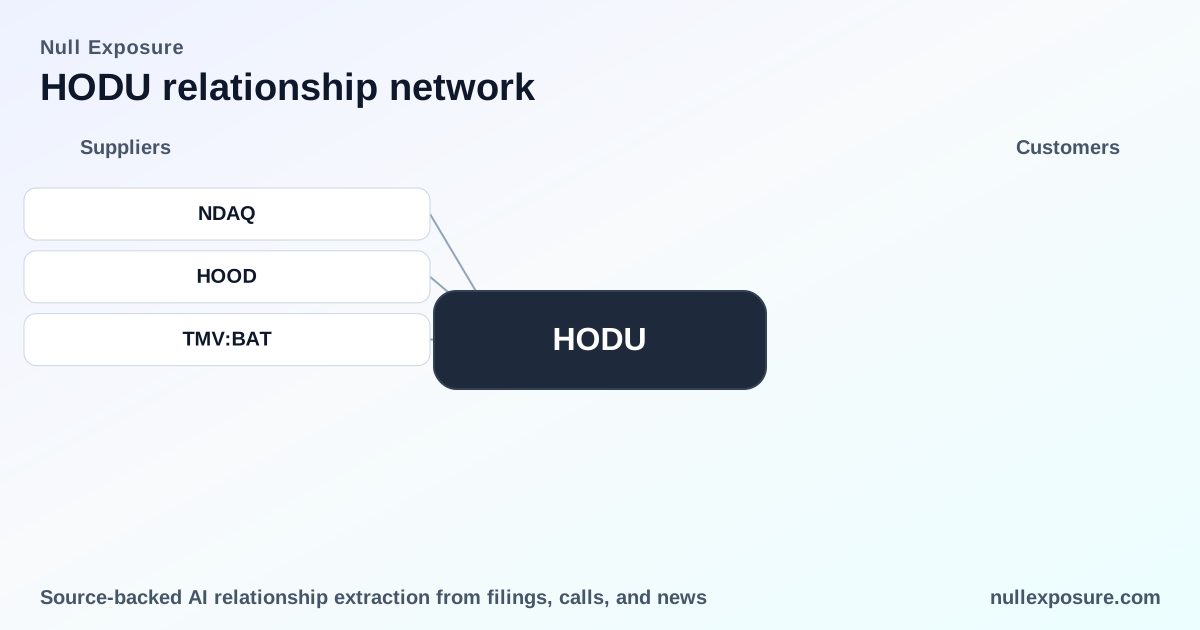
Counterparty relationships: the full list and what they mean
Nasdaq Stock Market
- Direxion’s HODU is listed and trades on the Nasdaq Stock Market, giving investors intraday access and enabling market‑making and arbitrage activity. According to a Nasdaq quote record in FY2026, the ETF is an active Nasdaq listing which establishes its primary trading venue and regulatory home. (Nasdaq listing reference, March 10, 2026.)
Robinhood Markets
- The fund’s economic exposure is directly tied to Robinhood’s equity via total return swaps, so the performance and credit of Robinhood’s underlying share price is the product’s core exposure driver. A press report in FY2026 described HODU as a leveraged ETF that invests in Robinhood stock through total return swaps. (The Globe and Mail coverage, March 10, 2026.)
Direxion (Sponsor and Issuer)
- Direxion is the issuer and portfolio manager behind HODU, structuring the ETF to deliver daily 2x returns on HOOD and controlling fees, operational design, and counterparty selection. Financial reporting and market notes in FY2026 identify the product as Direxion’s “Daily HOOD Bull 2X ETF (NASDAQ: HODU),” confirming the firm’s role as sponsor and operator. (Direxion market mentions, March 10, 2026.)
Operating constraints and business‑model signals investors should read as facts
These are company‑level signals about how HODU operates and the risk profile inherent to this type of product:
- Contracting posture — Sponsor‑centric: Direxion controls product terms, fee schedules, and counterparty selection; counterparties contract with the fund or sponsor rather than with passive exchanges. This centralization simplifies governance for investors but concentrates negotiation power and legal risk with the sponsor.
- Concentration — Single‑name risk is high: HODU’s exposure is concentrated on one underlying equity (Robinhood). Concentration amplifies market risk and makes the fund highly sensitive to idiosyncratic shocks to the underlying company.
- Criticality — Market plumbing is essential: The product’s functioning depends on listing/clearing (Nasdaq), swap counterparties, and the sponsor’s operational continuity; any disruption across those channels materially impacts liquidity and NAV mechanics.
- Maturity — Product design is standardized but specialized: Leveraged ETFs and total return swap financing are mature techniques, yet single‑stock 2x funds are specialized instruments that require active market‑making and clear counterparty credit management.
These signals translate into operational priorities: robust counterparty credit management, continuous market‑making capacity, and transparent fee and funding disclosures.
Key risk factors and operational implications
- Counterparty credit and liquidity risk: Total return swaps shift credit exposure to swap counterparties; sponsor selection and collateralization practices determine loss severity.
- Tracking and path dependency: Daily re‑leveraging leads to path‑dependent returns; investors seeking long‑term exposure will experience divergence from simple 2x multiple of multi‑day returns.
- Concentration risk: A single underlying makes the ETF vulnerable to corporate events (earnings, regulation, short interest swings).
- Exchange and clearing reliance: Nasdaq listing provides liquidity, but severe market stress can widen spreads or interrupt normal arbitrage.
Investors and operators must price these risks into trading algorithms, capital allocation, and counterparty acceptance thresholds.
Mid‑article action: where to get precise counterparty intelligence
If you are building a book or underwriting market‑making around single‑stock levered ETFs, you need actionable counterparty and listing intelligence. Learn structured supplier profiles, counterparty exposure summaries, and trade‑flow analytics at https://nullexposure.com/.
Operational checklist for counterparties and operators
- Confirm the sponsor’s counterparty agreements and collateral terms for total return swaps.
- Map trading and settlement flows through Nasdaq’s listing and clearing infrastructure.
- Stress‑test liquidity assumptions under adverse HOOD moves and simulated funding squeezes.
- Monitor sponsor communications and prospectus updates for changes in fee or financing terms.
Final assessment and recommendations
HODU is a fee‑earning, leveraged access product that monetizes amplified exposure to Robinhood through a sponsor‑driven structure and swap mechanics. The primary relationships — Nasdaq (listing), Direxion (issuer), and Robinhood (economic underlying via swaps) — define the fund’s risk surface and commercial dynamics. For institutional counterparties and market operators, the priority is to treat HODU as a concentrated, sponsor‑managed product requiring explicit counterparty credit limits, live liquidity commitments, and operational contingency plans.
If your firm evaluates supplier risk, trading access, or clearing obligations tied to leveraged single‑stock ETFs, integrate these relationship profiles into your onboarding and stress frameworks — and review directory resources at https://nullexposure.com/ to operationalize coverage.
Bottom line: HODU delivers a straightforward product proposition — 2x daily exposure to HOOD — but concentrates economic and operational risk into a small set of powerful relationships; that concentration demands elevated governance, monitoring, and contingency planning before committing capital or liquidity.