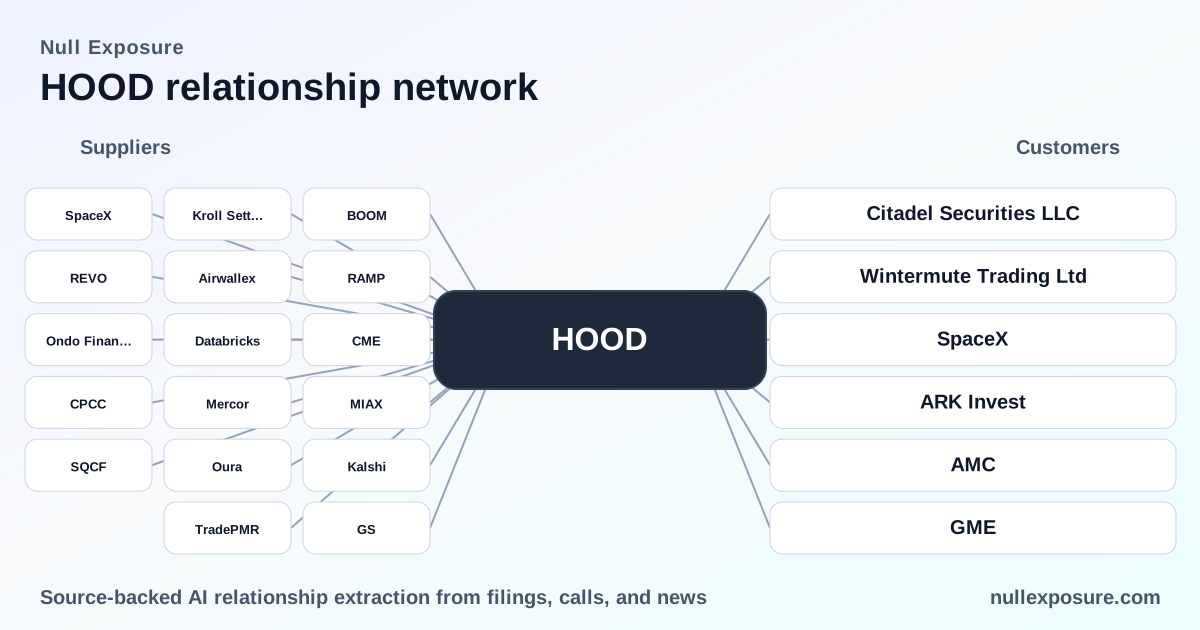
Robinhood (HOOD): supplier map, strategic partners, and what investors should price in
Robinhood operates a commission-free brokerage and consumer fintech platform that monetizes through transaction-based revenue (order flow and execution economics), subscription fees, interest on customer cash and margin, and an expanding set of ancillary product lines including crypto, prediction markets, tokenized securities and closed-end retail offerings. The company increasingly uses strategic partnerships, joint ventures, and sponsored fund vehicles to move downstream into asset ownership and new product distribution—which shifts counterparty risk from pure service provision to a hybrid operating model that combines platform economics with balance-sheet exposures.
For a fast commercial scorecard, visit https://nullexposure.com/.
Why the supplier map matters for valuation and operational risk
Robinhood’s supplier footprint is high-touch and capital-intensive. Public filings and market reporting show a deliberate mix of short-term financial arrangements (credit lines, securities lending), mid-term commercial frameworks (MSLAs, program agreements) and long-term property commitments. The result is a company that runs an internet-scale retail platform but depends materially on third-party market makers, exchanges, banking relationships and cloud vendors to keep trade flow, custody and settlement running.
- Contracting posture: the firm blends long-term leases and strategic acquisitions with many short-duration financing facilities and securities-lending agreements, producing frequent renewal and funding cadence risk. Several disclosures list both long-term leases running into the 2030s and 364‑day revolving credit facilities.
- Concentration and criticality: exchanges, market makers and banks are operationally critical; the filings flag that outages or loss of a market-making partner or banking rails would have material effects. Named counterparties in the disclosures include relationships tied to funding and clearing (for example, Coastal Bank, Barclays and SVB are referenced in credit/financing contexts) and trading venues that support extended hours (for example BOATS and Virtu).
- Maturity and spend posture: the company is in an active growth-and-integration phase with multiple acquisitions and repurchase programs in the 100m+ spend band, indicating material capital deployment and elevated integration risk.
If you want a supplier-level breakdown with risk scoring, start here: https://nullexposure.com/.
Supplier roster — concise, sourced notes
Below are the counterparties surfaced in recent reporting and press; each item is a one- to two‑sentence plain-English takeaway with the source noted.
- Boom (BOOM) — Robinhood’s Robinhood Ventures Fund I (RVI) lists Boom among private companies in the closed-end vehicle that retail users can request IPO shares of through Robinhood at an expected $25 offering price. Source: SahmCapital reporting on RVI (Feb 17, 2026).
- Ramp (RAMP) — Ramp is included in the RVI private-company roster offered to Robinhood customers as part of the RVI IPO allotment. Source: SahmCapital (Feb 17, 2026).
- Airwallex — Airwallex is named as a holding in the RVI vehicle, giving Robinhood retail customers pooled exposure to that private fintech through the fund distribution. Source: SahmCapital (Feb 17, 2026).
- Databricks — Databricks appears on the RVI concentration list, meaning Robinhood is distributing exposure to the private data/analytics company through the fund’s IPO offering. Source: SahmCapital (Feb 17, 2026).
- Mercor — Mercor is one of the private companies included in the RVI closed-end fund that Robinhood is offering to retail investors. Source: SahmCapital (Feb 17, 2026).
- Oura — Oura is listed among RVI’s initial private holdings, making it accessible to Robinhood customers via the RVI IPO process. Source: SahmCapital (Feb 17, 2026).
- Revolut (REVO) — Revolut is named among the RVI portfolio companies available to retail investors through Robinhood’s RVI offering. Source: SahmCapital (Feb 17, 2026).
- Goldman Sachs & Co. LLC (GS) — Goldman Sachs is acting as the sole bookrunner for the RVI proposed offering, positioning a major investment bank at the center of Robinhood’s retail fund distribution. Source: SahmCapital (RVI announcement).
- Stripe (CPCC) — SahmCapital notes Robinhood has entered into an agreement to acquire shares of Stripe that are expected to close after Stripe’s IPO, indicating the firm is sourcing private-to-public exposures for RVI. Source: SahmCapital (Feb 17, 2026).
- CME Group (CME) — Reporting links Robinhood’s product roadmap to expanding derivatives access and notes CME Group activity (for example new silver futures), signaling product-level integration with major derivatives exchanges. Source: SahmCapital market commentary (Jan 16, 2026).
- Miami International Holdings / MIAX (MIAX) — Miami International announced the sale of 90% of MIAX Derivatives Exchange (MIAXdx) to a joint venture established by Robinhood Markets with Susquehanna, transferring exchange control into a Robinhood‑led JV. Source: SahmCapital (Jan 21, 2026).
- Susquehanna — Susquehanna is a day‑one liquidity partner in the MIAXdx joint venture, with reporting noting Robinhood as the controlling partner and Susquehanna supplying liquidity and market expertise. Source: TradingView and SahmCapital coverage (Jan 2026).
- Kalshi — Kalshi, the CFTC‑regulated exchange, is the venue powering Robinhood’s prediction-market contracts and is explicitly cited as a partner for event‑based products such as sports and political markets. Source: SahmCapital (Jan 23, 2026) and TradingView commentary.
- Kroll Settlement Administration LLC — Kroll is the settlement administrator named for the Robinhood order‑flow litigation settlement, indicating settlement management and claims administration has been outsourced to a specialist vendor. Source: ClaimDepot settlement page.
- Ondo Finance — The HOODON token is issued by Ondo Finance; coverage highlights Ondo’s role tokenizing traditional financial assets for on‑chain use, tying Robinhood product branding to a tokenized issuer. Source: CoinDesk (2026).
- TradePMR — Robinhood and TradePMR launched the Robinhood Advisor Network pilot, which integrates TradePMR’s custodial/portfolio management functionality as a referral and RIA-facing distribution channel. Source: SahmCapital (Mar 3, 2026).
- SpaceX — Reporting states Robinhood is seeking a dedicated retail allocation in the expected SpaceX IPO, positioning the platform to route high‑profile primary allocations to its retail base. Source: SahmCapital (Jan 30, 2026).
Synthesis: implications for investors and operators
- Revenue diversification versus operational complexity. Robinhood is pushing beyond classic retail brokerage into fund distribution (RVI), exchange ownership (MIAXdx JV), prediction markets (Kalshi), tokenized instruments (Ondo), and advisor referral channels (TradePMR). Those moves diversify revenue but introduce balance-sheet, regulatory and counterparty complexity that investors must price.
- Counterparty and concentration risk are elevated. The company’s disclosures and third‑party reporting show reliance on market makers, exchanges, banking counterparties and cloud vendors; these are operationally critical and have been flagged as potentially material. The company’s spend bands and recent acquisitions (multiple transactions in the $100m+ range) signal elevated integration and cash‑deployment risk.
- Contract mix requires active monitoring. The firm runs a mix of long‑term leases and framework agreements (MSLA-style securities lending), alongside short-dated credit facilities and program agreements—creating a rhythm of renewals and liquidity checks that influences near-term credit and funding profiles.
If this profile matters to your investment thesis, run a supplier exposure scenario at https://nullexposure.com/.
Final takeaway
Robinhood is transforming from a pure execution platform into an orchestrator of retail distribution, using funds, JV ownership and third‑party exchange integrations to extend its product footprint. That strategy raises upside in monetization but also concentrates operational and regulatory counterparty risk into a smaller set of critical vendors and partners—an outcome investors must evaluate alongside traditional metrics. For a supplier‑level risk score and deal‑level intelligence, visit https://nullexposure.com/.