Hovnanian Enterprises (HOV): supplier posture, capital mix, and what procurement and investors need to know
Hovnanian Enterprises designs, builds and sells residential homes across the United States and monetizes through home sales, land development, mortgage origination services and secured financing structures (repurchase and term facilities). The company leverages option-based land acquisition and land-banking to limit upfront capital outlay while funding construction and mortgage inventory with short-term warehouse lines and longer-dated note issuance; its balance sheet shows meaningful leverage alongside roughly $2.94 billion of trailing revenue and a market capitalization near $639 million. For investors and operator teams evaluating supplier relationships, the critical lens is how contracting cadence (short fixed-price construction contracts versus long-term debt commitments), insurance and subcontractor reliance translate into operational exposure and working-capital volatility. Learn more about how we profile supplier risk at the Null Exposure homepage: https://nullexposure.com/
Business model in plain English: where supplier risk sits in the P&L
Hovnanian captures gross margin through home selling price less land, development and construction costs; the company retains optionality on land purchases through short-duration option contracts and uses fixed-price subcontracting in many markets to lock in cost. On the liability side, Hovnanian funds operations with a mix of short-term mortgage warehouse repurchase facilities and long-term senior notes — a dual structure that reduces near-term liquidity strain when demand is steady but increases refinancing and interest-rate exposure during downturns. The result is a business that is capital intensive, highly dependent on subcontractor execution, and sensitive to input-cost inflation and insurance availability.
Key financial context: trailing revenue of $2.94 billion, EBITDA roughly $115 million, a trailing P/E of 16.6 and elevated leverage through over $1.4 billion in long-term debt reported. These numbers confirm Hovnanian operates with meaningful fixed obligations that shape supplier negotiation leverage and financing needs.
A notable supplier relationship and what it implies
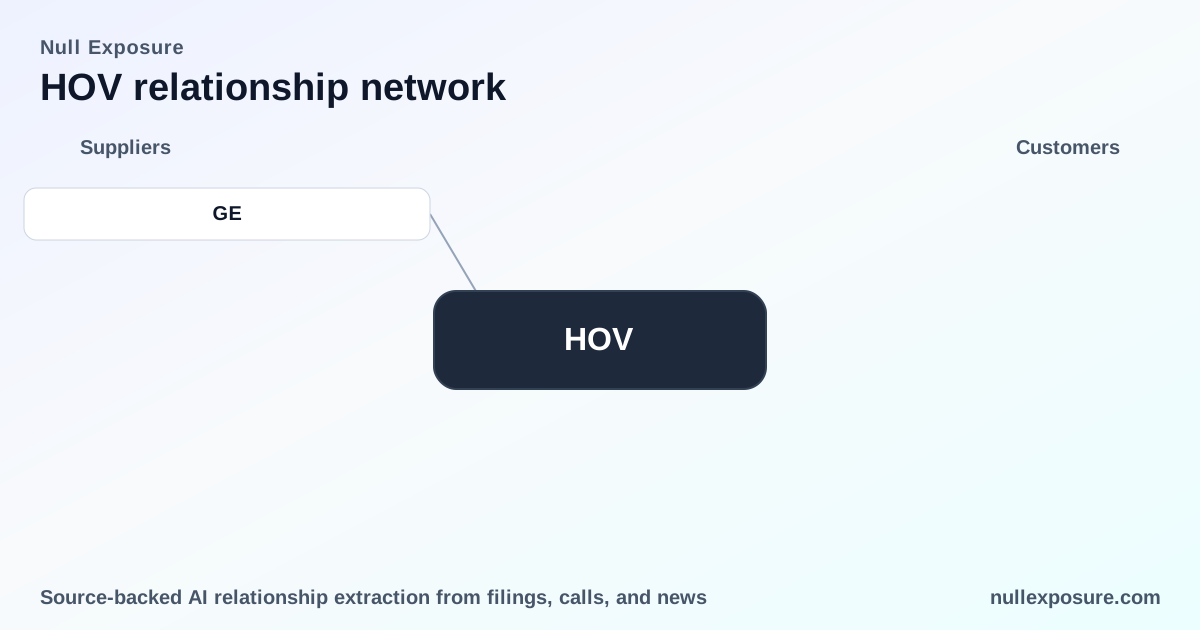
Hovnanian’s public disclosures and secondary reporting show standard appliance sourcing for model homes. For example, a Palm Beach Post feature from 2017 described K. Hovnanian model kitchens outfitted with General Electric appliances; this is a marketing-level supplier relationship used in product presentation and buyer appeal (Palm Beach Post, 2017). While appliance vendors are not central to Hovnanian’s balance-sheet risk, such sourcing choices affect model presentation costs and small-ticket finish assortments that influence customer satisfaction and warranty exposure.
How contracting posture shapes supplier dynamics
Hovnanian’s supplier posture is a hybrid:
- Short-term, fixed-price contracts dominate construction and subcontractor relationships, which constrains margin flexibility in the face of input-cost spikes but transfers certain cost predictability to the builder.
- Long-term financing commitments (senior notes due 2031 and 2033; secured term facilities) create structural cash-service requirements that make consistent working-capital access critical.
- Framework agreements and national purchasing contracts exist to consolidate vendors and lower per-unit costs, suggesting procurement centralization in key categories.
These characteristics produce specific operational and commercial implications: procurement teams must balance suppliers’ demand for more favorable payment terms during tight credit cycles against the company’s need to preserve liquidity for debt servicing; operations must monitor subcontractor insurance capacity and performance because Hovnanian absorbs defect and warranty risk.
Constraints and company-level signals investors should price in
Public filings and disclosures give a clear view of operational constraints that are company-level signals rather than supplier-specific findings:
- Contract maturities are mixed: the company has material long-term debt (senior notes and term loans maturing into the early 2030s) alongside short-term repurchase facilities that reprice frequently.
- Short-term borrowings support mortgage inventory: multiple mortgage warehouse repurchase agreements (with JPMorgan, Customers Bank and others) are explicitly short-dated into 2026, making access to warehouse liquidity a near-term operational necessity.
- Significant spend and land purchases: fiscal 2025 land and land-development spend exceeded $859 million, a clear signal that procurement commitments at scale exist even if many lots remain under option.
- Material operational exposure exists: subcontractor reliance, insurance-market dislocation for construction liability, and the company’s owner-controlled insurance program create concentrated operational risk.
- Geographic concentration in North America drives exposure to local permitting, utilities and weather-related disruptions.
These constraints mean Hovnanian’s supplier relationships are economically material: procurement and vendor financing arrangements must be evaluated not only for unit cost but for timing, insurance sufficiency and contingency planning.
Operational risk themes: what procurement and credit teams should audit
- Subcontractor concentration and performance: Hovnanian relies heavily on subcontractors to execute builds; any systemic supplier failure translates to warranty and reputational costs that Hovnanian absorbs.
- Insurance capacity: general liability insurance is limited industry-wide and premiums/deductibles have climbed; Hovnanian’s $30 million annual deductible for construction defect and warranty claims in recent years is a sizable retained exposure.
- Liquidity timing: short-term mortgage facilities are crucial to converting mortgages held for sale into permanent investors; disruptions here stress cash flow and supplier payments.
- Land-option economics: the company often cancels options (walking away from lots) when market conditions change; this flexibility reduces capital lockup but also generates periodic P&L charges and affects vendor commitments.
These operational themes should drive contractual terms: tighter performance SLAs for key trade partners, insurance evidence and higher scrutiny of vendor balance-sheet health.
For investors and operators: recommended next actions
- For credit analysts: stress-test Hovnanian’s liquidity under scenarios where short-term repurchase facilities are restricted and note refinancing costs rise; evaluate whether vendor payment cycles compress under stress.
- For procurement leads: verify supplier insurance limits, convert single-source trade relationships into dual-sourced agreements where possible, and push for payment terms that preserve flexibility during market cycles.
- For M&A or reinsurance teams: quantify warranty and defect reserves against recent claims experience and the owner-controlled insurance program.
If you want a deeper supplier-risk profile for Hovnanian or comparative exposure across homebuilders, start here: https://nullexposure.com/
Appendix — every supplier relationship found in public results
General Electric (GE): A 2017 Palm Beach Post feature described K. Hovnanian model kitchens outfitted with General Electric appliances, indicating use of GE-brand appliances in marketing and model-home fit-outs (Palm Beach Post, 2017). This is a product-level supplier relationship that supports model presentation rather than a core financing or land-supply counterparty.
For procurement and investor teams focused on operational resilience and supplier credit, Hovnanian’s mix of short-term supplier contracts, large-scale land purchases, and long-term fixed-rate debt is the principal driver of supplier negotiation power and counterparty risk. Review vendor insurance, warehouse access and refinancing plans as part of any investment or supplier engagement decision. Explore Null Exposure’s broader supplier risk tools and comparative analytics at https://nullexposure.com/ for actionable due diligence.