HOVR suppliers: who builds the Cavorite X7 and what that means for investors
New Horizon Aircraft Ltd (NASDAQ: HOVR) builds the Cavorite X7, a hybrid-electric VTOL aircraft, and monetizes through aircraft sales, certification-driven service contracts and downstream regional air mobility opportunities while funding operations with periodic equity offerings and placement agreements. The company’s value hinge is execution of serial production — which in turn depends on a small set of manufacturing and powertrain partners that provide fuselages, wings and high-efficiency inverter systems. For investors, supplier performance is the single largest operational variable between prototype promise and commercial revenue.
If you want timely supplier intelligence and a practical supplier-risk checklist for aviation investments, visit the NullExposure homepage: https://nullexposure.com/
Why supplier relationships are the operative risk for HOVR
HOVR is an engineering-led, capital-intensive manufacturer. The company reports zero revenue TTM and negative EBITDA, which makes supplier delivery and certification dependencies the de facto drivers of value realization. The filings and corporate disclosures signal a mixed contracting posture: evidence of both long-term leases and promissory instruments alongside short-term convertible notes and ad hoc service engagements. This combination indicates HOVR balances committed capacity with flexible, lower-cost vendor arrangements as it attempts to scale.
Operationally, the company shows a multi-segment supply profile—hardware and manufacturing sit alongside critical software and services—and the risk profile reflects that mix: suppliers are material to delivery timelines, and some technologies (battery cells, power electronics, motors) are single- or limited-source in nature. HOVR’s supplier base is therefore simultaneously a concentrated and critical bottleneck for commercialization.
Who HOVR is contracting with — the active supplier list
Below are every supplier relationship recorded in the available reporting and press coverage, with a plain-English summary and source reference for each.
-
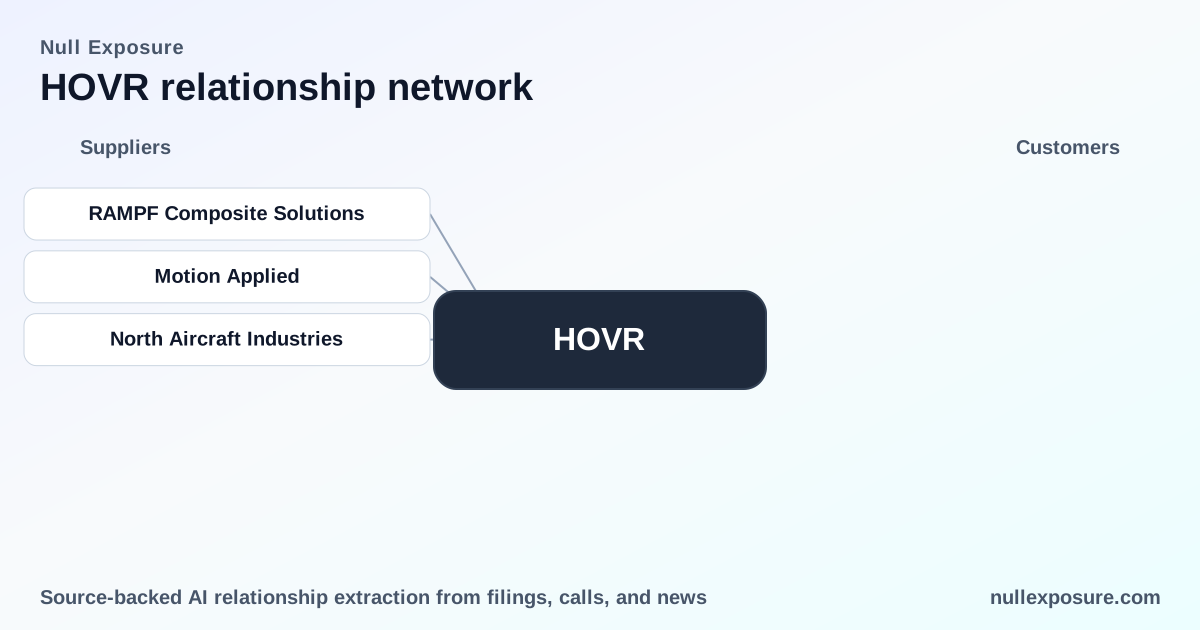
RAMPF Composite Solutions — RAMPF will manufacture the fuselage for the Cavorite X7, taking responsibility for the aircraft’s primary structural body. This was announced in a company press release on March 10, 2026. (See Vertical Magazine and AeroMorning coverage, March 10, 2026.)
-
Motion Applied — Motion Applied is designing and building a customized motor drive inverter to improve power efficiency and reduce weight for the X7’s vertical lift system; the engagement is framed as an engineering/manufacturing partnership for the hybrid-electric powertrain. (See the Citizen-Times press release, March 10, 2026.)
-
North Aircraft Industries — North Aircraft will manufacture and test the custom-engineered wings for the full-scale Cavorite X7, covering wing production and verification for serial aircraft. The partnership was announced on February 10, 2026 and covered subsequently in aerospace trade press. (See Access Newswire/Futunn, Feb 10, 2026, and Aero Magazine reporting.)
Each name above is taken from company press materials and trade reporting in early 2026; together these partners cover the structural fuselage, wings and a key power electronics subsystem — three of the most critical hardware elements for an electric VTOL program.
What the relationship map reveals about HOVR’s operating model
The combined relationship and constraints signals provide a coherent picture of HOVR’s supplier strategy and execution risk:
-
Contracting posture: Company disclosures include both longer-duration obligations (e.g., leases and multi-year promissory notes) and short-term notes and service engagements. This indicates a hybrid procurement model that leans on committed facilities while preserving flexibility for subsystem sourcing.
-
Concentration and single-source risk: Filings explicitly warn of reliance on a handful of suppliers for batteries, motors and electronics; the press-confirmed partnerships show HOVR has placed large component responsibilities with a small set of specialized vendors. Concentration is high and therefore a gating factor for ramp.
-
Criticality: Supplier roles are classified at company level as material to production and certification. The suppliers listed supply components that are both structurally and functionally critical to the X7; delays in any of these areas will translate directly to schedule slippage and certification risk.
-
Maturity and stage: Relationship evidence ranges from active engagements and procurement to prospect-stage dependencies for certain emerging technologies. The company lists active service providers, landed manufacturing partners and prospective single-source components — an operational mix typical of firms transitioning from prototype to limited production.
-
Spend profile: Disclosed spend patterns are modest to date (several engagements under CAD 100k and audit fees in the CAD 100k–1m range), consistent with an early-stage production program that is still frontloading engineering and certification costs rather than recurring high-volume supplier spend.
Investment implications and what to watch next
For investors, the critical monitoring points are straightforward and binary: supplier milestones, certification progress, and consistency of powertrain supply. Specific items to track over the next 6–12 months:
-
Delivery milestones and acceptance tests from RAMPF and North Aircraft on fuselage and wing tooling and first-piece inspections. Press release cadence and trade coverage are already public; subsequent confirmations of production-rate capability will materially de-risk the timeline.
-
Performance and integration testing updates for Motion Applied’s inverter hardware, particularly tests that affect weight, power efficiency and thermal management of the vertical lift system.
-
Any public disclosure of battery-cell suppliers, single-source exemptions, or substitution strategies; battery commercialization is repeatedly flagged by management as a gating item.
-
Cash runway and financing activity tied to production scale — HOVR has established at-the-market/sales agreements and occasional short-term notes, which investors should reconcile with supplier payment schedules.
Midway through your diligence, if you want a supplier-risk brief tailored to HOVR’s program and vendor ecosystem, check NullExposure resources for structured supplier intelligence: https://nullexposure.com/
Practical recommendations for operators and portfolio managers
-
Demand supplier-level KPIs: lead-times, capacity, quality yield, and first-article inspection dates for fuselage, wing and inverter production.
-
Require confirmation of alternate sourcing plans for battery cells and other single-source components; without clear contingency, serial production will be volatile.
-
Treat certification milestones as financing triggers. Given HOVR’s zero-revenue position, each certification pass materially affects the company’s ability to convert engineering spend into customer contracts.
-
Monitor insider and institutional ownership trends. With insiders controlling ~38% and institutions holding roughly 3.5%, strategic decisions on capital raises and partnership terms will be influenced by a concentrated ownership base.
For hands-on supplier diligence and comparative supplier risk scoring for aerospace programs, visit NullExposure: https://nullexposure.com/
Bottom line
HOVR’s public supplier roster shows a pragmatic split: specialist manufacturers for airframe structures and a focused power-electronics partner for the hybrid drive. That alignment covers the essential hardware vectors, but the company’s commercialization outcome will hinge on supplier execution, battery supply strategy and certification progress. Investors should treat upcoming supplier delivery confirmations and integration test results as the highest-value informational events for HOVR equity.