Werewolf Therapeutics (HOWL): supplier relationships, constraints, and what operators should price for
Werewolf Therapeutics develops protease-activated immunotherapies to boost anti-tumor immunity and currently monetizes through a mix of in‑licensed intellectual property, collaboration options, milestone/royalty economics, and capital markets funding while relying heavily on third‑party manufacturing and clinical service providers to advance programs to regulatory inflection points. For investors and supplier managers, the commercial thesis is simple: value accrues on successful clinical and regulatory milestones that convert license/options into material royalties and product sales, while downside concentrates on supply‑chain interruption, covenanted debt, and IP license risk. For direct engagement with HOWL counterparties, see more at https://nullexposure.com/.
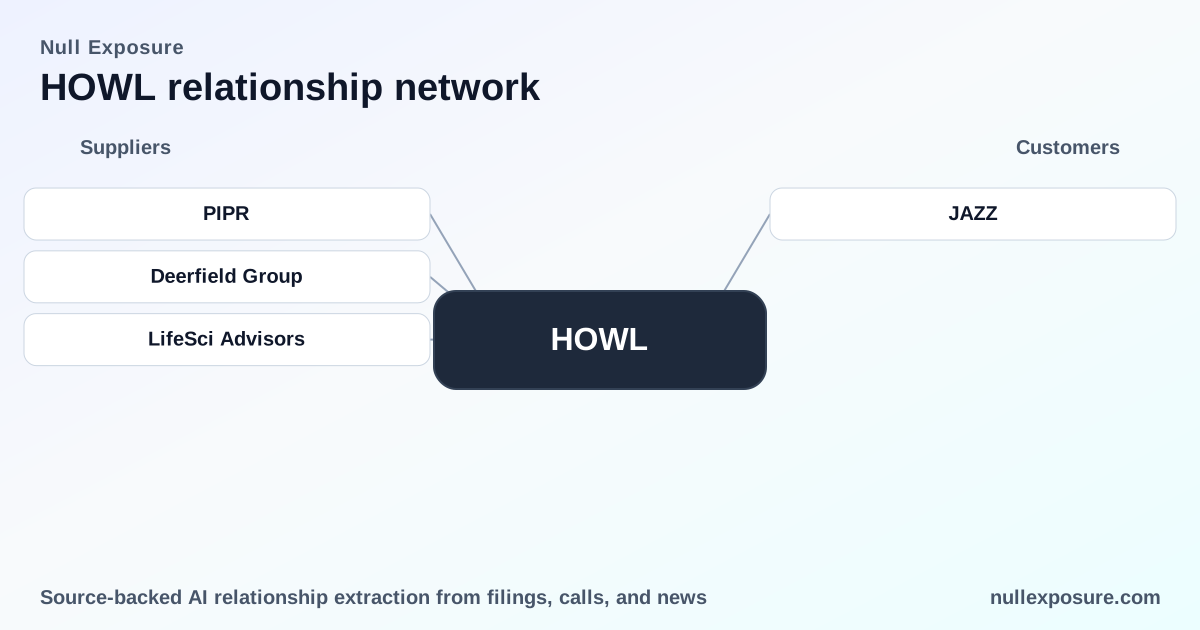
Quick read on the three named relationships in recent coverage
Piper Sandler & Co.
Werewolf has engaged Piper Sandler as exclusive financial advisor to assist a strategic evaluation process, signaling active strategic options work that could include M&A, licensing, or capital transactions, according to a news post referencing the engagement (reported March 10, 2026). Source: Bitget news (March 10, 2026).
Deerfield Group
Deerfield Group is listed as the company's media contact in pipeline and business updates published by the company on December 18, 2025; this identifies Deerfield as a public‑relations intermediary used to coordinate external messaging. Source: GlobeNewswire release (December 18, 2025) and republished on Yahoo Finance (December 2025).
LifeSci Advisors
LifeSci Advisors is listed as investor relations contact in the December 18, 2025 corporate update, indicating the firm handles IR outreach and investor communications for HOWL. Source: GlobeNewswire release (December 18, 2025) and republished on Yahoo Finance (December 2025).
How the supplier map shapes economics and execution risk
Werewolf’s operating model is license‑driven and externally manufactured. The company depends on a portfolio of inbound licenses (Harpoon, Adimab) and option agreements to source biologic constructs and antibody components that underpin clinical candidates. Those licensing arrangements create future contingent payments (option fees, development milestones, royalties) but also expose the company to the licensing counterparty’s prosecution and enforcement choices.
Manufacturing and clinical operations are outsourced. Werewolf does not maintain clinical‑scale manufacturing and engages CMOs for drug substance and drug product production, and CROs for trial execution. That strategy compresses fixed overhead but concentrates execution risk: single‑source suppliers, cGMP compliance, and supply continuity are critical to timelines and valuation.
Capital structure intersects supplier risk. The company’s term loan facilities (Pacific Western Bank/PWB historically and the K2HV facility executed in May 2024) impose covenants, required cash balances, and maturity schedules that affect payment flexibility to vendors and the ability to transition suppliers rapidly. The filings show a term loan maturing on May 1, 2028, and collateral and covenant mechanics that materially constrain liquidity deployment.
Contracting posture, concentration and maturity signals (company-level)
- Contract mix is mixed but skewed long‑term for core assets: Werewolf’s patent rights and key lease extend multi‑year horizons (patent family through 2037; Watertown lease to 2030), while many service engagements (CROs, consultants) are short‑term and cancellable, producing flexible but variable cost profiles. These characteristics favor nimble program pivots but make long lead‑time manufacturing commitments more delicate.
- Licensing is a primary operating lever: The company routinely in‑licenses technology (Harpoon, Adimab) and pays upfront and milestone fees in the low‑to‑mid six‑figure and occasionally seven‑figure ranges; investors should treat licensed IP as both an asset and a cost center that carries termination and co‑ownership risk.
- Supplier concentration is material and critical: Werewolf depends on a small number of CMOs and trial sites; any significant manufacturing or regulatory failure at a supplier would materially delay programs and value realization.
- Financial constraints are binding: Term loans and required restricted cash balances reduce optionality; the company has used ATM offerings and term debt to fund operations, creating an elevated focus on near‑term capital events.
- Geography is US‑centric with global IP reach: Operations and cash are primarily US‑based, but patent filings and regulatory considerations are global, exposing commercial plans to both US regulatory timelines and international IP enforcement variability.
Practical implications for suppliers and operators
- Price for regulatory and production compliance: CMOs and distributors must plan for high documentation and audit burdens (cGMP, preapproval inspections). Werewolf’s contracts will include quality and documentation milestones that shift cost of regulatory readiness to suppliers.
- Negotiate payment terms with cash‑flow awareness: Werewolf’s payables and cash constraints—augmented by loan covenants and required minimum balances—mean suppliers should expect standard biotech calendar payment profiles: monthly invoicing, milestone invoicing, and potential extension negotiations if capital transactions are ongoing.
- Protect IP and supply resilience: Counterparties that are suppliers should insist on clear confidentiality and IP assignment language and, where possible, multiple manufacturing sites or qualified secondary providers to mitigate single‑source failure risk.
- Expect deal structures that trade near‑term revenue for long‑term upside: Option fees and milestone‑linked economics are routine; suppliers and service providers should evaluate whether to accept standard clinical‑stage payment profiles or negotiate larger upfront payments.
Learn more about how supplier relationships affect valuation and execution at https://nullexposure.com/.
Relationship‑level takeaways for investors
- Piper Sandler engagement signals strategic packaging: An exclusive financial advisor implies the company is preparing for a material strategic action that could de‑risk or reprice supplier exposures. (Bitget, March 10, 2026)
- Deerfield and LifeSci roles are communications and IR: Public messaging is being routed through professional firms to control narrative and investor access during pipeline updates, consistent with a company preparing for external transactions or fundraising. (GlobeNewswire/Yahoo, December 18, 2025)
Final assessment and recommendations
Werewolf is a classic clinical‑stage biotech where value accrues if clinical and regulatory milestones are met, and operational fragility is concentrated in manufacturing, licensing, and capital covenants. For investors, the immediate focus is on the outcome of the strategic review led by Piper Sandler and on whether the company secures financing that preserves supply continuity. For suppliers, the rational stance is to negotiate terms that reflect single‑source risk, regulatory overhead, and the company’s near‑term covenanted liquidity profile.
If your firm evaluates or services clinical‑stage biotechs, consider monitoring supplier concentration and covenant timelines closely and engage with HOWL contacts through professional channels. Start that process at https://nullexposure.com/.
Bold takeaway: Werewolf’s upside is milestone‑driven and asymmetric; operational and counterparty fragilities are material and must be priced into any supplier contract or investment decision.