Hudson Pacific Properties (HPP): Strategic supplier and studio integrations investors should track
Hudson Pacific Properties operates as a REIT owning and operating roughly 19 million square feet of office and studio properties, and monetizes through rental income, studio operations and selective acquisitions that capture adjacent production services revenue. The company combines long-term lease cashflows with active studio services integration to expand revenue per square foot and compound asset value across core West Coast and select North American markets. For primary source materials and ongoing relationship intelligence, see Null Exposure's portal: https://nullexposure.com/.
How HPP’s business model translates into supplier and partner economics
Hudson Pacific’s core monetization is straightforward: stable, long-term lease income from office and studio tenants plus incremental revenue from studio-related services and production activity. The portfolio strategy increases cash yield through acquisitions and operational controls at studio properties, while leverage and hedging shape cash flow volatility. The company’s public filings show a predominance of long-term contractual commitments—weighted average lease terms measured in decades and significant non-cancellable lease liabilities—so suppliers and service partners are operating in the context of capital-intensive, duration-heavy relationships that favor reliability and scale.
To explore the complete intelligence offering on HPP supplier relationships, visit https://nullexposure.com/.
Relationship summaries you need to know (complete list from available reporting)
Below are every supplier/partner relationship surfaced in the company results, with plain-English summaries and source citations.
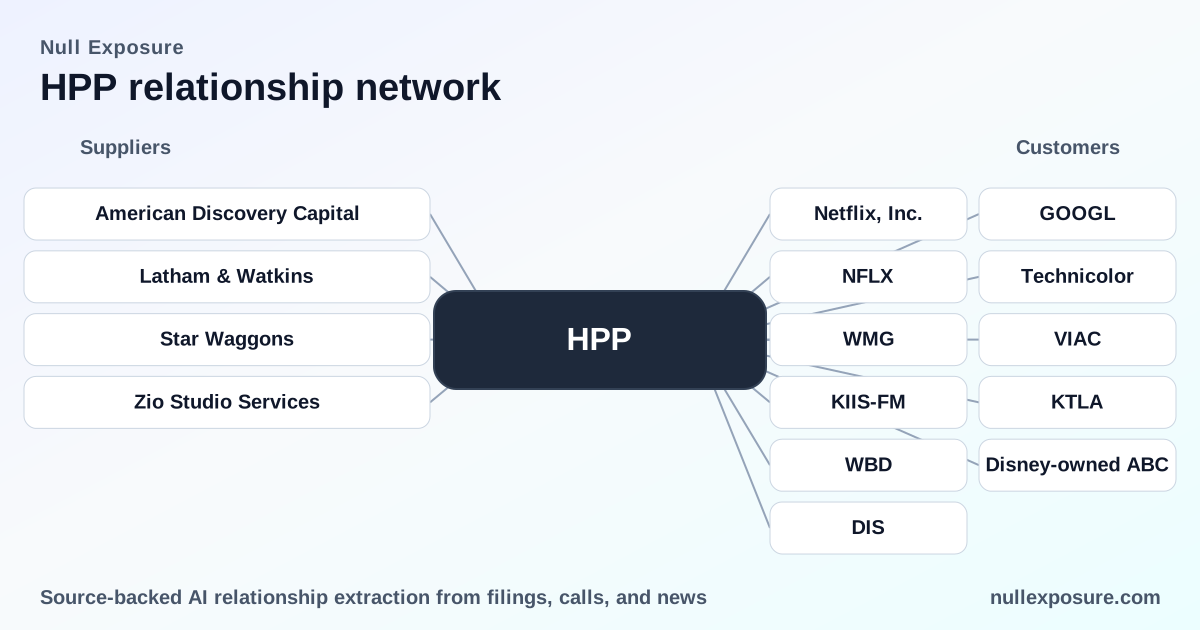
American Discovery Capital
American Discovery Capital acted as Hudson Pacific’s financial adviser in the acquisition that bundled Star Waggons and Zio Studio Services into the company’s studios platform, supporting deal execution and valuation work. Source: ConnectCRE coverage of HPP’s studios acquisition, March 2026 — https://www.connectcre.com/stories/hpps-acquisition-of-star-waggons-and-zio-aligns-with-its-global-studios-strategy/.
Latham & Watkins
Latham & Watkins served as legal adviser to Hudson Pacific on the same transaction, providing the transactional and regulatory legal work necessary for closing the studios-related acquisitions. Source: ConnectCRE coverage of HPP’s studios acquisition, March 2026 — https://www.connectcre.com/stories/hpps-acquisition-of-star-waggons-and-zio-aligns-with-its-global-studios-strategy/.
Star Waggons
Star Waggons was acquired and integrated into HPP’s studios platform to expand the company’s production services footprint and capture more on-site and on-location production revenue at Sunset Studios and other facilities. This acquisition is positioned to increase ancillary services revenue tied to studio occupancy. Source: ConnectCRE coverage of HPP’s studios acquisition, March 2026 — https://www.connectcre.com/stories/hpps-acquisition-of-star-waggons-and-zio-aligns-with-its-global-studios-strategy/.
Zio Studio Services
Zio Studio Services was folded together with Star Waggons and Sunset Studios under Hudson Pacific’s global studios strategy to create a more vertically integrated production services offering and capture a larger share of production services revenue across HPP facilities. Source: ConnectCRE coverage of HPP’s studios acquisition, March 2026 — https://www.connectcre.com/stories/hpps-acquisition-of-star-waggons-and-zio-aligns-with-its-global-studios-strategy/.
What the constraints and filing excerpts reveal about operating posture and supplier risk
HPP’s public filings and the constraint excerpts illustrate a definitive operating posture that investors and operators must weigh when evaluating supplier relationships.
-
Contracting posture: long-term and durable. The company discloses extensive long-term non‑cancellable operating lease agreements and a weighted average remaining lease term of roughly 21 years as of Dec 31, 2024, signaling that supplier relationships tied to property operations and studio services operate within durable, predictable revenue frameworks rather than short-term spot arrangements.
-
Framework and credit architecture. HPP uses revolving credit facilities, term loans and derivatives to manage capital and interest-rate risk, and maintains framework-style facilities (revolvers and unsecured debt) that dictate covenant-driven flexibility. These financing frameworks shape supplier payment priorities and capital allocation decisions.
-
Short-term obligations coexist with long-duration contracts. While most property leases are long-term, the company also carries short-term construction commitments (approximately $98.6 million outstanding at year-end 2024, most due within a year) and operational short-term exposures (accounts payable, derivative maturities). Suppliers on cap-ex or construction programs should expect near-term billing concentration but within a long-term asset program.
-
Counterparty mix includes individuals and large enterprises. Filings show significant employment contracts and collective bargaining exposure (about 20% of employees covered by CBAs) alongside the company’s practice of contracting with major financial institutions for hedging. This duality means operational suppliers interact with both individual personnel-level agreements (e.g., employment and labor relations) and large financial counterparties for funding and hedging services.
-
Geographic concentration: primarily North America with limited EMEA currency activity. Most property references and environmental assessments concern U.S. assets (San Francisco, Los Angeles, Seattle), and occasional currency-noted items suggest limited EMEA or CAD/GBP exposures in financial arrangements rather than core operating footprint.
-
Materiality and criticality are high. The filings explicitly state that failures in hedging, ground‑lease terminations, covenant breaches or inability to obtain financing would materially and critically affect Hudson Pacific’s operations and ability to deploy capital—making suppliers to revenue-generating studios and tenants economically significant partners.
-
Spending scale supports large providers. Contracted and committed spend bands run into the hundreds of millions for debt facilities and multi-year lease liabilities, with construction and cap-ex obligations in the tens of millions; suppliers with capacity for nine-figure program spend are best positioned.
-
Relationship roles and stages are active and transactional. The company’s supplier relationships skew toward service providers (property management, studio operators, legal and financial advisors) and both buyer/seller roles in acquisitions, with the public record showing active transactions and integrations as of recent filings.
For detailed supplier monitoring and counterparty risk scoring, explore Null Exposure’s research tools at https://nullexposure.com/.
Investment implications and operating takeaways
Hudson Pacific has engineered a hybrid model: stable, long-duration lease revenue combined with growth through studio services and selective acquisitions. That creates predictable baseline cashflows but requires continuous access to external capital and effective hedging to support development and acquisitions. Key investor considerations:
-
Upside: Studio integrations such as Star Waggons and Zio can lift revenue per studio square foot and diversify income beyond office rents. Legal and financial advisers like Latham & Watkins and American Discovery Capital indicate transaction sophistication that supports disciplined deal execution.
-
Risk: Covenant exposure, leverage, and dependence on third‑party financing are material and potentially critical to operations; failure to secure favorable capital or to hedge interest-rate risk will pressure distributions and valuation.
-
Supplier strategy: Operators and vendors should price for scale, reliability and long-term performance; HPP favors partners that can support multi-year studio and property programs and that can be onboarded under its third-party risk management framework.
Before allocating capital or tendering for HPP contracts, confirm counterparties’ capacity to meet long-duration service demands and ABL/hedging risk protocols. For a deeper supplier relationship briefing and risk heat map, visit https://nullexposure.com/.
Final read: what investors should action now
Hudson Pacific’s strategy converts real estate scale into operational revenue via studios and tenant services, but that trajectory depends on disciplined financing and execution. For investors, the trade is clear: exposure to durable studio cashflows with concentrated financial covenant risk. Operators and suppliers should price and structure offers to align with long-term lease economics and HPP’s capitalization profile. Learn more about active supplier intelligence and relationship monitoring at https://nullexposure.com/.