Hormel Foods (HRL) — supplier relationships that shape margins and execution
Hormel Foods monetizes a global portfolio of branded and value-added refrigerated and packaged proteins by procuring livestock, feed grains, nuts and other inputs, manufacturing finished products through owned plants and co-manufacturing partners, and distributing at scale into retail and foodservice channels. Revenue is driven by branded product mix and the company’s ability to control raw‑material costs through a mix of long‑term contracts, spot purchases, and hedging. For investors and operators, supplier arrangements are a direct lever on margin volatility and fulfillment risk; this note maps the recent supplier relationships and the firm‑level constraints that matter for underwriting HRL exposure. For a broader supplier-risk view, visit https://nullexposure.com/.
A quick read on how to think about HRL supplier exposure
Hormel’s procurement posture is deliberate: a blend of long‑dated formula contracts for base protein, supplemented by spot purchases and hedges for commodity inputs. This hybrid sourcing strategy stabilizes supply but leaves earnings sensitive to commodity cycles and concentrated operational disruptions (e.g., plant fires, disease outbreaks). The company runs material capital and purchase commitments, backed by a large revolving credit facility and multi‑year infrastructure investments — signalling both scale and fixed-cost exposure.
Active relationships that changed the supply picture in FY2026
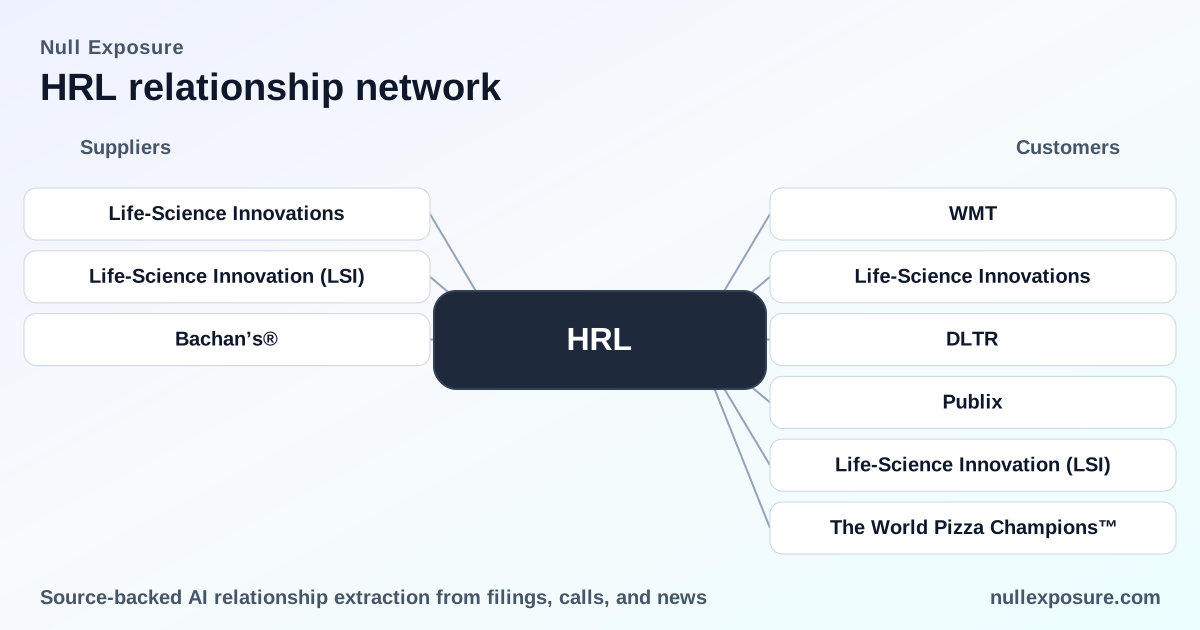
Life‑Science Innovations (LSI) — transitional co‑manufacturer and turkey supply acquirer
Hormel agreed to sell its whole‑bird turkey unit to Life‑Science Innovations, with LSI assuming supply contracts with third‑party turkey growers and providing co‑manufacturing services to Hormel through the end of fiscal 2026 to ensure uninterrupted customer fulfillment. This transaction transfers turkey supply-chain responsibilities while preserving short‑term production continuity for Hormel customers. Source: ThePoultrySite and MeatingPlace reporting (March 10, 2026).
Bachan’s® — brand collaboration on product innovation
Hormel’s SPAM brand launched a limited‑edition Japanese Barbecue Sauce flavored product created in partnership with Bachan’s®, demonstrating brand‑to‑brand licensing and co‑marketing activity that monetizes product innovation without heavy capital outlay. The collaboration highlights Hormel’s use of licensed flavor partners to extend shelf appeal and boost short‑term retail momentum. Source: Hormel Foods press release (2026).
Company‑level constraints that define operational risk and supplier strategy
These signals are drawn from Hormel’s disclosures and public reporting and should be treated as firm‑level characteristics rather than attributes of any single supplier.
- Contracting posture: Hormel maintains a mix of short‑term, spot, and long‑term commitments. The company discloses formula-based purchase agreements for hogs and turkeys stretching to 10 and 7 years respectively, grow‑out contracts up to 24 years, and an explicit policy of limited hedging horizons (grain, natural gas, diesel beyond two fiscal years and lean hogs beyond one fiscal year). This combination limits near‑term price shocks but leaves some multi‑year fixed commitments that can lock in cost bases.
- Concentration and spend scale: Procurement and financing are large in scale — purchases under raw‑material contracts were roughly $1.3 billion per year in recent fiscal periods, and Hormel carries a $750 million unsecured revolving credit facility. This is a high‑spend, capital‑intensive supplier profile that requires continuity of feedstock and financing.
- Criticality: Suppliers, co‑manufacturers and logistics providers are explicitly described as critical to Hormel’s ability to fulfill orders and protect brand economics; disruptions (disease outbreaks, plant incidents) have produced material production impacts in prior years. Third‑party manufacturing and logistics are operationally critical.
- Geographic footprint and sourcing risk: Hormel sources inputs globally (e.g., cashews, grains) and faces exposure to international disease outbreaks (ASF) and trade disruptions, while a substantial portion of production and supply is North America‑centric. Global sourcing creates price and availability tail risks even as domestic capacity concentrates operational risk.
- Relationship maturity and stage: Most supplier relationships are active; the firm is mid‑transformation on IT and operating processes, indicating some vendor activity in software/infrastructure with multi‑year rollouts and ongoing ramp phases for order‑to‑cash changes. Expect active vendor management and transition risk over the next 12–24 months.
What every investor and operator should flag now
- Supply re‑allocations matter for continuity: The sale of the whole‑bird turkey unit to LSI shifts both contractual obligations and execution risk off Hormel’s balance sheet while retaining short‑term co‑manufacturing to preserve customer fulfillment. Evaluate counterparty execution capacity and integration plans when modeling post‑FY2026 margins.
- Commodity sensitivity remains the dominant margin driver: Hormel’s blended contracting and hedging approach reduces but does not eliminate commodity exposure; prior fiscal 2025 input inflation materially pressured earnings. Stress models should assume continued volatility for pork, beef, nuts and grains.
- Large spend and credit profile constrain flexibility: With substantial purchase commitments and a $750 million revolver, liquidity and working‑capital management are priorities. Capital expenditure guidance of $260–290 million and advertising of roughly $148 million underscore fixed outlays that compete with margin rescue levers.
- Third‑party service providers are both leverage and risk: Outsourced IT, manufacturing licenses and logistics enable scale but introduce cyber and operational concentration risks that require active monitoring.
For a practical view on counterparties and contract staging across public companies, see https://nullexposure.com/ for supplier‑risk dashboards and deeper documents.
Short checklist for due diligence (operators and investors)
- Confirm the timeline and scope of LSI’s assumption of grower contracts and co‑manufacturing obligations through fiscal 2026; quantify transition costs.
- Reconcile long‑term purchase commitments and grow‑out contracts against balance‑sheet liquidity under commodity stress.
- Validate third‑party manufacturing capacity and contingency plans for critical plants (Austin, Little Rock, and major co‑manufacturing partners).
- Review brand licensing programs (e.g., Bachan’s collaboration) as a low‑capex revenue amplifier and gauge durability of cross‑brand promotions.
If you need a structured supplier exposure briefing tailored to HRL or peer food processors, start with a tailored scan at https://nullexposure.com/.
Bottom line — investment posture
Hormel uses a hybrid sourcing model to protect branded margin while leveraging co‑manufacturing and licensing to extend product reach. The LSI transaction materially offloads turkey whole‑bird operations while preserving fulfillment through a defined transition window, and brand collaborations like Bachan’s represent low‑capex upside. Primary risks are commodity cost volatility, execution at third‑party manufacturing partners, and the scale of purchase commitments against available liquidity.
For deeper supplier mapping and contract‑level risk scoring on HRL and its peers, visit https://nullexposure.com/ and request the HRL supplier brief.