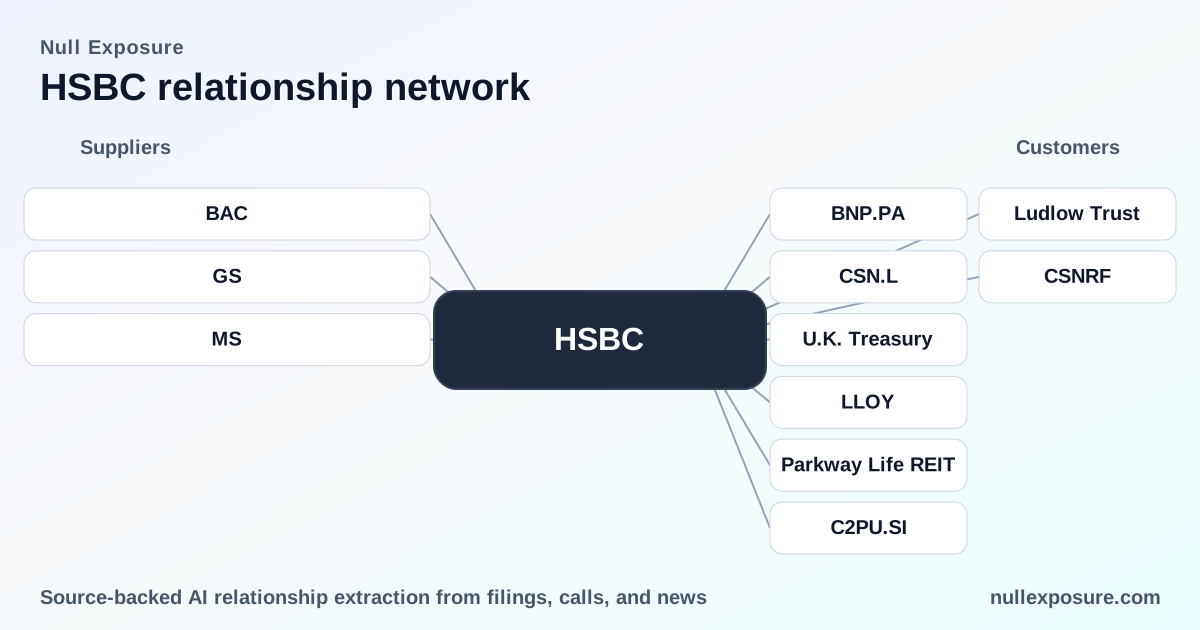
HSBC as a supplier counterparty: what investors need to know
HSBC Holdings plc operates a global, diversified banking franchise that monetizes through interest margin, fee income from capital markets and advisory work, and large-scale custody and transaction services. As a counterparty and supplier in financial transactions, HSBC is both a client of major investment banks for capital-markets advisory and a provider of balance-sheet and payments infrastructure to corporate and institutional counterparties; these relationships translate into recurring fee flows and episodic deal revenue tied to strategic transactions such as the Hang Seng privatisation. Learn more about how we surface supplier risk and counterparty exposures at https://nullexposure.com/.
Quick investment thesis: cash flow engines and counterparty exposure
HSBC’s scale—reflected in a ~USD 276 billion market capitalization and USD 63.2 billion revenue TTM—creates highly diversified fee and interest income that supports a mid-teens return on equity (11.6% ROE reported) and a modest dividend yield. The bank’s role as a counterparty to the large global investment banks listed below is operationally significant because advisory mandates generate concentrated, high-margin fees and also indicate active balance-sheet deployment and regulatory coordination across jurisdictions.
Why these advisory and banking relationships matter to operators and investors
HSBC leverages external investment banks for major strategic transactions and uses its own franchise for commercial banking and payments. When HSBC appoints name-brand advisers—Goldman Sachs, BofA Securities and Morgan Stanley—it signals both transaction size and complexity, and it creates short-term revenue transfer to advisers plus operational dependencies during execution (data rooms, due diligence, escrow arrangements). These advisory engagements are discrete but materially visible to investors because they affect fee income and execution risk in the period around the deal.
Explore counterparties and supplier mapping for portfolio due diligence at https://nullexposure.com/.
Documented relationships (each result in the record)
-
BofA Securities (Reuters via TradingView, Jan 26, 2026)
HSBC named BofA Securities as one of the joint financial advisers to HSBC Holdings and HSBC Asia Pacific in connection with the privatisation of Hang Seng Bank, reflecting a formal advisory mandate on a large strategic transaction. Source: Reuters coverage published Jan 26, 2026 (TradingView link: https://www.tradingview.com/news/reuters.com,2026-01-26:newsml_RSZ3330Qa:0-reg-hsbc-holdings-plc-privatisation-of-hang-seng-bank-scheme-effective/). -
Goldman Sachs (Reuters via TradingView, Jan 26, 2026)
Goldman Sachs was appointed alongside BofA as a joint financial adviser to HSBC Holdings and its Asia Pacific unit on the Hang Seng privatisation scheme, positioning Goldman to receive advisory fees and to coordinate on pricing and shareholder communications. Source: Reuters coverage published Jan 26, 2026 (TradingView link: https://www.tradingview.com/news/reuters.com,2026-01-26:newsml_RSZ3330Qa:0-reg-hsbc-holdings-plc-privatisation-of-hang-seng-bank-scheme-effective/). -
Morgan Stanley (Reuters via TradingView, Jan 26, 2026)
Morgan Stanley is listed as Financial Adviser to HSBC Asia Pacific on the privatisation—indicating Morgan Stanley’s role in regional structuring and transaction execution for the Asia business carve-out. Source: Reuters coverage published Jan 26, 2026 (TradingView link: https://www.tradingview.com/news/reuters.com,2026-01-26:newsml_RSZ3330Qa:0-reg-hsbc-holdings-plc-privatisation-of-hang-seng-bank-scheme-effective/). -
BofA Securities (Reuters via TradingView, Jan 23, 2026)
A prior Reuters report dated Jan 23, 2026 records BofA Securities again as a joint financial adviser, confirming that the bank’s engagement was consistent across the judicial review and sanction phases of the privatisation. Source: Reuters coverage published Jan 23, 2026 (TradingView link: https://www.tradingview.com/news/reuters.com,2026-01-23:newsml_RSW1523Qa:0-reg-hsbc-holdings-plc-privatisation-of-hang-seng-bank-court-sanction/). -
Goldman Sachs (Reuters via TradingView, Jan 23, 2026)
The Jan 23, 2026 filing/release recorded Goldman Sachs in the same joint-adviser capacity, reinforcing the role of global banks in clearing legal and regulatory milestones for the transaction. Source: Reuters coverage published Jan 23, 2026 (TradingView link: https://www.tradingview.com/news/reuters.com,2026-01-23:newsml_RSW1523Qa:0-reg-hsbc-holdings-plc-privatisation-of-hang-seng-bank-court-sanction/).
What these relationships collectively signal about HSBC’s supplier posture
- Concentration and criticality: Appointing top-tier global banks for a single transaction concentrates advisory fees externally, but the engagements are episodic—important for near-term fee recognition and material to investor sentiment around strategic moves (e.g., the Hang Seng privatisation).
- Contracting posture: HSBC uses competitive, high-skill external advisers for complex cross-border restructurings, indicating a contracting approach that prioritizes specialist capability for critical transactions rather than insourcing advisory risk.
- Maturity and predictability: These advisers are repeat players in capital markets; their involvement signals execution maturity and a standardized transaction playbook, reducing implementation friction during court-sanction and scheme phases.
- Company-level signal: Absence of other supplier constraints in the record suggests HSBC’s supplier relationships for this transaction are focused and transactional rather than operationally embedded across its core deposit and payments chains.
Investment implications: revenue, risk, and monitoring priorities
HSBC’s engagement of BofA, Goldman Sachs, and Morgan Stanley on the Hang Seng privatisation is material for short-term advisory revenue and reputational positioning in Asia. Investors should prioritize monitoring:
- Announcement-to-close fee recognition and any disclosed fee tables in subsequent filings.
- Execution risks tied to regulatory approvals and shareholder litigation that could affect timing and cost.
- Counterparty concentration around a few global advisers for large strategic moves; this is efficient but creates single-event dependencies.
Key takeaway: these are classic capital-markets supplier relationships—high-fee, high-visibility, and time-bound—rather than ongoing operational dependencies.
For a deeper supplier map and to monitor counterparty exposure across your portfolio, visit https://nullexposure.com/.
Final read: risk vs. strategic upside
HSBC’s balance-sheet scale and recurring banking operations underpin most of its earnings, while advisory engagements transfer discrete value to external banks and temporarily concentrate execution risk. The Hang Seng privatisation engagement validates HSBC’s strategic willingness to use top-tier advisers to extract and monetize regional value, which supports upside to fee income around the transaction timeline. For operators and investors, the primary monitoring items are execution milestones and fee disclosure; these determine how much value accrues to HSBC versus external advisers.
If you require continuous tracking of supplier relationships and counterparty advisories tied to strategic transactions, Null Exposure offers tailored coverage and alerting—start here: https://nullexposure.com/.