Helius Medical Technologies (HSDT) — supplier relationships that shape commercialization and risk
Helius Medical Technologies develops and commercializes a non‑invasive neurostimulation system (PoNS) and monetizes through device sales, therapy services and licensed technology; revenue is supplemented by licensing arrangements that obligate royalty payments. Commercialization depends on third‑party manufacturing, logistics partners, and a narrow set of service providers — these relationships drive both go‑to‑market capacity and downside operational risk. Explore supplier intelligence at NullExposure: https://nullexposure.com/
Business model in one line Helius sells hardware (PoNS device controllers and mouthpieces), supports therapy services around that hardware, and operates under license obligations that include a 4% royalty payable to Advanced NeuroRehabilitation, LLC on covered device and related therapy revenues, which structurally reduces margin on product and service sales (company filings, FY2024).
How to read this supplier map Helius runs a light internal manufacturing and fulfillment footprint and outsources critical functions. That contracting posture creates concentrated counterparty exposure and operational leverage: if a manufacturer or logistics partner falters, revenue delivery and regulatory compliance timelines shift materially. For investors and operators, the question is not whether partners exist — they do — but how single‑source dependencies, regulatory oversight, and commercial terms, including royalties and ATM financing, translate into execution risk and cash flow volatility.
Want a deeper supplier risk profile? See the full platform at NullExposure: https://nullexposure.com/
What the constraints say about Helius’s operating model
- Contracting posture — mixed tenure. The company uses long‑term constructs (leases, multi‑year option plans, and a multi‑year manufacturing partnership history) alongside short‑term constructs (an ATM sales agreement and a lease addendum through March 2026), indicating flexibility in capital and occupancy but limited internal scale for manufacturing and logistics (FY2024–FY2025 filings).
- Concentration and criticality. Helius is dependent on third‑party manufacturers and CROs for product build and clinical progress; the filings identify manufacturing dependency as a material and sometimes critical risk that can delay commercialization or trigger regulatory action (FY2024 10‑K).
- Geographic posture — North America focal point. Most operational examples and fulfillment references center on the U.S. and Canada, reinforcing a North American supply and regulatory footprint.
- Financial posture. Spend signals show modest contracted professional fees (e.g., sub‑$100k lease liabilities and ~$200k placement advisor fees), suggesting a capital‑constrained operating model that uses modest external spend and ATM programs for liquidity (FY2024–FY2025 disclosures).
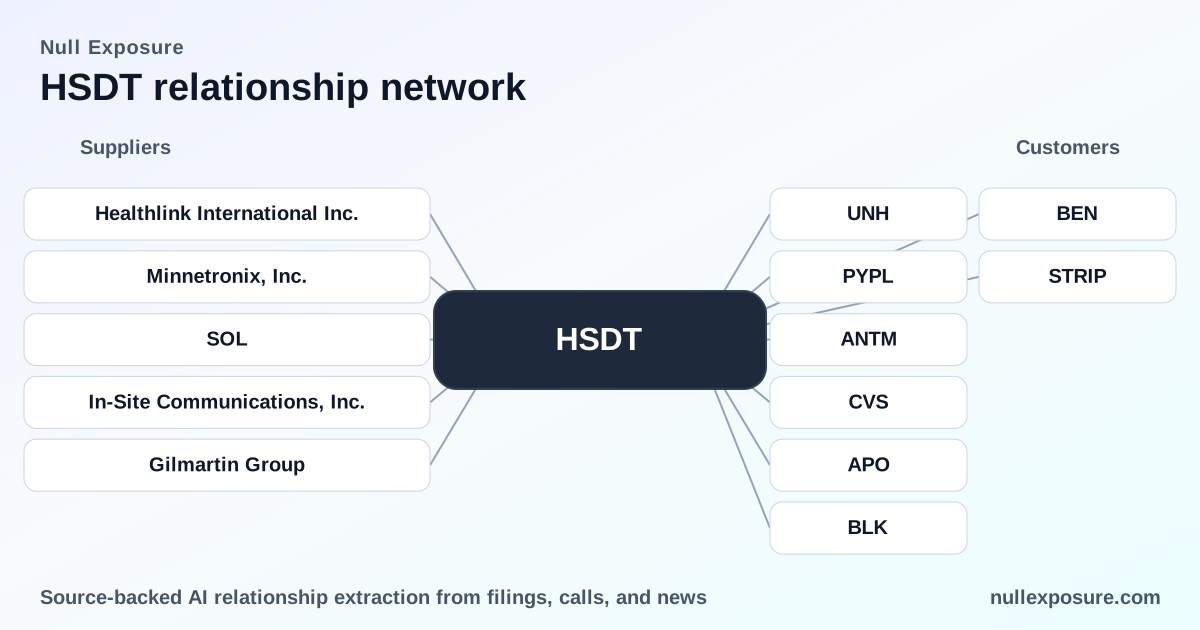
A complete rundown of every supplier relationship disclosed Healthlink International Inc. Healthlink provides third‑party logistics and warehousing for Helius’s U.S. and Canadian commercial shipments and began fulfilling U.S. orders at commercial launch in April 2022, adding Canadian fulfillment in late 2022. According to Helius’s FY2024 Form 10‑K, Healthlink handles order fulfillment and warehousing for finished goods.
Minnetronix, Inc. Minnetronix is Helius’s contract manufacturer for PoNS device controllers and mouthpieces after a transition that began in Q3 2023 and was completed in Q4 2024, replacing Key Tronic; this makes Minnetronix a critical production node for commercial supply. The FY2024 10‑K documents the manufacturing transition to Minnetronix in St. Paul, MN.
Solana (SOL) Helius acquired over 760,190 Solana tokens as part of a digital asset treasury strategy, signaling an unconventional treasury allocation into cryptocurrency holdings that can amplify balance‑sheet volatility. A March 2026 QuiverQuant news item reported Helius’s Solana token acquisition as part of its FY2025 activities.
In‑Site Communications, Inc. In‑Site Communications appears as an investor relations contact in a company release originally from 2021 and reposted on lifestyle outlets; this indicates the use of third‑party PR/IR firms for external communications. A 2021 investor relations release listing Lisa M. Wilson of In‑Site Communications was carried on Yahoo Lifestyle in March 2026.
Gilmartin Group Gilmartin Group is shown as an investor relations contact for Helius in at least one investor communication around 2025 corporate actions, evidencing multiple external IR/PR engagements over time. Markets FinancialContent reported an April 30, 2025 announcement that referenced Philip Trip Taylor of Gilmartin Group as an investor relations contact.
Operating implications by relationship type
- Manufacturing dependency (Minnetronix): The completed manufacturer transition underscores a single‑source manufacturing posture that demands sustained quality controls and regulatory alignment; any disruption could materially affect supply and revenue timing (company 10‑K, FY2024).
- Distribution/fulfillment (Healthlink): Third‑party logistics centralize downstream delivery risk; ramping sales require scale at the logistics partner and strong inventory coordination.
- Treasury & non‑operational counterparties (Solana): Cryptocurrency holdings are a non‑core exposure that introduces mark‑to‑market volatility and potential liquidity gaps if digital assets are used to secure cash needs.
- Communications and advisory spend (In‑Site, Gilmartin, Roth/Craig‑Hallum): Helius outsources IR and capital‑market support functions and has used ATMs and placement agents to raise capital, which is consistent with a small‑cap financing posture (ATM with Roth, placement fees ~ $200k referenced in filings).
Investment implications and risk checklist
- Concentration risk is material: Single manufacturer and third‑party logistics make operational continuity a top investment risk; contingency plans and supplier diversification are key mitigants.
- Royalty drag on gross margin: The 4% royalty obligation to Advanced NeuroRehabilitation reduces gross economics on device and therapy revenue and should be modeled as a recurring margin headwind (FY2024 license disclosure).
- Balance sheet volatility from digital assets: The Solana position changes the risk profile of treasury cash and requires monitoring of valuation and liquidity treatment.
- Small‑cap financing posture: Use of ATMs, placement agents, and modest advisor fees signals ongoing capital access needs; dilution risk should be priced into models.
Actionable next steps for investors and operators
- For investors: demand quarterly disclosure of manufacturing output and fulfillment KPIs tied to Minnetronix and Healthlink to validate revenue delivery and inventory health.
- For operators: negotiate second‑source manufacturing or secure buffer inventory commitments to reduce single‑point failure risk and plan for regulatory audits of outsourced manufacturing.
- For both: monitor the digital asset treasury and IR engagements for signs of liquidity strategy or communications shifts.
For a structured supplier and contract view tailored for investment due diligence, visit NullExposure: https://nullexposure.com/
Conclusion Helius runs a capital‑light commercialization model built on outsourced manufacturing, logistics and advisory services, with an embedded licensing royalty and a recent experiment in digital assets that increases balance‑sheet complexity. Key investment questions center on manufacturing resiliency, fulfillment scale, and the cash management posture; answers to those questions determine whether Helius’s commercial ramp converts into durable revenue or remains fragile to supplier disruptions. Learn more about supplier risk intelligence and active monitoring at NullExposure: https://nullexposure.com/